


War and Order from the Global South
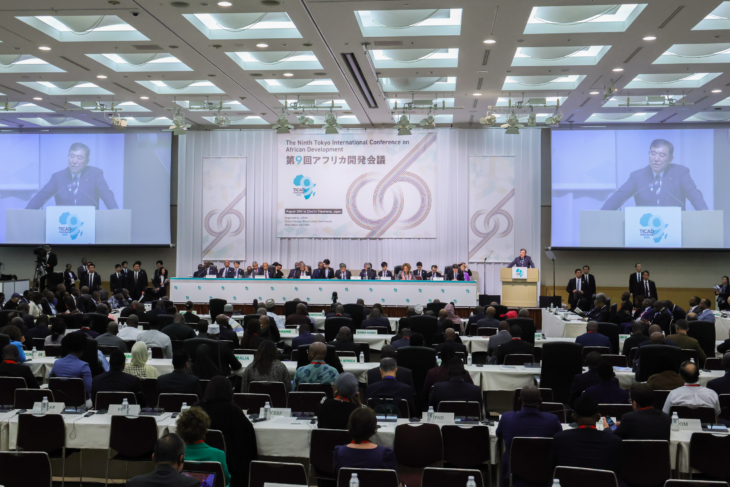
In a multipolar world, Japan must engage the Global South as a diverse group of states guided by distinct national interests, rather than as a single bloc. Many maintain flexible diplomatic alignments and avoid exclusive commitments to any camp. Japan should therefore reject camp-based thinking and focus on understanding local perceptions of order and autonomy. In this context, the 9th Tokyo International Conference on African Development in 2025 was significant, as some countries seeking to balance China may view Japan as an alternative partner.
Photo: Cabinet Public Affairs Office
War has thrown the international order into flux. The search for a multipolar order centered on various “Souths” has begun.
- The presence of emerging powers, which sometimes surpass developed nations, is growing.
- New, regionally driven frameworks for conflict management are emerging and warrant closer scrutiny.
- Japan should consider shifting away from “American dominance” and toward “diversification.”
Wars and hostilities frequently erupt across Eurasia, from Ukraine to the Middle East, India and Pakistan, Thailand and Cambodia. After occupying and annexing the Crimean Peninsula in 2014, Russia’s fighting in eastern Ukraine escalated into a full-scale invasion in 2022. This aggression continues to this day. On October 7, 2023, Hamas attacked Israel. Israel subsequently retaliated by extending its attacks beyond Gaza to include pro-Iranian forces, such as Hezbollah. Israel also launched military strikes on Iran, targeting its nuclear program. The Middle Eastern order has undergone seismic changes during this period, including the collapse of Syria’s Bashar al-Assad regime. While the Israel-Iran “Twelve-Day War” ended with a brief ceasefire, the Gaza conflict shows no signs of ending. In May 2025, a military conflict broke out between India and Pakistan. Although the fighting subsided after just four days, diplomatic repercussions persist, including the rapid deterioration of US-India relations due to US mediation during the ceasefire process. Furthermore, the border conflict between Thailand and Cambodia is intensifying, though it remains contained.
The onset, continuation, and termination of these wars are naturally driven in part by the unique circumstances of each country and region. However, these circumstances also coexist and influence one another, linking the interests of regional actors and major powers across borders and affecting the global order. Given the rapid succession of conflicts in the current international landscape, I would like to interpret the dynamism of international politics moving toward “multipolarity” and consider the form of Japanese diplomacy required to align with the times.
A world where binary oppositions lead to the division of nations into camps?
A few years before Russia’s invasion of Ukraine, the phrase “New Cold War” was frequently heard against the backdrop of China’s rise and the normalization of US-China conflict. Considering that the United States and the Soviet Union were economically decoupled during the Cold War prior to 1989, it remains questionable whether it is appropriate to apply the same “Cold War” label to the current situation, where the United States and China both play indispensable roles in the global economy. However, this perception of international politics as a major-power confrontation has become increasingly widespread.
The United States and other Western countries frame the current international order as a struggle between developed democracies and authoritarian states—such as China, Russia, Iran, and North Korea—with the so-called Global South positioned outside this binary. China, on the other hand, views the world through a lens of “developed versus developing world.” Although their worldviews differ, they share a perception of order based on a specific binary axis of opposition.
In this context, the logic and discourse surrounding war also tend to converge on this axis of conflict. In the war in Ukraine, Russia has justified its military invasion by invoking the eastward expansion of the North Atlantic Treaty Organization (NATO) after the end of the Cold War, the “Nazification” of Ukraine, and the need to protect “ethnic Russian residents” in the Donetsk and Luhansk Oblasts in eastern Ukraine. In response, Western countries continue to support Ukraine, defending its sovereignty and opposing any attempt to “change the status quo by force.” Japan, too, has repeatedly stated that “today’s Ukraine is tomorrow’s East Asia.” However, as the actual war drags on, these discourses, regardless of whether the conflict is right or wrong, solidify a conflict structure of “the West versus Russia, or China supporting it.”
Behind this growing binary opposition is a recognition of long-term shifts in international politics and economics; namely, the relative decline of American national power and the rise of China. As the role of the United States diminishes, allies are called upon to strengthen their solidarity and share a greater burden in maintaining deterrence. Japan is strengthening its ties with South Korea, Australia, the Philippines, and NATO, as well as with other nations in East Asia, while actively bolstering its own defense capabilities. While this does not perfectly mirror the Cold War, it fosters the perception that two distinct “camps” or “teams” have formed in the international community, intensifying conflict and competition between them.
US power—economic and military alike—has not declined in absolute terms. While China’s rise suggests a relative decline, the real problem for the West lies in the sluggish and declining national power—primarily economic strength—of US allies. Japan is a prime example. The growing “inward-looking” attitude in the US is likely influenced not only by China’s rise but also by anxiety and dissatisfaction regarding its Western allies.
An increasingly multipolar world
China and Russia, taking advantage of the US retreat from international involvement, are emphasizing the “multipolarization” of the world more than ever before. The collapse of the US unipolar system and the increasing influence of developing nations like China are clear markers of multipolarity, with the growing presence of the Global South being a logical consequence. The West also shares this emphasis on the Global South.
However, the question is whether both the West and China truly engage on their own terms the countries of the Global South and are committed to contributing to the economic development and stability these nations desire. For many Western countries, the Global South is often treated simply as “nations outside the West”—excluding themselves and their opponents—and is merely a subject of discussion on how to draw them into their own camp. While this is important in itself, is it really appropriate to demand that they belong to a specific camp?
Meanwhile, what about China? As mentioned above, China has a vision of the world order as “developed versus developing world” and positions itself as a leader among developing nations. For China, the countries of the Global South are those with shared interests and are considered a support base for China. However, the reality of the countries referred to as the Global South, whether they be emerging or developing countries, is diverse. Treating them as a single group without understanding their diversity and individuality will not lead to effective foreign policy, whether for the West or China.
When considering the Global South, it is important to remember that, particularly for less developed countries, economic development is the primary national goal, and belonging to a camp is not an issue. Furthermore, while some so-called emerging countries have achieved dramatic economic growth and increased their political and military presence, it is also important to note that there is considerable diversity within them. This diversity is evident in the BRICS.[1] In addition to founding members such as Brazil, Russia, India, China, and South Africa, Egypt, for example, is focusing on space development and striving to become a player in cutting-edge science and technology.
However, it’s important to note that the developed world is also becoming more diverse. The Organization for Economic Cooperation and Development (OECD), often referred to as the “Club of the Rich,” has welcomed Chile, Slovenia, Israel, Estonia (all in 2010), Latvia (2016), Lithuania (2018), Colombia (2020), and Costa Rica (2021) as members this century, with Indonesia and Thailand in Southeast Asia currently applying for membership. The OECD is no longer simply structured as “developed countries = G7.” In this sense, questions arise as to the appropriateness of China’s framework of “developed versus developing nations.”
The world is effectively moving toward multipolarity, resulting in diverse decision-making in various fields, including politics, economics, and society. Both the West and China need to understand and grasp these trends.
Influences that change the structure of regional order
The current situation, where major wars and conflicts coexist, is likely related to the trend toward multipolarity. In particular, the decline of interest in the international community in the United States, the decline of the West’s influence, the emergence or rise of major powers or new powers in the region, and the resulting fluidity of the order, are some of the factors behind the occurrence of war and fighting. Developing countries that have gained strength may also use military force for the sake of nationalism.
For example, while the conflict in the Middle East is not directly linked to Ukraine, the structural changes mentioned above are a contributing factor, and the absence of Russia, which has no choice but to focus on the Ukraine war, is likely a contributing factor. And above all, the presence of Israel, with its advanced technological capabilities and sense of national “defense,” is crucial. In the Middle East since the October 7 attacks, the contexts that defined previous Middle Eastern wars— the conflict between Israel and Palestine (Arab countries) and the emergence of Arab nationalism—have receded into the background, and the pre-conflict paradigm of “Saudi Arabia vs. Iran” has also been overshadowed. Israel is now playing a greater role in shaping order than before. In any event, the situation is no longer easily understood in the same way as before. US involvement increasingly appears calibrated to Israel’s growing dominance in the regional balance of power.
In response, China has clearly stated its support for Palestine, primarily in the context of countering the United States. China’s national goal is to catch up with the United States by 2049, the 100th anniversary of the founding of the People’s Republic of China. To achieve this, it has taken actions and words that lower the United States’ reputation in the international community. Such rhetoric, for example, includes the “double standards” it highlights in comparison with Ukraine. Some of this rhetoric is also aimed at gaining sympathy from Islamic countries. Indeed, in Southeast Asia, after the Gaza conflict, the United States’ reputation fell, particularly in Islamic countries like Indonesia and Malaysia, while China’s favorability rose relatively. This can also be seen as part of a chain reaction.
The recent military conflict between India and Pakistan is in part a reflection of the structural destabilizing factors of the existing India-Pakistan and Sino-Indian conflicts. However, during Donald Trump’s second term, not only US-China relations but also US-India relations deteriorated, and the Trump administration hardened its tariff policy toward India. On August 18, 2025, Chinese Foreign Minister Wang Yi flew to New Delhi to meet with Indian Foreign Minister Subrahmanyam Jaishankar. During the meeting, Wang Yi called for a “multipolar world and greater democracy in international relations,” to which Jaishankar responded that “India-China relations have moved from the bottom up and are continuously improving and developing.” Prime Minister Narendra Modi then attended the Shanghai Cooperation Organization (SCO) summit held in Tianjin, China, in September of the same year. This was an example of US factors influencing Sino-Indian relations. China’s traditionally friendly relationship with Pakistan is by no means unchanging; rather, it responded flexibly to China’s primary goal: its relationship with the United States. China had its own priorities here.
In Southeast Asia, a border conflict also broke out between Thailand and Cambodia. In terms of global impact, this conflict differs from the wars and fighting mentioned above. However, the process of resolving the conflict saw Malaysia, the 2025 chair of the Association of Southeast Asian Nations (ASEAN), convene a special meeting, where a ceasefire agreement was reached. The special meeting was attended by Malaysian Prime Minister Anwar Ibrahim, Thailand’s Deputy Prime Minister and Minister of Interior Phumtham Wechayachai (Acting Prime Minister of Thailand), and Cambodian Prime Minister Hun Manet. Representatives from both the United States and China also participated. Leading up to this, US President Trump urged the Thai and Cambodian leaders to seek a peaceful resolution, and China continued to communicate with relevant countries to promote dialogue and a ceasefire. This ceasefire agreement, initiated by a regional organization like ASEAN and its chair country and involving the United States and China, is a unique example of peacemaking.
How do we manage and end wars and fighting? It is unlikely that we will see a situation like the 1990s, where the United States takes the lead and the United Nations gives its stamp of approval. While the role of the United States remains important, negotiations should be conducted under a diverse framework, with regional powers and major countries taking the lead and, in some cases, China also getting involved. Precisely because we live in an age where war is so likely to break out, flexible responses that reflect the actual circumstances will be required regarding how to end wars.
Japanese diplomacy in a multipolar era
A stable international environment is essential for Japan, and to that end, Japan must also actively participate in building order. This article raises the question of how much Japan can contribute to preventing and resolving international conflicts. To what extent can it access the parties involved in wars and fighting? For example, in South Asia, Japan places emphasis on India, but without the ability to speak to Pakistan, it will be unable to ease the conflict.
Japan is often said to be even more strongly oriented toward a “unipolar America” than the United States itself. Conversely, Japan tends to dislike multipolarity. Furthermore, Japan exhibits a strong tendency toward team-oriented thinking, favoring the “West versus authoritarian camp” framework. On the other hand, while it is true that there is a tendency to conduct detailed diplomacy that takes into account the diversity of the Global South, it seems that, overall, Japanese diplomacy is strongly conscious of the conflict structure.
In a genuinely multipolar world, Japan’s strategic challenge will be to engage the Global South not as a bloc, but as a constellation of states with distinct interests and trajectories. To do so, Japan needs to understand the national interests and perceptions of regional order envisioned by countries in the Global South, and should refrain from thinking or acting in a way that directly seeks to belong to any particular camp. Many countries in the Global South make diplomatic choices while striking a balance based on their national interests and the circumstances of the moment. Even if they appear to belong to one camp, they will not sever ties with other camps. Furthermore, this grouping is variable depending on the issue.
In this regard, the 9th Tokyo International Conference on African Development (TICAD9), held in August 2025, was an important initiative from a diplomatic strategy perspective. In fact, countries that feel increasing Chinese influence are increasingly seeking alternatives to act as a balancer. This is because leaders are trying to demonstrate their independence and not just follow China’s orders. If Japan is chosen as an alternative, it would be a success for Japanese diplomacy.
Relatedly, in Japan, there is a strong sense of caution that BRICS is part of the Chinese camp. Indonesia’s membership in BRICS in January 2025 was reported as a shock. While caution is necessary, there is no need to approach the situation with an overly biased view of the camp. While China views BRICS as a gathering place for “developing nations,” this is not necessarily the case for Indonesia. Rather, it is an option for Indonesia to balance its position with the United States, and the addition of Islamic countries such as the United Arab Emirates (UAE), Iran, and Egypt to the expanded membership likely provided a factor in Indonesia’s decision.
Objectively speaking, the increase in member countries has resulted in a weakening of BRICS’s cohesion and unity. Many of the new member states will likely have various complaints about the Western-led order, but they will not reject it, and at the same time, they will likely not accept China’s worldview. Both the BRICS and the OECD are becoming more diverse. Given this global diversification, Japan is being asked to take on the extremely difficult task of conducting diplomacy that takes into account various worldviews and recognition of regional order, as well as each country’s national interests. In doing so, it will be important to consider what kind of multipolar world is desirable for Japan.
Translated from “Gurobaru Sausu kara Mita Senso to Chitsujo (War and Order from the Global South),” Gaiko (Diplomacy), Vol. 93 Sept./Oct. 2025, pp. 12-18. (Courtesy of Jiji Press) [January 2026]
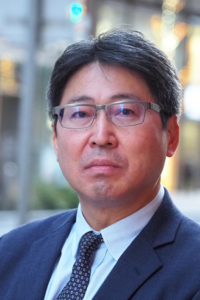 KAWASHIMA Shin, Ph.D.
Professor, Graduate School of Arts and Sciences, University of Tokyo
Born in 1968. He graduated from the Tokyo University of Foreign Studies and earned his Ph.D. in history from the University of Tokyo. He has served as an advisor for the National Security Secretariat of the Cabinet Office and is the author of “Confrontation and Accord: Japan and China Pursue Different Courses,” Chapter 2, Japan-China Joint History Research Report published by the Japan-China Joint History Research Committee in March 2011. His publications include Chugoku kindai gaiko no keisei (Formation of Modern Chinese Diplomacy, a winner of the Suntory Prize for Social Sciences and Humanities), Nijuisseiki-no Chuka (China in the 21st Century), Chugoku-no furontia (China’s Frontiers) and Shinkokoku kara miru Afuta Korona no jidai: Beichu tairitsu no aidani hirogaru sekai (Emerging Countries After COVID-19: The world caught between the US-China rivalry) (co-authored).
[1] BRICS member countries: Brazil, Russia, India, China, South Africa, Iran, Egypt, UAE, Ethiopia, and Indonesia. BRICS Partners: Belarus, Cuba, Bolivia, Malaysia, Uzbekistan, Kazakhstan, Thailand, Uganda, Nigeria, and Vietnam.
Keywords
- war
- international politics
- multipolar order
- emerging powers
- regional frameworks
- Japanese diplomacy
- Global South
Related posts:
 Recent Cyber Situations and the Bill Introducing Active Cyber Defense
 A Society Where People Can Work Even at Age 70
 Japanese Pop Culture and Cultural Diplomacy: Overseas Expansion, Reception, and the Role of Fan Communities
 Regarding the “Limited Exercise of the Right of Collective Self-defense” Based on the Determination of “Survival-threatening Situations”
 Afghanistan Earthquake: Relief Activities by Peace Japan Medical Services and Peshawar-kai