


Reading China’s Tactics Aiming to Change the Status Quo
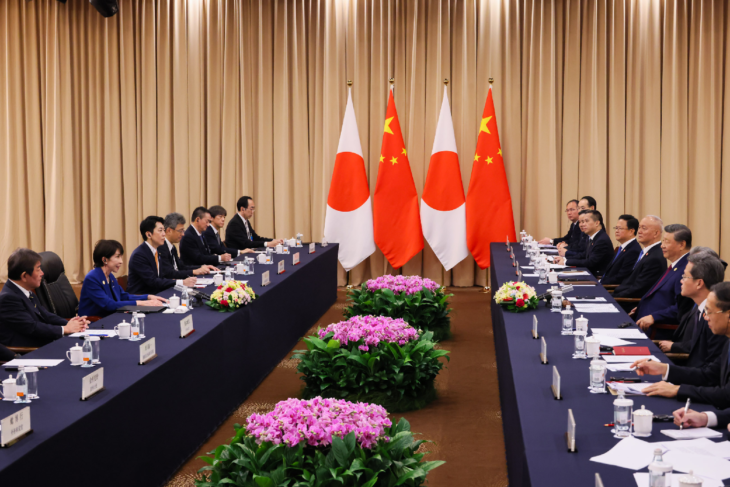
At the APEC meeting held in Seoul on October 31, 2025, Prime Minister Takaichi Sanae held a summit meeting with Chinese President Xi Jinping. At the next Shenzhen APEC in November 2026, President Xi Jinping, as the host, will need to receive the Japanese Prime Minister. “Looking ahead to such diplomatic schedules, Japan should proceed with negotiations to reverse the measures China has imposed one by one. It is also necessary to normalize relations to a level where a summit meeting is possible […]. Maintaining communication channels is essential for the preservation of deterrence.”
Photo: Cabinet Public Affairs Office
What Was Prime Minister Takaichi’s Statement?
On November 7, 2025, at the House of Representatives Budget Committee, regarding Japan’s right of collective self-defense, Prime Minister Takaichi Sanae was asked by Okada Katsuya, a member of the Constitutional Democratic Party of Japan (CDPJ), “under what circumstances a survival-threatening situation would occur.” In response, she stated that such a determination should be made “based on the individual and specific circumstances of the actual event, by comprehensively judging all available information.” Furthermore, regarding the content of a survival-threatening situation, she answered, “It is as stated in Article 2, Item (iv) of the Armed Attack Situation Response Act.” That Article 2, Item (iv) stipulates: “a situation where an armed attack against a foreign country that has a close relationship with Japan occurs and as a result, Japan’s survival is threatened and there is a clear danger that the people’s right to life, liberty and the pursuit of happiness could be fundamentally overturned.”
In response, while confirming whether she was saying that if China were to “impose a sea blockade, it might become a survival-threatening situation,” Representative Okada stated that even in a case where, for example, “the Bashi Channel between Taiwan and the Philippines is blocked,” there would basically be no situation where “energy or food supplies to Japan are cut off” if detours were made. He then pressed her again, asking “under what specific circumstances it would become a survival-threatening situation.” It was at this juncture that Prime Minister Takaichi likely began speaking beyond the documents prepared by her staff.
Prime Minister Takaichi gave an in-depth response, stating, “If an armed attack occurs against Taiwan, a sea blockade is carried out with warships, and responses are made in combination with other means, the use of force may arise.” She further elaborated, “For example, the US military comes to provide assistance to lift that sea blockade, and some other use of force is carried out to prevent that. Since such a situation is also envisioned, we must comprehensively judge the information regarding what kind of situation has arisen at that time.” Representative Okada expressed strong concern, stating, “The current answer does not lead to a very restrictive interpretation of a survival-threatening situation,” and “It would grant the government an extremely broad margin of discretion.”
In response, Prime Minister Takaichi explicitly stated, “What kind of means will be used to place Taiwan completely under the control of China, the Beijing government? It might be a simple blockade of sea lanes, it might be the use of force, or it might be disinformation or cyber propaganda.” She then added, “If it involves the use of warships and is accompanied by the use of force, I believe this is a case that, no matter how one looks at it, could become a survival-threatening situation.” It is these remarks that are being viewed as problematic.
However, as is clear from the discussion here, a survival-threatening situation is judged by the nature of the event; the assumption that the US military will provide assistance is a fundamental prerequisite for the application of the right of collective self-defense. Of course, the Takaichi statement is unusual in the sense that it is a mention of a specific case by a Prime Minister; however, in terms of content, it likely does not deviate from the government’s responses during the deliberations on the Security Legislation or from the government’s traditional security policy.
China’s Tactics: Words and Actions
Following this statement, it took time for the Japanese media and society to share the understanding that the application of the right of collective self-defense is basically directed toward the United States, and that a survival-threatening situation is determined by the nature of the event. China exploited this interval to disseminate the impression both domestically and abroad that “Japan will militarily intervene in Taiwan” or “Japan will enter the war and intervene in internal affairs,” claiming that “Japan is inciting the situation” and “Japan is changing the status quo.”
Using the claim that Prime Minister Takaichi changed the status quo as a pretext, China justifies its own national strategy, which it has expanded through salami slicing tactics,[1] and seeks to go a step further to normalize and institutionalize it. Such movements manifest in both words and actions. In this regard, it is necessary to refer to precedents.
For instance, in 2012, when the then-Noda Yoshihiko administration of the Democratic Party of Japan (DPJ) purchased private land in the Senkaku Islands to turn it into state-owned land for the purpose of “maintaining the status quo,” the Chinese government propagandized that the Japanese government had “purchased the islands” and “changed the status quo.” This led to anti-Japanese demonstrations and the normalization of incursions by Chinese government vessels into the territorial waters and contiguous zones around the Senkakus. In November 2014, The Four-Point Consensus (Regarding Joint Discussions to Improve Japan-China Relations) was established between Japan and China, leading to a summit meeting between Prime Minister Abe Shinzo and President Xi Jinping. Nevertheless, incursions by Chinese government vessels into the waters around the Senkakus have continued to the present day. China successfully changed the status quo while blaming the other party.
In the first place, it was the Chinese side that changed the status quo. On December 8, 2008, Chinese government vessels “intruded” into the territorial waters of the Senkaku Islands for the first time. Japanese conservative politicians reacted strongly to this act and planned to purchase the private land in the Senkakus to construct a lighthouse and other facilities. Concerned that this would lead to a conflict between Japan and China, the DPJ administration purchased the private land precisely to “maintain the status quo.” However, China created and disseminated a “narrative” that it was Japan that had changed the status quo, thereby changing the status quo while engaging in self-justification.
Where, then, do China’s intentions lie this time? Some view it as China having indicated a “red line” that Japan cannot cross and issued a warning. Indeed, Foreign Minister Wang Yi stated as much, but has the Japanese side fundamentally shifted its policy in the first place? Since the Takaichi statement also falls along the extension of Japan’s long-standing policy of emphasizing the “peace and stability of the Taiwan Strait,” even if China has indicated a red line, it likely implies a shift in where that red line is drawn.
Furthermore, there is a view that China is conducting an “experiment” to confirm Japan’s “preparedness” and the US reaction. While this may be correct in one respect, the overall picture of China’s policy remains elusive and unclear.
And finally, there is the view that China is utilizing this opportunity to shift responsibility onto Japan while attempting to change the status quo in both “words and actions.” This article will add consideration from this perspective of “changing the status quo.”
China’s Strategy: Future Vision and Alteration of Order
What is China’s current national strategy? During the 19th National Congress of the Communist Party of China (CPC) in 2017, President Xi Jinping and others stated that China aims to become” a great modern socialist country” by 2049, the centenary of the founding of the People’s Republic of China, and that “the Chinese nation…now stands tall and firm in the East” with greater spirit than ever before. Furthermore, the CPC Constitution was amended to include the goal to “[…] realize the Two Centenary Goals (the 100th anniversary of the founding of the Communist Party of China in 2021 and the 100th anniversary of the founding of the People’s Republic of China in 2049) and the Chinese Dream of national rejuvenation.” The former phrase, “stands tall and firm in the East,” implies standing at the center of the world, while the latter, “the Chinese Dream,” signifies catching up with and overtaking the United States, likely implying the unification of Taiwan as well. This is because expressions such as “national rejuvenation” and “national dream” are frequently used as rhetorical prefaces for the “liberation” of Taiwan.
Recently, for the purpose of Taiwan unification, China has deployed its newly constructed aircraft carriers and other assets beyond the First Island Chain—connecting Okinawa, Taiwan, and the Philippines—to the east of Taiwan to deter the US military. Moreover, China is attempting to justify its discourse that Taiwan belongs to China by propagating its own unique interpretation of UN General Assembly Resolution 2758 (the so-called “Albanian Resolution”) to the world. Particularly since the establishment of the Tsai Ing-wen administration of the Democratic Progressive Party (DPP) in May 2016, China has applied pressure on Taiwan not only through military exercises and economic harassment but also through disinformation and undersea cable damage “accidents,” attempting to force unification. China has intensified its condemnation by labeling the Democratic Progressive Party (DPP) and its presidents as secessionists.
What must not be forgotten is that while China pursues such a strategy, it consistently claims to be defensive and devoid of any aggressive intent. China emphasizes that it is passive and defensive, criticizing Western developed nations for allegedly plotting a “unilateral change of the status quo by force” and conspiring to overthrow the Chinese regime.
Tensions in Cross-Strait Relations: The 80th Anniversary of the End of the War
The year 2025 marked the 80th anniversary of the end of World War II. In Japan, while the “Reflection on the 80th Anniversary of the End of the War” by former Prime Minister Ishiba Shigeru became a topic of significant discussion, a “history war” was in fact unfolding between China and Taiwan. Even before the Takaichi statement, a history war regarding the validity of the San Francisco Peace Treaty and other matters had already been underway between China and Taiwan.
In early May of that year, coinciding with Russia’s Victory Day celebrations, President Xi Jinping published an article emphasizing China’s sovereignty over Taiwan based on the Cairo Declaration and the Potsdam Declaration. The Cairo Declaration explicitly states that Taiwan and the Penghu Islands were to be restored from Japan to the Republic of China (at the time). In response, President Lai Ching-te of Taiwan—whom China categorically labels a secessionist—countered in late June by denying the People’s Republic of China’s sovereignty over Taiwan based on the San Francisco Peace Treaty. He pointed out that the treaty only states that Japan renounces Taiwan and the Penghu Islands, without explicitly specifying their recipient.
Furthermore, on August 15 of the same year, President Lai Ching-te characterized the day not as the victory of the War of Resistance against Japanese Aggression or the “Restoration of Taiwan,” but as “this anniversary of the end of the war, 80 years after [1945].” This provoked strong reactions from China and the Kuomintang (KMT) within Taiwan. Three days later, on August 18, a spokesperson for the Chinese Ministry of Foreign Affairs completely rejected President Lai’s remarks, asserting that the “San Francisco Peace Treaty is null and void.” This was a direct reaction to the statement made in June.
Then, in October of that year, Takaichi Sanae was elected as the new president of the Liberal Democratic Party (LDP). President Lai expressed his congratulations, notably using the expression “both countries of Taiwan and Japan.” When the new Prime Minister Takaichi was elected on the 21st of the same month, President Lai referred to her as an “unwavering friend of Taiwan” and described the Japan-Taiwan relationship as “unwavering partners sharing values.” It goes without saying that the Chinese side protested strongly against these exchanges. China was highly vigilant regarding the relationship between President Lai and the new Prime Minister Takaichi.
On October 24, a few days after Prime Minister Takaichi took office, the Standing Committee of the National People’s Congress (NPCSC) of China decided to designate October 25 as the “Commemoration Day of Taiwan’s Restoration.” This was against the backdrop of the 80th anniversary of the end of Japanese rule over Taiwan. October 25 was a day of great focus in the history war. However, on that day, President Lai made no mention of Japanese rule and instead spoke about the Battle of Guningtou on October 25, 1949, in which the Republic of China (ROC) Armed Forces defeated the People’s Liberation Army (PLA). He effectively sidestepped China’s narrative.
Japan-China Summit and the Resurgence of the Taiwan Issue
On October 24, 2025, the same day China designated the “Commemoration Day of Taiwan’s Restoration,” Prime Minister Takaichi delivered her Policy Speech in the Diet. While expressing “grave concern” regarding China, she described China as “an important neighboring country for Japan” and stated that it is “necessary to establish a constructive and stable bilateral relationship.” She further remarked, “[We will] comprehensively promote a mutually beneficial relationship based on common strategic interests through continued candid dialogue between the leaders of Japan and China.” This followed the China policies of the Kishida Fumio and Ishiba Shigeru administrations; with no particular mention of Taiwan, it is considered to have been a gesture of consideration toward the Chinese side.
One week later, on October 31, a Japan-China Summit was held between President Xi Jinping and Prime Minister Takaichi on the sidelines of the APEC meeting held in South Korea. They reached an agreement on “establishing a constructive and stable relationship,” promoting a “mutually beneficial relationship based on common strategic interests,” and the importance of dialogue. Prime Minister Takaichi had already stated her intention to refrain from visiting Yasukuni Shrine, and like the late Prime Minister Abe Shinzo, she demonstrated an attitude of distinguishing between her personal assertions as a Diet member and her official position as Prime Minister. During the House of Representatives Budget Committee on November 7, she also explicitly stated the inheritance of the Murayama Statement.
On November 1, Prime Minister Takaichi met with the representative of Taiwan participating in APEC (Lin Hsin-i, Former Vice Premier). Since Prime Minister Abe frequently met with Taiwan’s representatives (such as Vincent Siew, Former Vice President of Taiwan) at APEC during the 2010s, the meeting between Prime Minister Takaichi and the Taiwanese representative was not unusual. Here too, like former Prime Minister Abe, Prime Minister Takaichi adhered to words and actions appropriate for a Prime Minister, distinct from her time as a Diet member.
However, the Chinese side protested vehemently. Factors behind this likely included China’s hostility toward President Lai, the tension in cross-strait relations, social media communications, and the fact that it occurred the day after the summit between President Xi and Prime Minister Takaichi.
Prime Minister Takaichi’s remarks at the House of Representatives Budget Committee took place a few days later, on November 7. As if lying in wait, China announced measures such as discouraging travel and study abroad to Japan, re-imposing a ban on Japanese marine product imports, and suspending the activities of Japanese entertainment in China. Consequently, in both “words and actions,” China began to “change the status quo” while holding Japan responsible.
The Evolving History War and the East Side of the First Island Chain
In terms of words, China has disregarded the content of survival-threatening situations as a legal term, instead claiming that “Japan will enter the war” or “Japan will intervene in internal affairs to fight China alongside Taiwan.” Furthermore, China has disseminated numerous “narratives” concerning historical issues. Traditionally, the historical recognition issues between Japan and China centered on the Nanjing Massacre and the comfort women issue; however, under the Xi Jinping administration, historical policy is strongly linked to domestic and foreign policy itself. In conjunction with its actions of crossing the First Island Chain, China has also directed toward Japan the argument that the San Francisco Peace Treaty is null and void—an assertion it had already made toward Taiwan in August 2025. This line of argument claims that Taiwan belongs to China while also asserting that the sovereignty of Okinawa remains undecided. Moreover, China has cast doubt on Japan’s “One China Policy” regarding the 1972 Japan-China Joint Communique and strongly asserts its own “One China Principle.” In doing so, China is challenging the international order that supports post-war East Asia, particularly the order concerning the First Island Chain.
In terms of actions, China’s ultimate goal remains unclear at present. However, its objective may be to move the front line further east by expanding the scope of PLA activities beyond the First Island Chain to its eastern side and permanently deploying aircraft carriers there. While the radar lock-on incident by carrier-based aircraft from a Chinese aircraft carrier has drawn significant attention, the location of the incident is as important as the act itself. This incident occurred not in the East China Sea, but to the east of Okinawa. Already, both the Chinese Navy and Air Force have expanded their scope of activity from the East China Sea and the Taiwan Strait to the area between the First Island Chain and the Second Island Chain—namely, to the east of the Nansei Islands and Taiwan—effectively sandwiching Taiwan and the Nansei Islands from both east and west. It is likely that this trend will intensify, with the aim of achieving a state where aircraft carriers and other assets operate constantly on the east side of the First Island Chain. This would mean that China has moved up a stage in its preparations to prevent the approach of the US military or to isolate US forces in the Nansei Islands, thereby making the unification of Taiwan a reality.
The Positioning of the United States
Following Prime Minister Takaichi’s remarks, the delay in the media’s understanding of the Security Legislation and the visible division within Japanese society were advantageous for China. Furthermore, the fact that the United States did not support the Takaichi statement itself was also a favorable development for China. On November 24, President Xi Jinping reportedly held a telephone consultation with President Trump ahead of Japan to explain China’s stance. Although a telephone consultation between the Japanese and US leaders was held subsequently, China’s swift action yielded certain results, and China intensified its offensive against Japan while the Trump administration maintained a distance from Japan.
However, on December 2, President Trump signed the “Taiwan Assurance Implementation Act,” which amends and strengthens the “Taiwan Assurance Act of 2020,” and further announced the “National Security Strategy (NSS).” This document identifies the former engagement policy, which sought to integrate China into the “rules-based international order,” as an error. While demanding an increased burden from allies, it states that regarding the situation surrounding Taiwan, the priority is ideally to maintain military superiority for deterrence, and that it does not support any unilateral change to the status quo in the Taiwan Strait.
While it can be said that this does not differ from the existing US policy, its importance is high given that the commitment to the Taiwan Strait was not previously explicit under the Trump administration, and the timing of its issuance is significant. From China’s perspective, this likely also demonstrates the difficulty of its policy to drive a wedge between Japan and the United States.
Measures to be Taken by Japan
Regarding the current situation, the measures Japan should take can be summarized into the following three points.
First is addressing China’s “change of the status quo” in terms of both “words and actions.” In 2012, while Japan succeeded in normalizing relations after two years, it allowed a “change of the status quo” around the Senkaku Islands. This time, regarding words, Japan must clearly demonstrate both domestically and internationally that it is not changing the status quo and remains proactive in improving relations with China. Simultaneously, it must appropriately disseminate information regarding the San Francisco Peace Treaty and the Japan-China Joint Communique to address countering arguments. Regarding actions, the challenge lies in cooperating with the United States to address China’s intensifying activities in the East China Sea and on the east side of the First Island Chain. It is vital to make China feel some level of cost to force a change or delay in its schedule.
Second is the issue within Japanese society. China does not only conduct simple propaganda aimed at Japanese society but also carries out “operations” designed to sow division. A firm understanding and response are necessary to enhance social resilience against such internal infiltration.
Third is the continuation of diplomatic negotiations. At the Shenzhen APEC in November 2026, President Xi Jinping, as the host, will need to receive the Japanese Prime Minister. Looking ahead to such diplomatic schedules, Japan should proceed with negotiations to reverse the measures China has imposed one by one. It is also necessary to normalize relations to a level where a summit meeting is possible, perhaps by implementing measures similar to the 2014 four-point agreement. Maintaining communication channels is essential for the preservation of deterrence.
If China perceives that its goals in “words and actions” have been largely achieved, there is a high probability it will engage in diplomatic negotiations. However, allowing China to achieve its goals would result in the same outcome as 2014. While strongly deterring China from achieving its objectives, Japan must continue negotiations and normalize relations for the sake of “peace and security in East Asia.”
Translated from “Genjo Henko wo Nerau Chugoku no Senjutsu wo Yomu (Reading China’s Tactics Aiming to Change the Status Quo),” Chuokoron, February 2026, pp. 116–123 (Courtesy of Chuo Koron Shinsha) [March 2026]
KAWASHIMA Shin, Ph.D.
Professor, Graduate School of Arts and Sciences, University of Tokyo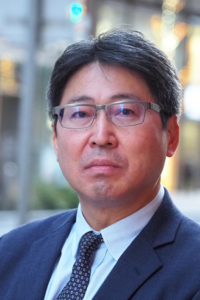
Born in 1968. He graduated from the Tokyo University of Foreign Studies and earned his Ph.D. in history from the University of Tokyo. He has served as an advisor for the National Security Secretariat of the Cabinet Office and is the author of “Confrontation and Accord: Japan and China Pursue Different Courses,” Chapter 2, Japan-China Joint History Research Report published by the Japan-China Joint History Research Committee in March 2011. His publications include Chugoku kindai gaiko no keisei (Formation of Modern Chinese Diplomacy, a winner of the Suntory Prize for Social Sciences and Humanities), Nijuisseiki-no Chuka (China in the 21st Century), Chugoku-no furontia (China’s Frontiers) and Shinkokoku kara miru Afuta Korona no jidai: Beichu tairitsu no aidani hirogaru sekai (Emerging Countries After COVID-19: The world caught between the US-China rivalry) (co-authored).
[1] Salami Slicing Tactics is a technique of accumulating small, inconspicuous fait accomplis—changes to the status quo—ultimately achieving a larger goal.
Keywords
- Prime Minister Takaichi
- China’s intentions
- history war
- Taiwan
- First Island Chain
- status quo
- survival-threatening situation
Related posts:
 Defending Japan’s Sovereignty in the AI Era: Leveraging Linguistic Uniqueness to Build Sovereign AI
 The Dynamics of the “Coalition of the Willing” in the Indo-Pacific
 Japan’s Strategy as a Pioneer in Central Asian Diplomacy: Observations from the First “Central Asia plus Japan” Dialogue Summit
 From Support to Participation: The Future of ASEAN-Japan Relations
 Recent Cyber Situations and the Bill Introducing Active Cyber Defense