


Prime Minister Modi’s Visit to Japan: Opening a “Golden Chapter” in Japan-India Relations
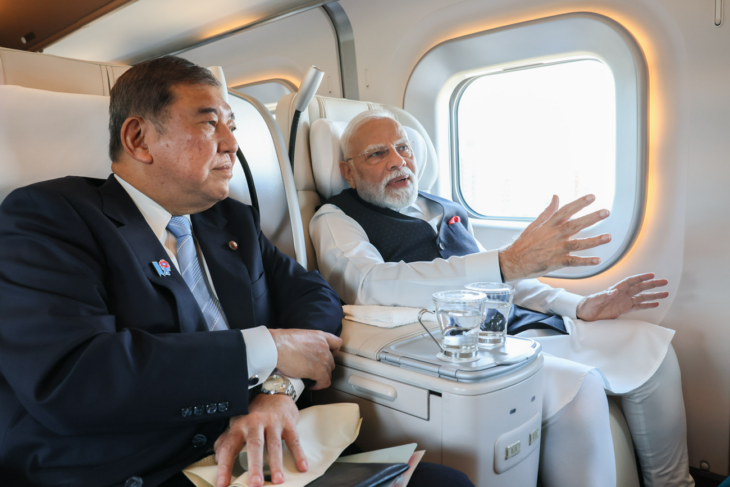
Prime Minister Modi (right) and Prime Minister Ishiba exchange views on a Shinkansen train heading to Sendai City (Miyagi Prefecture) on August 30, 2025.
Photo: Cabinet Public Affairs Office
Building upon the unprecedented strengthening of Japan-India ties achieved under the Modi administration, both countries should articulate a vision for “the next decade” based on achievements to date.
- As we enter 2025, the diplomatic environment surrounding India is expected to become more challenging.
- The summit reached a broad agreement on security, the economy, and people-to-people exchanges.
- In addition to bilateral relations, strengthening multilateral relations is also important.
The relationship between India and Japan is beyond just diplomatic relations; it is a cultural and trust based relationship. We see our progress in each other’s progress.
… I remember, when we started the Vibrant Gujarat Summit 20 years ago, Japan was one of the key partners. Just think about it, a developing country, a small state [Gujarat] organizing an investment summit, and a developed country like Japan being its partner. This shows how strong the foundation of Bharat-Japan [Japan-India] relations is.
[On bringing Japanese investment] … Even my visiting card was printed in Japanese. […] I arranged for Japanese cuisine in Gujarat and even invited a hotel chain to provide it. […] Keeping our Japanese friends in mind, we developed new golf courses in Gujarat, where earlier golf had no presence at all.
I am confident that the steps we are taking today will raise the edifice of a “Viksit Bharat” in 2047 to new heights. I am equally confident that Japan will continue to walk with us as our trusted partner in this mission, our friendship will remain unbreakable. I often say that when it comes to the Bharat-Japan relationship, it is a “made for each other” partnership.
These are excerpts from the address given by Prime Minister Narendra Modi at the ceremony marking the start of shipments of the “e VITARA,” a battery electric vehicle from Maruti Suzuki India Limited (Suzuki’s joint venture in India), held in his home state of Gujarat ahead of his visit to Japan on August 29–30, 2025. It is certain that Prime Minister Modi’s warm feelings toward Japan and the close relationship he has maintained since his time as Chief Minister of Gujarat underpin today’s Japan-India relations; however, his recent visit to Japan achieved results that far exceed those personal bonds, laying the foundation for the further evolution of the strategic partnership between the two nations.
In this article, I intend to clarify the background of this visit to Japan—particularly its significance within India’s domestic and foreign policy—the outcomes of the visit, and the priority issues for the future, including the mutual interconnections among them.
Navigating a complex diplomatic and economic landscape
First, I would like to look at the environment surrounding India’s domestic and foreign policies. In his Independence Day speech in August 2025, Prime Minister Modi strongly condemned terrorism, praised the success of military operations against Pakistan, and emphasized the strengthening of national defense. At the same time, he delivered a speech lasting over 100 minutes, centered on the keywords: Self-reliance (Aatmanirbharta), Reform (Sudhaar), and Farmer (Kisan). As this indicates, it has been pointed out that the military clash with Pakistan in May 2025 continues to influence India’s domestic politics and its diplomacy (specifically relations with the United States and China). Although the clash itself reached a ceasefire within four days, criticisms have been raised by opposition parties and others against the Prime Minister, suggesting that there might have been US mediation and that allowing such intervention was a strategic blunder.
India’s fundamental position is that Jammu and Kashmir is an integral part of India, and issues surrounding Kashmir should never be internationalized or mediated by a third party. For this reason, many in the Indian media and among intellectuals have reacted strongly against the fact that US President Trump had announced the ceasefire on social media before the parties involved—India and Pakistan—did so. Furthermore, there is significant backlash regarding the fact that the United States treated both countries as equals (a move rejected in India as “hyphenation,” connecting the two countries with a hyphen), and extended unusually warm hospitality, such as inviting Pakistan’s Field Marshal Syed Asim Munir, Chief of Army Staff, to a White House luncheon. This has resulted in a rebound of criticism against the administration. Additionally, not a few Indian military officials have pointed out that, observing Pakistan’s military actions, the close military cooperation between China and Pakistan was even more extensive than previously anticipated.
Regarding relations with the United States, although the personal relationship between Prime Minister Modi and President Trump was said to be good, the Indian side reacted strongly against the imposition of high tariffs (50%, citing reasons such as punitive measures for importing Russian crude oil), in addition to the aforementioned issues involving Pakistan. Although negotiations regarding tariffs resumed in mid-September 2025, the future direction remains unpredictable.
On the other hand, India-China relations have been gradually moving toward improvement since the first summit meeting in five years was held in 2024. In August 2025, following his visit to Japan, Prime Minister Modi’s visit to China was realized in the form of his attendance at the Shanghai Cooperation Organization (SCO) meeting held in Tianjin, China. While improvements in areas such as investment, flights, and people-to-people exchanges are expected to continue bit by bit, many experts do not foresee a fundamental change in the relationship, as the underlying structure of security issues—such as the border dispute and China’s relationship with Pakistan—remains largely unchanged. In fact, since the beginning of 2025, the first-ever trilateral dialogue between China, Pakistan, and Bangladesh was held. Furthermore, Chinese Foreign Minister Wang Yi visited Afghanistan immediately after his visit to India in August 2025 to participate in a trilateral dialogue between China, Pakistan, and Afghanistan, and subsequently visited Pakistan, demonstrating China’s own version of “balanced diplomacy.” Additionally, regarding India’s relations with its neighboring countries, there are increasing instances requiring careful maneuvering by India, such as the collapse of the Hasina administration in Bangladesh, in addition to the tense relations with Pakistan.
The Indian economy remains robust, with a real Gross Domestic Product (GDP) growth rate of 6.5% last fiscal year. It is projected to exceed the GDP of Japan and that of the combined member states of the Association of Southeast Asian Nations (ASEAN) by 2026, and to surpass Germany by 2029 to become the world’s third-largest economy. The fundamental policy is “Viksit Bharat 2047,” aiming to become a developed nation by 2047, the 100th anniversary of its independence. To this end, India has positioned self-reliance (domestic production, modernization, and technological innovation) as its foundation and aims to strengthen manufacturing and exports under the banners of “Make in India” and “Make for the World.” On the other hand, India faces challenges such as a massive trade deficit with China and a high youth unemployment rate (15.0% [as of September 2025]), necessitating further strengthening of the manufacturing sector, ensuring competitiveness, increasing exports and employment, and moving away from protectionist policies.
Meanwhile, the Japanese side has also been facing many challenges. Against the backdrop of Russia’s aggression against Ukraine and issues in the East and South China Seas, Japan has clearly advocated its opposition to any attempts to change the status quo by force and has stood for the rule of law. As the international environment changes, the importance of India as a partner that shares values and interests and can cooperate closely, particularly in the Indo-Pacific region, is increasing. For Japan, with its aging population and declining birthrate, India, which continues to experience dynamic economic growth and possesses a large pool of young and talented human resources, is also an attractive economic partner.
As seen above, it can be said that this visit to Japan occurred at a crucial timing for both Japan and India.
A landmark summit: Defining the roadmap for the next decade
During Prime Minister Modi’s visit to Japan, broad-based agreements were formulated on the direction of cooperation for the next decade [Japan-India Joint Vision for the Next Decade] including security and defense cooperation, economic security, economy, investment and innovation, and people-to-people exchanges. Just among those signed and exchanged between the governments, including summit-level outcome documents, 17 Memorandums of Understanding (MOUs) were announced, and the total exceeds 180 when including MOUs between private companies. The following is an overview of the key points.
- Security and Defense Cooperation: The 2008 Joint Declaration on Security Cooperation between Japan and India was revised. The two sides agreed on information sharing regarding new security risks, conducting bilateral exercises between our forces in a wide range of fields, cooperation in Maritime Domain Awareness (MDA) and maritime law enforcement, and exploring the co-development and co-production of equipment and technology.
- Economic Security: Both leaders agreed to launch the Japan-India Economic Security Initiative and to strengthen cooperation between the two countries, including on the resilience of supply chains for critical materials. Specifically, six areas were identified: semiconductors, critical minerals, information and communication technology, clean energy, scientific cooperation, and pharmaceuticals.
- Economy, Investment, and Innovation: Both leaders announced a new target of 10 trillion yen in private investment from Japan to India and expressed their commitment to continue working on improving the business environment. They also agreed on cooperation in fields such as digital, AI, startups, and space. Regarding decarbonization, Japan and India welcomed the signing of the Memorandum of Cooperation on the Joint Crediting Mechanism (JCM) and the Joint Declaration of Intent on Clean Hydrogen and Ammonia. Both leaders concurred to continue cooperation toward the realization of the high-speed rail project, which is a flagship project of Japan and India. Furthermore, they agreed to launch the Next-Generation Mobility Partnership (NGMP) to promote cooperation in a broader range of mobility sectors.
- People-to-People Exchanges: Both sides agreed to promote the development, exchange, and circulation of mutually complementary human resources between Japan and India, including leveraging the capabilities of highly skilled professionals and other Indian human resources for Japan’s economic growth and regional revitalization, and enabling Indians who have learned advanced and specialized technologies in Japan to return to their home country and contribute to India’s development. To this end, they announced an Action Plan for Japan-India Human Resource Exchange and Cooperation, which sets a target of the exchange of more than 500,000 personnel in both directions in the next five years, including 50,000 skilled personnel and potential talents from India to Japan.
In addition to these agreements, the visit to Sendai by both leaders via the Shinkansen was also meaningful. In addition to sharing stories of how both leaders spent much of their time traveling on sleeper trains in their youth, topics such as the history, punctuality, and safety of the Shinkansen were discussed. The two leaders also received a briefing on the experimental rolling stock, ALFA-X, and observed the driver’s cabin of the E5 series Shinkansen, where they experienced its top speed of 320 km/h. Furthermore, in Sendai, they visited the Miyagi plant of Tokyo Electron Limited.
A truly strategic and global partnership for a new era
I believe that two significant points can be highlighted as a result of this visit.
First, the Japan-India Special Strategic and Global Partnership, announced in 2014, has been evolved into a truly strategic one. Over the past decade, Japan and India have advanced various forms of cooperation; however, against the backdrop of changes in the international environment and the resulting demands of the times mentioned earlier, I believe both sides have reaffirmed their mutual strategic significance. From India’s perspective, it must have recognized once again that Japan is the true partner to move forward with toward the goals of becoming a developed nation by 2047, “Make in India,” and “Self-reliance (Aatmanirbharta)” amidst a severe international environment. In conversations with Indian intellectuals as well, many opinions have been expressed that in the current international situation, it is more necessary than ever for major democracies like India and Japan to cooperate. Furthermore, for Japan, it was confirmed that strengthening relations with India—a friendly nation achieving significant economic growth while producing a vast number of diverse and talented young people—is essential for Japan’s politics and economy. The greatest significance of this visit lies in having redefined such a strategic relationship with an eye toward the next ten years.
Second, through these broad-based and concrete agreements, as Prime Minister Modi himself stated in the joint press announcement by both leaders, India and Japan “have laid a strong foundation for a new and golden chapter” in their “Special Strategic and Global Partnership.” Among the intellectuals in Delhi, some observed these results and said to me, “Japan is back!” This indicates that the outcomes of this visit were impactful, while also suggesting that for the past few years, Japan’s presence had not been sufficiently visible to India. Additionally, although Prime Minister Modi headed directly to the SCO meeting in Tianjin after departing from Sendai, he stated in an announcement following the bilateral meeting that “the two countries (India and China) are development partners, not rivals”; however, he returned home without participating in the subsequent events in Beijing.
The path forward: Five priorities to solidify the “Golden Chapter”
To ensure that Japan-India relations become a true “golden chapter” in the future, there is no doubt that considerable effort will be required from both sides. While there are many items for follow-up, I would like to highlight five that are considered particularly important.
First is the field of economic security. There is no need to re-emphasize its importance for Japan, but India is also now suffering from export restrictions by other countries (such as on critical minerals, magnets, and fertilizers) and has a great interest in countermeasures against the “weaponization” of economic tools through reliable partners and in building resilient supply chains. In the six areas identified at the Summit Meeting mentioned earlier, it is required to link these to concrete projects involving private companies. Regarding semiconductors in particular, many Japanese companies are looking to participate in India’s manufacturing plans, and we wish to advance wide-ranging cooperation, including the creation of a semiconductor ecosystem and human resource development.
Second is small and medium-sized enterprises (SMEs). Investment in India by Japanese companies is growing, and the number of member companies of the Japan Chamber of Commerce and Industry in India (JCCII) is expected to increase from 638 as of October 2025 to over 700 within two years. On the other hand, the next challenge will be the entry of Japanese SMEs. There are many issues, such as measures by the Indian authorities regarding taxes and regulations and the creation of high-quality partnerships, and we intend to make even greater efforts through public-private cooperation.
Third is cooperation in the areas of defense equipment and technology. Currently, cooperation is underway toward the transfer of the Unified Complex Radio Antenna (UNICORN) to the Indian Navy, but the formation of a “second and third UNICORN” is required. In fact, many specific lists of requests have been presented by the Indian side, and this is a field where we wish to expand cooperation through the efforts of both sides.
Fourth is people-to-people exchanges. While the details were mentioned earlier, since my assignment to India (October 2024), many economic missions from Japan, including from regional areas, have visited India, and many have shown interest in accepting Indian human resources, including high-skilled personnel. We wish to advance cooperation so that this helps revitalize the Japanese economy and is further circulated back into India’s economic development.
Fifth is the strengthening of international cooperation on a multilateral or plurilateral basis. Japan and India, sharing fundamental values and interests, are committed to advancing cooperation to realize a Free and Open Indo-Pacific (FOIP). In this context, the Japan-Australia-India-US (Quad) remains the most vital framework. Convening a Summit Meeting at the earliest possible date is crucial, not only for the four nations but for the peace and stability of the entire Indo-Pacific. Japan will spare no effort in providing full support to the host country, India, toward the successful and timely convening of this meeting.[1] Furthermore, we look forward to deeper cooperation in the Bay of Bengal region—focusing on the development of Northeast India and industrial value chains—and in Africa, through robust Japan-India public-private partnerships.
In a fluctuating international environment, strengthening the Japan-India relationship is not only beneficial but essential for both nations and the broader Indo-Pacific. To ensure this “Golden Chapter” remains steadfast and enduring, we will continue to dedicate our utmost efforts.
Translated from “Modhi Shusho Honichi: Nichi-In Kankei no ‘Goruden Chaputa’ wo Hiraku (Prime Minister Modi’s Visit to Japan: Opening a ‘Golden Chapter’ in Japan-India Relations),” Gaiko (Diplomacy), Vol. 94 Nov. / Dec. 2025, pp. 114–119. (Courtesy of Jiji Press) [March 2026]
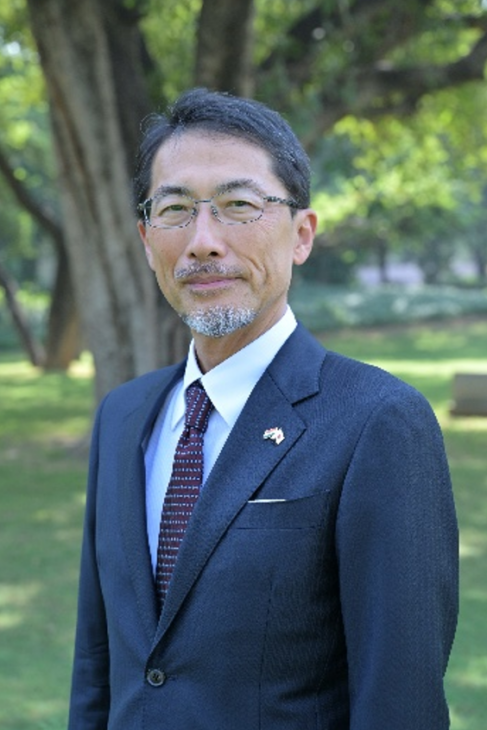 ONO Keiichi
Ambassador Extraordinary and Plenipotentiary of Japan to India
Graduated from the University of Tokyo in 1988 and joined the Ministry of Foreign Affairs of Japan. He has an MA in Law (Cantab). His previous positions include Director of the First Southeast Asia Division and the Northeast Asia Division of the Asian and Oceanian Affairs Bureau; Minister at the Embassy of Japan in Indonesia; Director-General for Global Issues; Director-General of the Economic Affairs Bureau; and Deputy Minister for Foreign Affairs (G7/G20 Sherpa). He has been serving in his current position since 2024.
[1] A date for the 2025 Quad summit, set to be chaired by India in New Delhi in 2025, has yet to be fixed.
Keywords
- Japan-India relations
- Vision for the Next Decade
- Golden Chapter
- Special Strategic and Global Partnership
- Modi
- Viksit Bharat 2047
- human resource exchange
Related posts:
 Reading China’s Tactics Aiming to Change the Status Quo
 Defending Japan’s Sovereignty in the AI Era: Leveraging Linguistic Uniqueness to Build Sovereign AI
 The Dynamics of the “Coalition of the Willing” in the Indo-Pacific
 From Support to Participation: The Future of ASEAN-Japan Relations
 Special Dialogue: Prospects for Japanese Diplomacy in 2026—Advancing the Strategies of the “Free and Open Indo-Pacific” Further