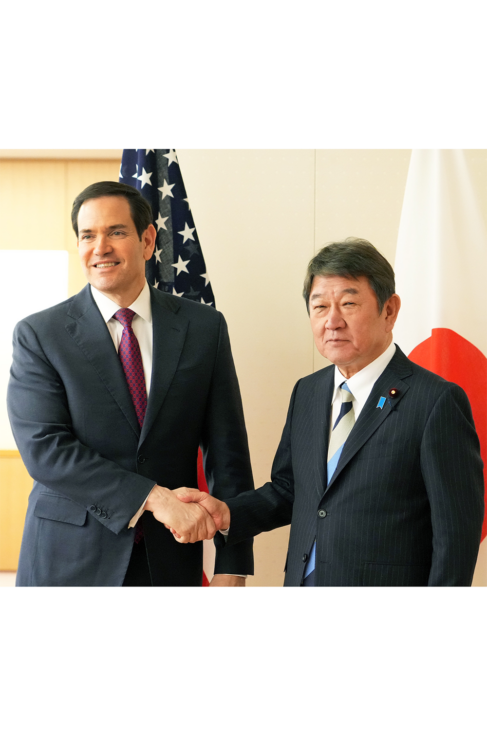
Hosoya Yuichi: With the inauguration of the Takaichi Sanae administration on October 21 last year, you assumed the post of Minister for Foreign Affairs for the second time. Immediately after taking office, you actively followed a busy diplomatic schedule together with the Prime Minister, starting with meetings related to the Association of Southeast Asian Nations (ASEAN) and a Japan-U.S. Summit Meeting. Motegi Toshimitsu: From right after the launch of the administration, important diplomatic events followed one after another, and it turned into something of a rocket start as I attended many meetings. I made three successive overseas trips: ASEAN-related Summit Meetings (October 26–27) in Kuala Lumpur, Malaysia; an Asia-Pacific Economic Cooperation (APEC) Ministerial Meeting (October 29–31) in Gyeongju, the Republic of Korea; and a G7 foreign ministers’ meeting (November 11–12) in Niagara, Canada. In addition, by the end of December I had held ...
[Read more]

Electoral System Reform as a Political Issue Along with the reduction of seats in the Lower House, radical reform of the electoral system has emerged as a major issue in Japanese politics. On October 20, 2025, upon the inauguration of the Takaichi Sanae administration, the “Coalition Government Agreement” signed between the Liberal Democratic Party (LDP) and the Japan Innovation Party (JIP) included a goal to reduce the number of Lower House seats by 10 percent. Furthermore, it incorporated a commitment to consider the abolition of the parallel electoral system (combining single-member districts and proportional representation, hereinafter “parallel system”) and the introduction of a multi-member district system (MMD). Although the bill was ultimately placed under continued deliberation, on December 5 of the same year, a bill was submitted to reduce the Lower House membership by 45 or more seats. This bill contained a provision for ...
[Read more]
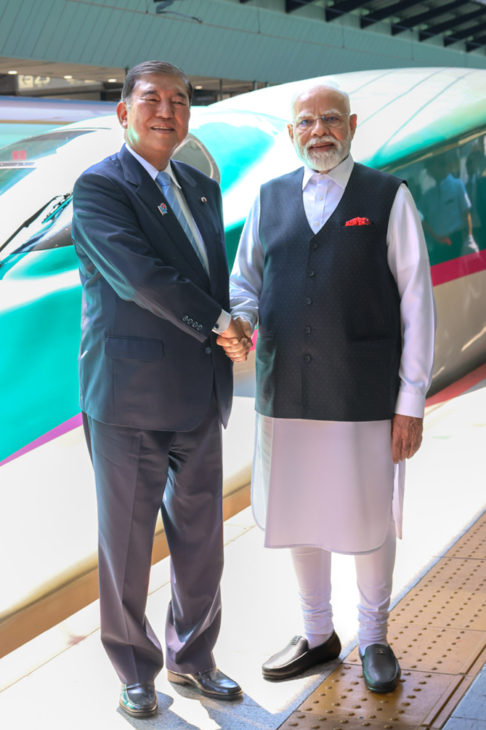
Building upon the unprecedented strengthening of Japan-India ties achieved under the Modi administration, both countries should articulate a vision for “the next decade” based on achievements to date. As we enter 2025, the diplomatic environment surrounding India is expected to become more challenging. The summit reached a broad agreement on security, the economy, and people-to-people exchanges. In addition to bilateral relations, strengthening multilateral relations is also important. The relationship between India and Japan is beyond just diplomatic relations; it is a cultural and trust based relationship. We see our progress in each other’s progress. … I remember, when we started the Vibrant Gujarat Summit 20 years ago, Japan was one of the key partners. Just think about it, a developing country, a small state [Gujarat] organizing an investment summit, and a developed country like Japan being its partner. This shows how strong the ...
[Read more]
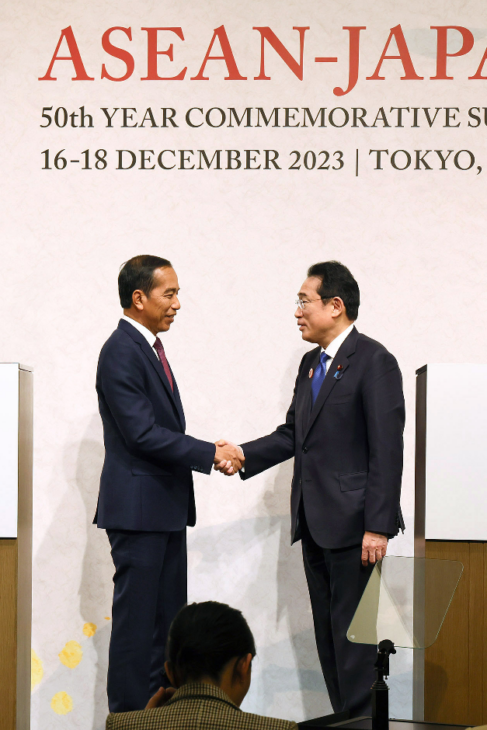
As the international order faces upheaval, ASEAN-Japan relations require a timely upgrade. Professor Suzuki Sanae explores the key points and future directions of this partnership. Expand opportunities for Japan to deepen its understanding of ASEAN. Foster proactive participation in ASEAN cooperation projects. Lead Indo-Pacific cooperation through inclusivity and the rule of law. In 2023, Japan and ASEAN celebrated the 50th anniversary of their friendship and cooperation. The relationship traces its origins back to 1973, the year the Japan-ASEAN Synthetic Rubber Forum was held. This forum was convened at the request of the ASEAN side to discuss the economic damage faced by natural rubber-producing and exporting countries, such as Indonesia and Malaysia, due to the expansion of Japan’s synthetic rubber exports. In the 1970s, ASEAN nations harbored deep-seated distrust toward Japan, fueled by postwar reparations, the influx of Japanese companies tied to official development ...
[Read more]

In 2025, major powers intensified their diplomatic engagement with Central Asia. What is the strategy for Japan—a long-standing partner in the region—to ensure it does not “lose its presence”? Major powers hold an overwhelming advantage in terms of historical ties and economic scale. While China is strengthening logistics, Russia is struggling with its declining presence. Japan is required to leverage its accumulated diplomatic experience and demonstrate its “true commitment.” On December 20, 2025, the first Summit of the “Central Asia plus Japan” Dialogue was held. Originally, this summit was scheduled to take place in Astana, Kazakhstan, in August 2024 to coincide with the 20th anniversary of the “Central Asia plus Japan” Dialogue framework. However, due to an earthquake off the coast of Kyushu and the issuance of the Nankai Trough Earthquake Extra Information bulletin, then-Prime Minister Kishida Fumio canceled his visit, and the summit ...
[Read more]

Diplomatic diversification is advancing among US allies. What possibilities do various minilateral frameworks offer? “Hedging-based cooperation” is expanding as a means to mitigate excessive strategic and economic dependence on the United States. Efforts are underway to restructure the Quad’s agenda, while new frameworks that do not include the United States are simultaneously emerging. Regional actors are increasingly seeking to “engage” in shaping a multilayered order, rather than being compelled to make a binary “choice” between competing systems led by the United States and China. In 2025, international politics reached a critical inflection point. Most significantly, the United States—Japan’s sole ally and the long-standing anchor of stability in the Indo-Pacific—has clearly begun to reorient its diplomatic course toward an “America First” policy under the second Donald Trump administration, emerging as a force that shakes the very foundations of the existing international order. However, the destabilization ...
[Read more]

The innovations in quantum computers are bringing about immeasurable changes to industry and society. At the same time, however, international competition for technological superiority is intensifying, and we have reached a critical juncture where Japan’s standing is being called into question. The future opened by quantum computers and security threats The digital society, which forms the foundation of modern civilization, has been built upon the staggering pace of progress in semiconductor technology. However, this progress is approaching its physical limits. The technology that holds the potential to fundamentally break through this sense of stagnation and fundamentally change the nature of computation is “quantum computers.” They are entirely different from conventional computers, bringing about a leap in computational power by orders of magnitude. As a result, for specific problems, they are expected to solve in just a few seconds calculations that would take a conventional ...
[Read more]

Since the revelation of the political fundraising scandal involving factions of the Liberal Democratic Party (LDP), the landscape of Japanese party politics has been transformed through two national elections: the Lower House election in October 2024 and the Upper House election in July 2025.[1] The situation has changed at a dizzying pace, characterized by the defeat of the LDP-Komeito coalition in the Lower House election, the birth of a minority government, Komeito’s departure from the coalition, the rapid surge of the Democratic Party for the People (DPP), the sharp expansion of support for Sanseito, and the Japan Innovation Party (JIP) joining the “coalition government” in a confidence and supply agreement (non-cabinet cooperation). The LDP’s response to the political fund scandal was insufficient to convince voters, and combined with the burden of rising prices, the party was abandoned by the electorate. Having lost their majority ...
[Read more]
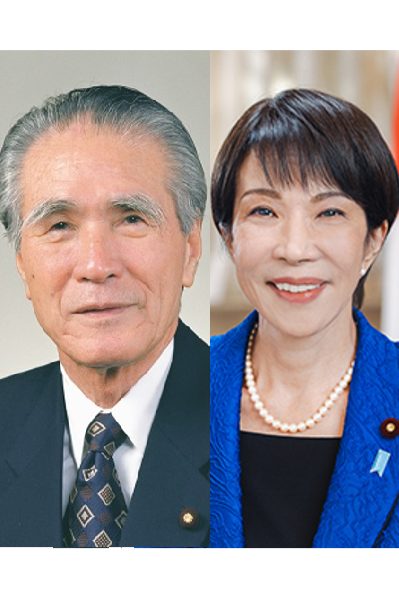
On October 21, 2025, the Takaichi Sanae administration was inaugurated. It goes without saying that Takaichi is the first female Prime Minister in Japan’s constitutional history. Furthermore, the coalition between the Liberal Democratic Party (LDP) and Komeito, which began in 1994, was dissolved, leading to a realignment of the coalition between the LDP and the Japan Innovation Party (JIP). Just four days prior to this, it was reported that former Prime Minister Murayama Tomiichi had passed away at the age of 101. In 1994, the “acrobatic” coalition in which the LDP installed Murayama, the Chairman of the Japan Socialist Party (JSP), as Prime Minister served to inform the world that the “1955 System,” which had long persisted throughout the postwar era, had truly come to an end in both name and reality.[1] Nearly thirty years have passed since the Murayama administration was established in ...
[Read more]


