Diplomacy - Japan Policy Forum
Home > Topics > Diplomacy

Archives Diplomacy

No.
Vol. 5, Diplomacy  Aug. 12, 2026

Parallels Between Takaichi Sanae and Konoe Fumimaro: Can Takaichi Diplomacy Learn from the Failures of a Popular Wartime Prime Minister?

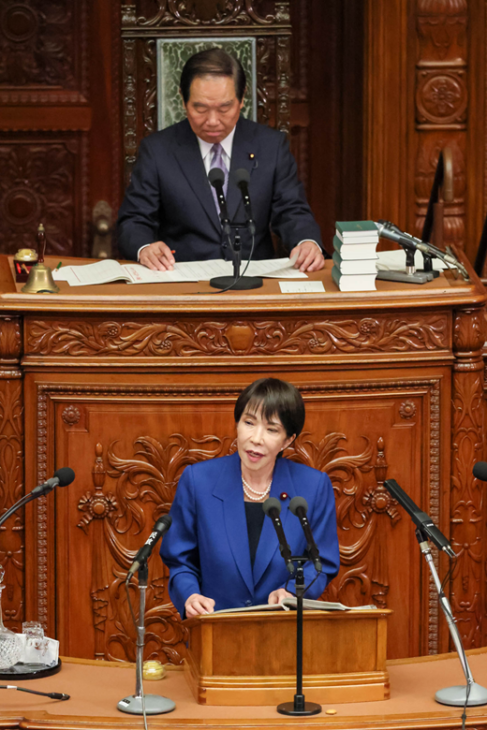
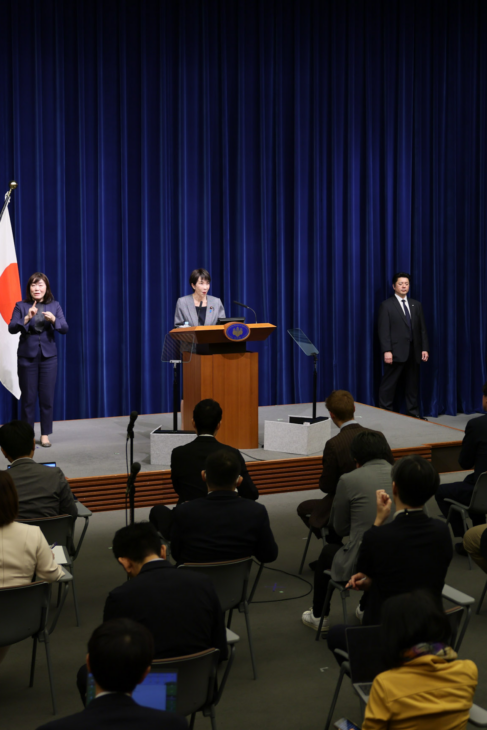
The international community is being tossed about by the actions of US President Donald Trump, including the attacks on Iran. Amidst this chaotic international situation, the Japan–US alliance, the axis of Japanese diplomacy, stands at a major crossroads. Six months after she took office, how should we evaluate the diplomacy of Prime Minister Takaichi Sanae? And where should Japanese diplomacy head from here? The Bungeishunju editorial department spoke with Nakanishi Hiroshi, a professor at the Graduate School of Kyoto University specializing in international politics, who served as an expert member of the Advisory Panel on Reconstruction of the Legal Basis for Security established under the Abe Shinzo administration. The year 2026 opened with astonishing news as the United States launched a military operation in Venezuela, detaining President Maduro and his wife. At the end of February, a large-scale attack on Iran was carried out, ... ... [Read more]

No.
Vol. 5, Diplomacy  Aug. 12, 2026

Defense Spending Will Shape the Future of the Japanese Economy

At a time when defense spending is expanding worldwide, if properly designed, it can serve as a catalyst for transforming economic structures. This article provides a multifaceted analysis of its impact on the Japanese economy. Vladimir Lenin, who established the Bolshevik administration during the Russian October Revolution (November 1917), sent a telegram to the Army Commander-in-Chief on November 29, 1918. “As our troops push on westward and into the Ukraine, provisional regional Soviet governments are being formed to back up the Soviets in the localities. This has the advantage of depriving the Ukrainian, Lithuanian, Latvian and Estonian chauvinists of a chance to regard our troop movements as occupation and of creating a favourable situation for further advance” (Lenin’s Collected Works, Progress Publishers, Moscow, 1965, Volume 28, pg. 225). Imperial Russia had fallen, but Ukraine and the Baltic states were not permitted their independence. A ... ... [Read more]

No.
Vol. 5, Diplomacy  Aug. 5, 2026

The “Creative Power” National Security Initiative: Integrating Security and Economic Strategy

In an era marked by a harsh geopolitical environment and the growing weaponization of the economy, how should Japan redesign its preparedness? Sagara Yoshiyuki presents a novel framework bridging national defense with fiscal, financial, and supply-capacity resilience, formulated by the Study Group on the Integrated Strategy for Defense, Economic and Fiscal Policy. Amid Escalating Great-Power Competition The security environment surrounding Japan has become exceptionally severe. Russia’s invasion of Ukraine has continued for over four years, with modern warfare being forged on the battlefield in cycles of mere weeks. China’s formidable military power has expanded from the periphery of Taiwan and the Senkaku Islands to the east of Iwo Jima, shifting the balance of power in the Pacific. North Korea is experiencing a surge in demand as it mass-produces and supplies artillery shells and missiles to Russia through its robust military production base. This deepening ... ... [Read more]

No.
Vol. 5, Diplomacy  Aug. 4, 2026

Trials facing Japanese diplomacy beyond “Plan A′”: A new course demanded by multiple wars

The world has entered a new “interwar period” laden with unprecedented risks. Japan is now called upon to pursue a more autonomous survival strategy. Multiple wars involving the United States and Russia are interconnected, and the crisis continues to expand In addition to stepping up self-reliance efforts, Japan should advance the diversification of its security cooperation Japan needs to shift its relations with China from a “strategic and mutually beneficial” relationship to one of “adversarial coexistence” Due to the ongoing war involving the United States, Israel, and Iran, the Middle East has fallen into a state of turmoil. Even if a full-scale ceasefire is established in the future, things will likely never return to the state they were in before the attacks. Meanwhile, Russia continues its aggression against Ukraine and is intensifying its paramilitary attacks on Europe. Military cooperation among Russia, China, and North ... ... [Read more]

No.
Vol. 5, Diplomacy  Jul. 29, 2026

The Reality Revealed by China’s “War Preparations”: How Far Can the Three Security Documents Go?

China is attempting to redesign the entire nation, including its economy and governance, into a form capable of withstanding conflict. Rather than obsessing over predictions regarding when a war might break out, Japan should address the pressures accumulating in peacetime and enhance the resilience of government decision-making and private infrastructure. What is the essence of China’s “preparation for war”? The “preparation for war” being pursued by China’s Xi Jinping administration does not directly imply an invasion of Taiwan tomorrow. However, it would also be a mistake to dismiss it as an empty political slogan. What is currently underway within the Chinese leadership is the process of restructuring peacetime governance, military operations, industrial policy, and national mobilization into a framework that can easily transition to a contingency setting. What Japan must observe is not predictions of dates regarding “when China will attack,” but rather the ... ... [Read more]

No.
Vol. 5, Diplomacy  Jul. 24, 2026

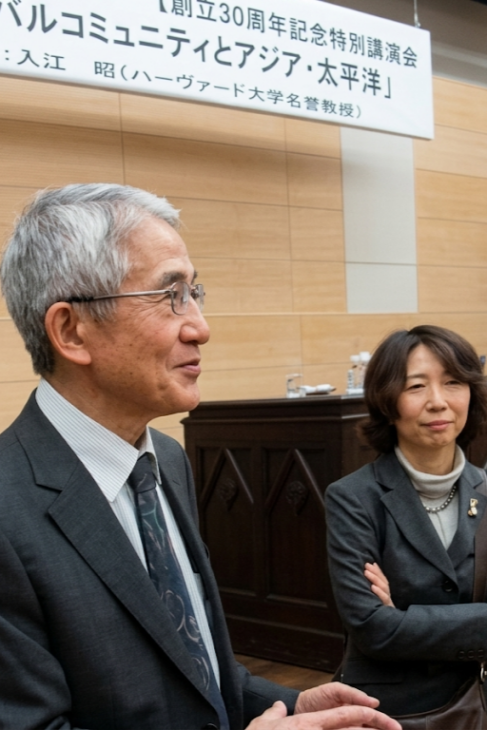
In Memoriam: Dr. Iriye Akira, Professor Emeritus at Harvard University—The Broad Perspective and Ideals That Championed “The Internationalization of History”

Dr. Iriye Akira, Professor Emeritus at Harvard University, passed away on January 27, 2026. After graduating from high school, Dr. Iriye moved to the United States to study using a scholarship from the Grew Foundation (known as the Grew-Bancroft Foundation). Joseph Clark Grew (1880–1965), after whom the foundation was named, served as the US Ambassador to Japan before World War II and was known for his pro-Japanese stance. The path that Dr. Iriye walked throughout his life seems to overlap with the history of postwar US-Japan relations. Dr. Iriye’s masterpiece on diplomatic history, Kyokuto Shin-chitsujo no Mosaku (originally published in English as After Imperialism: The Search for a New Order in the Far East, 1921–1931 in 1965), was a pioneering work of multi-archival research based on the collection and rigorous reading of primary sources in multiple languages. Furthermore, by exploring the policies of the ... ... [Read more]

No.
Vol. 4, Diplomacy  May. 14, 2026

Special Dialogue: Prospects for Japanese Diplomacy in 2026—Advancing the Strategies of the “Free and Open Indo-Pacific” Further

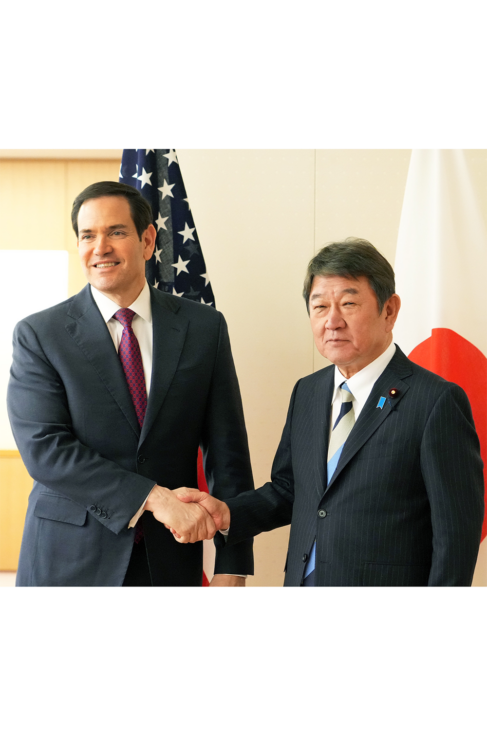
  Hosoya Yuichi: With the inauguration of the Takaichi Sanae administration on October 21 last year, you assumed the post of Minister for Foreign Affairs for the second time. Immediately after taking office, you actively followed a busy diplomatic schedule together with the Prime Minister, starting with meetings related to the Association of Southeast Asian Nations (ASEAN) and a Japan-U.S. Summit Meeting. Motegi Toshimitsu: From right after the launch of the administration, important diplomatic events followed one after another, and it turned into something of a rocket start as I attended many meetings. I made three successive overseas trips: ASEAN-related Summit Meetings (October 26–27) in Kuala Lumpur, Malaysia; an Asia-Pacific Economic Cooperation (APEC) Ministerial Meeting (October 29–31) in Gyeongju, the Republic of Korea; and a G7 foreign ministers’ meeting (November 11–12) in Niagara, Canada. In addition, by the end of December I had held ... ... [Read more]

No.
Vol. 4, Diplomacy  Apr. 13, 2026

Prime Minister Modi’s Visit to Japan: Opening a “Golden Chapter” in Japan-India Relations

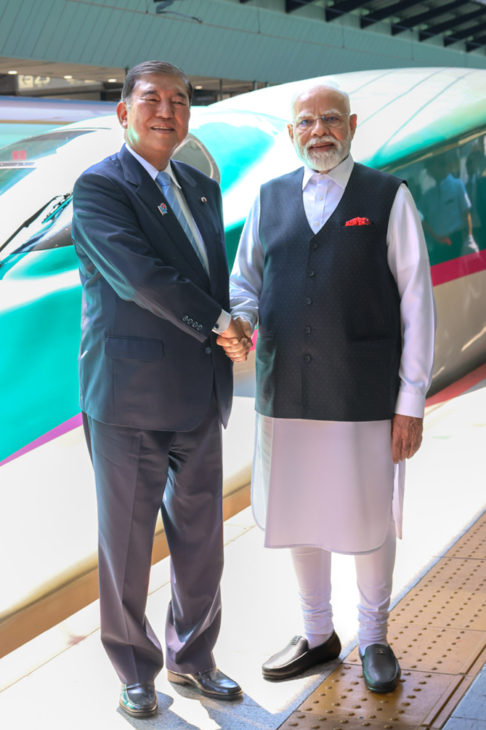
Building upon the unprecedented strengthening of Japan-India ties achieved under the Modi administration, both countries should articulate a vision for “the next decade” based on achievements to date. As we enter 2025, the diplomatic environment surrounding India is expected to become more challenging. The summit reached a broad agreement on security, the economy, and people-to-people exchanges. In addition to bilateral relations, strengthening multilateral relations is also important. The relationship between India and Japan is beyond just diplomatic relations; it is a cultural and trust based relationship. We see our progress in each other’s progress.   … I remember, when we started the Vibrant Gujarat Summit 20 years ago, Japan was one of the key partners. Just think about it, a developing country, a small state [Gujarat] organizing an investment summit, and a developed country like Japan being its partner. This shows how strong the ... ... [Read more]

No.
Vol. 4, Diplomacy  Mar. 27, 2026

From Support to Participation: The Future of ASEAN-Japan Relations

  As the international order faces upheaval, ASEAN-Japan relations require a timely upgrade. Professor Suzuki Sanae explores the key points and future directions of this partnership. Expand opportunities for Japan to deepen its understanding of ASEAN. Foster proactive participation in ASEAN cooperation projects. Lead Indo-Pacific cooperation through inclusivity and the rule of law.   In 2023, Japan and ASEAN celebrated the 50th anniversary of their friendship and cooperation. The relationship traces its origins back to 1973, the year the Japan-ASEAN Synthetic Rubber Forum was held. This forum was convened at the request of the ASEAN side to discuss the economic damage faced by natural rubber-producing and exporting countries, such as Indonesia and Malaysia, due to the expansion of Japan’s synthetic rubber exports. In the 1970s, ASEAN nations harbored deep-seated distrust toward Japan, fueled by postwar reparations, the influx of Japanese companies tied to official development ... ... [Read more]

No.
Vol. 4, Diplomacy  Mar. 26, 2026

Japan’s Strategy as a Pioneer in Central Asian Diplomacy: Observations from the First “Central Asia plus Japan” Dialogue Summit

In 2025, major powers intensified their diplomatic engagement with Central Asia. What is the strategy for Japan—a long-standing partner in the region—to ensure it does not “lose its presence”? Major powers hold an overwhelming advantage in terms of historical ties and economic scale. While China is strengthening logistics, Russia is struggling with its declining presence. Japan is required to leverage its accumulated diplomatic experience and demonstrate its “true commitment.” On December 20, 2025, the first Summit of the “Central Asia plus Japan” Dialogue was held. Originally, this summit was scheduled to take place in Astana, Kazakhstan, in August 2024 to coincide with the 20th anniversary of the “Central Asia plus Japan” Dialogue framework. However, due to an earthquake off the coast of Kyushu and the issuance of the Nankai Trough Earthquake Extra Information bulletin, then-Prime Minister Kishida Fumio canceled his visit, and the summit ... ... [Read more]