


Is This the Potential of Japan Escaping the “Deflationary Trap”?
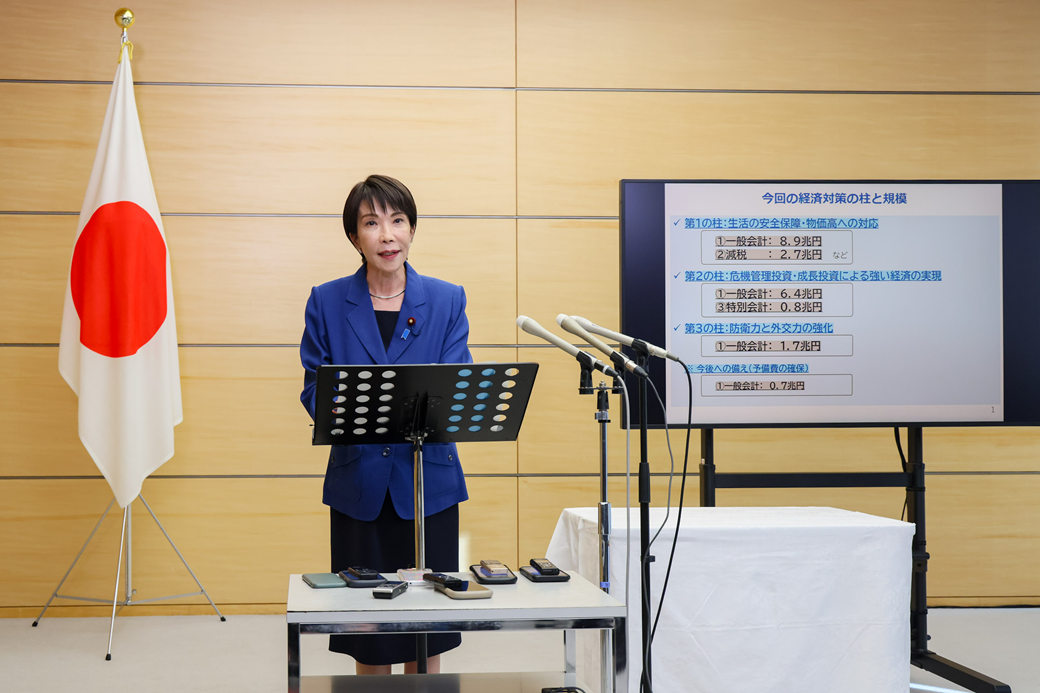
On November 21, 2025, at a press conference regarding “Comprehensive Economic Measures and Other Matters,” Prime Minister Takaichi Sanae stated: “Responsible and proactive public finances entail a purpose-driven and forward-looking approach to fiscal policy. This line of action is not in any way about pursuing size simply for the sake of expansion. We will thoroughly implement the principle of spending wisely while employing strategic fiscal policies that have the aim of safeguarding people’s daily lives and forging a strong economy.”
Photo: Cabinet Public Affairs Office
Is the current overheating of the Japanese economy a temporary enthusiasm, or is it a manifestation of structural change? Voice spoke with Professor Itoh Motoshige about the course of the Japanese economy in an era of exiting deflation and navigating the AI revolution.
An “Exit Bonus” Supporting the Japanese Economy
There is no doubt that the Japanese economy, and indeed the global economy, is currently reaching a major turning point. In Japan, an era of deflation continued for more than two decades starting from the early part of this century. While there were various underlying factors behind deflation, as a result, companies became extremely reluctant to invest, wages failed to rise, and consumer spending stagnated accordingly.
Since the COVID-19 pandemic, however, that situation has been changing significantly. The Japanese economy has gradually transitioned from a deflationary environment to an inflationary one. Rather than being brought about directly by government policies, this initially had a strong aspect of imported inflation. Of course, this included undesirable inflationary factors such as rising crude oil prices. As a result, however, the Japanese economy is turning from a deflationary economy into an inflationary one.
I often use the term “deflationary trap,” and I believe the Japanese economy is currently being liberated from it. What is the deflationary trap? It is a state in which deflation itself becomes a factor that further worsens the economy.
There are several key points to deciphering the current Japanese economy, the first of which is interest rates. During the deflationary period, nominal interest rates were indeed low, but due to the zero-interest-rate constraint, they could not be lowered significantly. Meanwhile, because prices did not rise, real interest rates did not fall enough to sufficiently encourage corporate investment. Furthermore, as the view that deflation would persist spread among companies and households, a cautious stance took root in both investment and consumption. Consequently, corporate earnings and growth expectations struggled to rise, and stock prices continuously faced difficulty in sustaining an upward trend.
Today, however, price increases are progressing, making the situation vastly different from that of the deflationary period. Although nominal interest rates have also begun to rise, the speed of price increases was initially faster, causing real interest rates to drop significantly. As a result, companies’ appetite for investment and the inflow of funds into asset markets have been encouraged, providing a boost to rising stock prices and real estate values.
The second point is public finance. Under deflation, tax revenues struggle to grow, making fiscal management difficult. What is even more serious is that it becomes difficult to improve the government debt-to-GDP ratio; if nominal GDP does not expand, the debt-to-GDP ratio is hard to lower, making the government hesitant to take bold fiscal action.
Currently, however, price increases are advancing, and the fiscal environment has improved compared to the deflationary period. Tax revenues are also increasing, and the expansion of nominal GDP makes it easier for the debt-to-GDP ratio to improve. Against the backdrop of these environmental changes, since the Kishida Fumio administration and particularly under the Takaichi Sanae administration, there has been a growing stance toward bolstering growth through active fiscal policy. Support for semiconductor investment can be positioned as one symbolic example of this.
Furthermore, corporate behavior has changed significantly by escaping the deflationary trap. During the deflationary period, companies shrank amid falling prices and were forced to be cautious about investment. Because investment did not increase, deflation persisted, and because deflation persisted, investment failed to increase further—falling into a negative spiral. But when prices begin to rise, companies cannot maintain their management unless they raise prices. Of course, raising prices is not simply a matter of rewriting price tags. To get consumers and business partners to accept price hikes, companies must offer higher added value and construct new business models. Reforms to management itself are required there. Consequently, as Japanese companies escape the deflationary trap, they have come to adopt a more forward-looking management posture than before.
Even more important are wages. During the deflationary period, wages were fixed in place at many companies. The fact that wages did not rise was itself a factor reinforcing deflation, and it was by no means a desirable situation for consumers either. In recent years, however, wage increases have been observed. Even assuming that a wage hike of around 3% is achieved across Japan as a whole, behind that number exist companies that are unable to raise wages. In other words, an average of 3% means that at some companies, wage increases of, for example, 6% or even higher are being carried out. This momentum in wage increases is encouraging the mobility of human resources and inter-company competition, vitalizing the metabolism of the Japanese economy.
In this way, by escaping the deflationary trap, the Japanese economy as a whole is heading toward a highly favorable situation. Amid this, corporate capital investment is also increasing significantly. To be sure, this bonus from exiting the deflationary trap will not last forever. Nevertheless, at least at the present moment, it can be said that its benefits are serving to support the Japanese economy.
The Direction of “Responsible and Proactive Public Finances” Is Correct
The process of escaping deflation and transitioning to inflation brings many positive effects to the Japanese economy. As I have just noted, however, these benefits will not last forever. As inflation takes root and becomes priced into the economy as a whole, the “bonus” from exiting deflation will fade.
The most easy-to-understand factor is interest rates. Around 2025, nominal interest rates also began to rise, and the gap with the rate of price increases gradually narrowed. As nominal interest rates rise, the negative margin of real interest rates shrinks. As a result, the strong tailwinds that have supported investment and asset prices up to now will also gradually weaken.
Public finance requires an even more cautious look. At present, because tax revenues are increasing due to inflation and nominal GDP is expanding, the fiscal environment is improving. However, if interest rates continue to rise in the future, interest payment expenses associated with the refinancing of government bonds will increase, and the burden on government finances will gradually grow larger.
That said, the Japanese government is not in a situation where it faces immediate difficulties at the present moment. This is because many of the government bonds currently held were issued during the era of ultra-low interest rates.[1] However, as the refinancing of government bonds progresses and issuances at higher interest rates increase in the future, the situation will change. A full-scale surfacing of these issues will likely occur on a timeline of three to five years down the road. That is precisely why it is important now, while tailwinds are blowing for the Japanese economy, to consider how to make use of them.
The single biggest problem of the deflationary era was that companies shrank excessively. They withheld investment and did not raise wages, and as a result, the vitality of the Japanese economy as a whole was lost. The role of the government is extremely large in terms of how to untangle that shrunken state. Now is the very time when the government needs to eliminate the structural stagnation that the deflationary economy possessed as quickly as possible. In that sense, there is very great significance in the government actively advancing growth strategies.
For that reason, regarding the concept of “responsible and proactive public finances” advocated by the Takaichi administration, I evaluate its direction as being correct. However, what will be called into question from now on is whether it can truly be executed, and whether it can be advanced in a manner that does not place an undue burden on public finance while closely reading market trends. To be sure, being mindful of the market does not mean alternating between joy and despair over immediate interest rate fluctuations or stock price movements. Even if long-term interest rates were to rise at this very moment, operations would not come to an immediate standstill. This is because many of the outstanding bonds were issued at low interest rates.
What is truly important is to prepare policy instruments from now that can respond when the time comes, looking ahead to what kind of risks will arise three to five years down the road if long-term interest rates continue to rise. Being mindful of the market means conducting such medium- to long-term risk management. The success or failure of the Takaichi administration’s economic policies depends on whether it can execute growth strategies while keeping an eye on future fiscal risks.
An “AI Boom” Significantly Different From the “IT Boom”
When considering the background of current high stock prices, the presence of the so-called AI boom is also extremely significant. Needless to say, this is not a phenomenon unique to Japan, but a story that involves the global economy as a whole. What is fascinating is that AI is no longer acting as a standalone industry, but is exerting various impacts while becoming intricately intertwined with a wide range of industries.
I would like to consider this while tracing the flow of history. In the 1990s, particularly in the second half, the Internet spread rapidly in the United States, and the digital economy expanded. This was the era of the so-called IT boom. American companies, led by Microsoft, propelled the global economy, with US technological strength and economic vitality serving as the driving forces of growth. However, that trend changed significantly with the collapse of the IT bubble in 2000. Thereafter, emerging economies came to support the growth of the global economy, as marked by what was called the era of BRICs. Capital from advanced nations flowed into emerging markets, and movements seeking new investment opportunities continued.
However, that flow was also shaken tremendously by the Global Financial Crisis (GFC) in 2008. Even after that, the global economy experienced various twists and turns. Although China exceptionally continued high growth, its economic structure gradually shifted toward being driven by domestic demand. As a result, an era continued in which it was difficult to find a new engine for the global economy to replace the IT revolution of the 1990s or the emerging markets boom of the 2000s.
It was amid this context that AI made its entrance. In a sense, AI is a technology that sits on an extension of the Internet revolution. However, my understanding is that its impact could far surpass that of the Internet. What is important here is that the global economy of the past thirty years or so basically took on the color of long-term stagnation. In economics, this is referred to as “Secular Stagnation.”
Over these past thirty years, long-term interest rates around the world continued to decline, and in 2008 deflationary tendencies intensified. One major reason for this was that advances in digital technology did not necessarily entail large-scale investment in physical assets. In the past, when steel and automobiles were at the center of economic growth, huge investments in factories and equipment were necessary. However, even as the Internet spread, investment demand on a scale comparable to that never ultimately emerged. As a result, surplus funds flooded the world, and long-term interest rates kept falling.
AI is significantly different in this regard. AI possesses a nature where the technology itself generates massive investment demand. Huge investments in semiconductor factories and the commitment of enormous capital into data center construction are symbolic examples. Investments in related fields such as power supply, communications, and cooling equipment expand simultaneously. What is occurring now is that new technological innovation called AI is forcefully inducing investment, thereby vitalizing the economy as a whole.
If this trend continues, there is a possibility that developments will unfold differently from the past IT boom. In the past, even when technological innovation occurred, it did not lead to sufficient investment demand. With AI, however, technological innovation itself is giving birth to investment. Speaking with Japanese corporate managers, I can truly feel that momentum; when listening to people at semiconductor material manufacturers, semiconductor manufacturing equipment makers, or related companies, investment related to AI and data centers is increasing with incredible momentum, and those expectations are reflected in stock prices as well.
What is key, however, is how long this situation will persist. Expectations for the technology of AI itself are extremely high. Yet, with any technological innovation, optimism and pessimism coexist. If asked whether the current investment boom is truly sustainable, optimism is likely dominant at the present moment. Although various factors of anxiety exist in the global economy, such as Middle Eastern situations and geopolitical risks, AI-related technology possesses enough power to sweep away such pessimism. Precisely because many people think so, capital from all over the world is concentrating in AI-related fields.
Furthermore, what is even more important is the point I mentioned earlier: that AI is not a technology belonging solely to specific industries. Beyond major IT companies and semiconductor manufacturers developing AI, it is a general-purpose technology applicable across all industries, including manufacturing, logistics, retail, and finance. AI harbors the potential to transform industrial structures themselves. Considering this, it is hard to imagine that this wave will vanish in a short period of time. Naturally, there will be adjustment phases along the way. Nevertheless, the structural changes brought about by AI are likely to remain a major driving force for the global economy in the future.
Japan Beginning to Be Chosen as an Investment Destination
Amid these changes in the global economy, what kind of strategy should Japan adopt? First and foremost, what is important is its relationship with the United States. At present, Japan is also being dragged around by every move of President Donald Trump; however, he will not serve as president forever. For Japan, it is necessary not only to respond to the Trump administration, but also to consider how to build a relationship with the United States while looking beyond it.
On the other hand, the future of the Japanese economy cannot be discussed while looking at the United States alone. US exports account for only about 10% of total global exports, and its imports are also around 15%. While there is no doubt that it is a huge presence, it is also a fact that the remaining 80% or more of trade is conducted by other countries. Therefore, even if the United States were to become insufficiently active in maintaining free trade or the global economy, it is extremely important to create a mechanism in which other countries cooperate to maintain the flattening of the economy.
In fact, such movements have already begun. The United Kingdom joined the CPTPP (Comprehensive and Progressive Agreement for Trans-Pacific Partnership), and the number of countries desiring to participate will likely increase in the future. South Korea has also finalized a policy to apply for membership, and various examinations are progressing regarding the strengthening of cooperation with the EU. Further sophistication is also being pursued for Japan’s economic partnership agreements with the Mercosur countries in South America (whose full member states are Argentina, Brazil, Paraguay, Uruguay, and Bolivia). Of course, while having lost power, the existence of the WTO itself remains important.
The global economy cannot be considered without the United States. However, rather than relying solely on the United States, efforts are demanded to maintain and develop the free trade system built up to now on a multilateral basis. Within that context, the relationship with China will also likely have to be continuously examined.
Another point worthy of attention is changes in global supply chains. Currently, protectionism is strengthening worldwide in terms of trade. When it comes to investment, however, the situation is not necessarily the same. While the Trump administration takes a very harsh stance toward imports, it rather welcomes investment in the United States by foreign companies.
For example, Nippon Steel possesses world-leading competitiveness in high-grade steel, and its important market is the United States. However, due to high tariffs imposed by the Trump administration, export from Japan is difficult for the company. As a result, Nippon Steel selected a strategy to produce and sell within the United States through its acquisition of US Steel. Ironically, the high-tariff policy of the United States is serving the role of protecting Nippon Steel’s operations within the United States.
In short, it is no longer an era where globalization can be considered simply through “trade” alone. New supply chain strategies including foreign direct investment and local production are becoming increasingly important. And within that, Japan’s role is also changing. Japanese companies up to now actively expanded overseas against the background of domestic market stagnation and a deflationary environment. Today, however, the domestic Japanese market is beginning to be re-evaluated as an investment destination. Taiwan Semiconductor Manufacturing Company (TSMC) setting up in Kumamoto Prefecture is one prime example.
Due to the intensification of US-China confrontation, semiconductor companies are being forced to diversify their production bases. As for TSMC, while advancing investments into the United States, it is expanding investments into Japan at the same time. This is no mere coincidence. Nor is this a story limited to the semiconductor industry. Japan possesses political stability, high technological capability, and excellent infrastructure, and as geopolitical risks rise, its value is being re-evaluated anew.
Looking back, Japan was often seen as lacking attraction as an investment destination in East Asia compared to China or South Korea. Japan also had a closed image, and it was not a country into which foreign capital actively flowed. Today, however, the situation has changed. While investment in ASEAN continues to be important, Japan’s superiority in advanced technology fields remains large. As investment in China grows more cautious along with geopolitical risks, an increasing number of foreign companies are considering investment in Japan as an option, with the weak yen also serving as a tailwind.
Furthermore, the posture of Japanese companies themselves is changing. During the deflationary period, they refrained from domestic investment and prioritized overseas investment, but in recent years, their appetite for domestic investment has been rising. The government is also backing domestic investment, and investment is being vitalized in various fields starting with renewable energy, not just semiconductors. Looking at these movements, Japan is being repositioned in the global economy not as a mere market, but once again as an important production base and investment destination. In that sense, Japan’s economic positioning is changing.
What Is Demanded in the “Era of Industrial Policy”
At present, policies in which governments globally provide fiscal support to bolster private investment are being emphasized. This is so-called industrial policy. Regarding industrial policy, the truth is that the United States, Europe, and China even from an earlier stage, have actively engaged in it. It can be said that the global economy as a whole has entered an “era of industrial policy.” Within this environment, recognition that there is no reason for Japan alone to do nothing has strengthened rapidly within Japan over the past few years.
In addition, Japan has its own inherent circumstances. The single biggest problem with the deflation that lasted for more than twenty years lies in the fact that Japanese companies did not conduct sufficient investment domestically. While overseas investment might have been active, investment within Japan stagnated. Thus, the Japanese economy fell into a state close to hollowing out, and to rectify this situation, domestic investment must be vitalized. As a means to achieve that, the idea that fiscal policy should be actively utilized is taking root.
Moreover, as mentioned at the beginning, an inflation tailwind is currently blowing. Tax revenues are also increasing, and fiscal capacity has grown larger compared to before. Precisely because we are in such an environment, it can be said that we are in a situation where it is easy to advance industrial policy. Against that backdrop, considering which fields Japan should focus on going forward, what is first important is how to utilize existing strengths. What supported the conventional Japanese economy was heavy, thick, long, and large industries, which in corporate terms are represented by presences like Toyota Motor and Hitachi. What is important is how such companies can upgrade themselves amid the AI era and the new globalization.
I believe the source of Japan’s competitiveness lies in the foundation of such manufacturing industries. Whether Japan can transform while maintaining those strengths is an extremely important issue for the Japanese economy. Building upon that, what should still be paid attention to are the fields of AI and semiconductors, and more broadly, the digital economy.
Of course, US companies sit at the center of the AI revolution, but there are opportunities for Japan as well. This is because in fields such as semiconductor manufacturing equipment and materials, Japan still possesses high competitiveness. The fact that stock prices of companies like Tokyo Electron, Shin-Etsu Chemical, and JX Metals are highly evaluated is an expression of such expectations. These fields could become Japan’s new growth industries following automobiles and home appliances. What will be called into question from now on is in what manner Japan can provide value to and capture growth from the AI revolution led by the United States.
On the other hand, how to view economic security has also become an important issue. When speaking of economic security, it sounds like a grand theme, but the concept itself has actually existed for a long time. A typical example is food security, where discussions on how to protect agriculture and food have continued for over thirty years. And at that time, the reality that it was unrealistic to argue that food imports from overseas should be stopped completely to rely solely on domestic supply was understood by many people. Even so, it was also not desirable for Japan’s agricultural foundation to be lost due to complete liberalization.
Maintaining a certain level of domestic production capacity while enjoying the benefits of international trade; creating a framework that disperses import sources without relying excessively on a single country or region—such flexible mechanisms are the essence of security, and the exact same can be said for economic security. Of course, reinforcing domestic industrial foundations is important. Particularly in fields with deep connections to security, such as defense and advanced technologies, a certain level of domestic capability must be secured. However, what is even more important than that is dispersing risks while maintaining cooperation with overseas partners. Whether in corporate management or state governance, what is demanded—though it may be a mundane conclusion—is ultimately that balance.
Postponing Reforms Is No Longer Permissible
In the era ahead, both companies and the government must not operate on the premise that nothing will happen, but must constantly factor in that something will happen. On top of that, in thinking about Japan’s vision for the future, what is most important is none other than exiting the sense of stagnation that was formed during the long-lasting deflationary era. For example, population decline is unavoidable, but population shrinking and society losing vitality are not actually completely synonymous. If what needs to be done is carried out firmly, it should be possible to maintain a vital economy even in a population-declining society.
Rather, Japan’s problem lies in having postponed necessary reforms for many years. In fact, it had been known for a long time that the declining birthrate and aging population were progressing. Whether it was regional development in a population-declining society, social security system reforms centered on pensions and medical care, or fiscal consolidation, everyone recognized the necessity. Despite that, full-scale responses were postponed. That is precisely why, going forward, we must tackle head-on the issues that have been postponed up to now. The market is undoubtedly watching that stance.
By right, rather than responding after receiving pressure from the market, moves should be made beforehand. During the deflationary era, a severe situation continued where nominal GDP did not grow and only government debt piled up. For that reason, the government was constantly bound by the mindset that “fiscal conditions are severe.” However, as a result of cutting only budgets that were easy to cut, investments in the future such as education, research and development, and social infrastructure development were pushed to the back burner. On the other hand, social security expenses could not be cut, and as a result, the Japanese economy gradually lost its vitality.
Present-day Japan is beginning to emerge step by step from such a sense of stagnation. Of course, this does not mean the necessity for social security system reform has disappeared. However, at least we are emerging from the mindset of having no choice but to give up on investments in the future. How far that change can be sustained will surely be extremely important for the future Japanese economy.
Moderated by Mizushima Ryusuke, Voice
Translated from “Tokushu 1 Kabuka Shinjidai, Sangyo no Yukue: ‘Defure no Wana’ kara Dakkyakushita Nihon no Kanosei (Special Feature 1, New Era for Stock Prices and the Future of Industry: Is This the Potential of Japan Escaping the “Deflationary Trap”?),” Voice, August 2026, pp. 40–49. (Courtesy of PHP Institute) [October 2026]
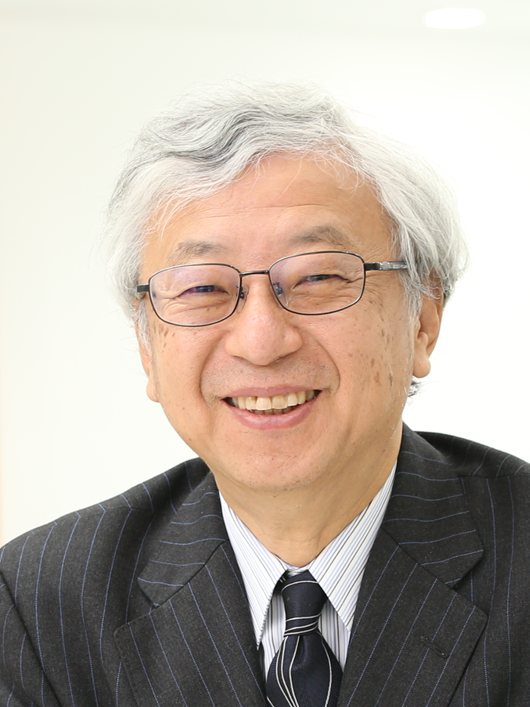
ITOH Motoshige, Ph.D.
Professor Emeritus, The University of Tokyo
Born in Shizuoka Prefecture in 1951. He has served as a professor at the Graduate School of Economics, The University of Tokyo, Chairman of the National Institute for Research Advancement (NIRA), and professor at the Faculty of International Social Sciences, Gakushuin University. He also served as an expert member of the Council on Economic and Fiscal Policy under the Abe administration. He received a Ph.D. in Economics from the Graduate School of Economics at the University of Rochester. His specialties are international economics and microeconomics. Known as a “walking economist” who analyzes the real economy from a theoretical perspective by visiting business sites, he currently serves as an outside director for numerous companies. His numerous publications include, Bijinesu Ekonomikusu (Business economics, Nikkei Business Publications), Netto Nyusu dewa Wakaranai Honto no Nihon Keizai Nyumon (An Introduction to the real Japanese economy that you can’t learn from online news, Toyo Keizai Inc.), and Sekai Infure to Nihon Keizai no Mirai (Global inflation and the future of the Japanese economy, PHP Business Shinsho).
[1] This refers to the era of unprecedented monetary easing implemented by the Bank of Japan for over 25 years, from the late 1990s, to overcome the recession and deflation following the collapse of the bubble economy.
Keywords
- deflationary trap
- interest rates
- AI revolution
- public finances
- industrial policy
- Japan’s competitiveness
- reform
Related posts:
 The Strategic Logic of “Autonomy” in Asian Decarbonization: What Should Japan Connect?
 What Is Meant by Supply Chain Resilience?
 A Society Where People Can Work Even at Age 70
 A Policy Vision Beyond Abenomics
 International Cooperation and Resource Diplomacy to Reduce Dependence on Chinese Rare Earths