


A Policy Vision Beyond Abenomics
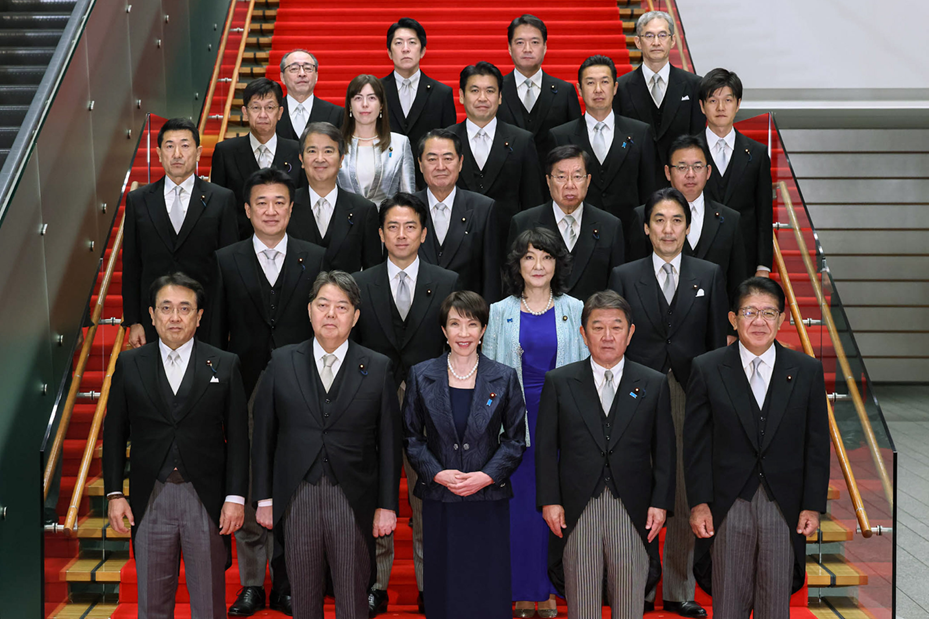
On October 21, 2025, the Takaichi administration was inaugurated. Alongside “responsible and proactive fiscal policy,” the hallmark of the Takaichi administration’s economic policy is strategic investments. In the instructions issued to 18 Cabinet ministers that same day, the common instructions to all Cabinet ministers declared: “We will restore the strength of the Japanese economy, with strategic investments—proactive, public-private initiatives taken in advance—as our core focus.”
Photo: Cabinet Public Affairs Office
The economic phase is shifting both domestically and internationally. “Sanaenomics” is an economic policy package designed to respond to this shift with rationality and coherence. Professor Iida Yasuyuki unpacks its full scope and grand design.
Structured Policies
Judging from patterns of support in the Liberal Democratic Party (LDP) presidential election and the lineup of economic policy brains, many commentators view the economic policies of the Takaichi Sanae administration as a continuation and intensification of Abenomics. On the other hand, the policy documents issued since the administration’s inauguration, as well as the policy agreement with the Japan Innovation Party (JIP), reveal an ambitious policy vision that, while inheriting the achievements of Abenomics, seeks to transcend it.
This divergence reflects the demands of economic reality. The two administrations confronted fundamentally different economic circumstances. When the second Abe Shinzo administration was formed in 2012, the Japanese economy was suffering from deficient demand. As the Consumer Price Index indicates, for most of the period since 1998, the Japanese economy had been in a deflationary recession, where falling prices led to shrinking demand, which in turn caused further price declines. According to estimates by the Cabinet Office, actual GDP at the end of 2012 was approximately 2% below potential GDP.
The standard economic prescription for insufficient aggregate demand is to support aggregate demand through macroeconomic policies. From this logic were derived the First Arrow of Abenomics (Aggressive Monetary Policy) and the Second Arrow (Flexible Fiscal Policy). Meanwhile, aggregate demand policies are intended to help an economy reach its full productive capacity, whereas long-term economic growth is driven by the Third Arrow (Growth Strategy).
The Three Arrows of Abenomics were a parallel set of policy “plans” in the sense that each sought to improve the challenges of the time somewhat independently; indeed, it might be more appropriate to call them a policy “list.” This dichotomy between demand-side policy and supply-side reinforcement is a characteristic of traditional economic theory and was a highly valid economic proposal for the Japanese economy at that time.
In contrast, the economic policy of the Takaichi administration is a policy plan with a structured framework, where “strategic investments” are placed at its core, supported by “responsible and proactive fiscal policy” and the continuation of monetary easing.
Shift to a Labor-Shortage Economy
Few people today would describe the Japanese economy as being in a state of deflation. While the impact of rice prices is significant in 2025, the inflation rate throughout 2026 is expected to trend around the 2% target. The exchange rate, which once soared to the 70-yen-per-dollar range under the Democratic Party of Japan (DPJ) administration and led to the hollowing out of domestic manufacturing, has now reached a phase where there are concerns over excessive yen depreciation.
The most significant change of all is likely the transformation of the employment situation. During the Abenomics era, the number of employed persons increased by 5.4 million, and regular employment grew by more than 2 million. Labor resources, which had been underutilized due to deficient demand, were successfully brought back into use.
As we know from the long experience of the deflationary recession, Japan must never be allowed to fall into such a state again. In that sense, the management of fiscal and monetary policies with due consideration for economic conditions will remain an essential endeavor. Real GDP for the July–September quarter of 2025, announced recently, showed negative growth for the first time in six quarters; however, the GDP gap (or output gap) estimated by the Cabinet Office and the Bank of Japan is approaching zero (a state of supply-demand equilibrium). Although both estimates are frequently criticized for being underestimations, it is certain that, at the very least, the primary problems at hand are no longer deflation and unemployment.
What is required of fiscal and monetary policy amid inflation and labor shortages is not a “medication-type” policy designed to fill a demand gap. Rather, the aim of accommodative policy under supply constraints is to improve supply capacity itself by applying demand pressure that exceeds current capacity. This could be described as a “strength-training-type” economic policy philosophy.
The logic that demand pressure and labor shortages improve supply capacity itself is known as the hysteresis effect, or the High-Pressure Economy theory. Labor shortages encourage capital investment for labor-saving and R&D, while simultaneously improving average productivity through the movement of people into growth industries. This garnered significant attention in 2016 when Janet Yellen, then Chair of the Board of Governors of the Federal Reserve System (Federal Reserve), emphasized these effects.
Traditional economic theory has assumed that long-term productivity improvement and economic fluctuations are determined by separate logics. In a sense, Abenomics can be seen as a policy vision aligned with this dichotomy. In contrast, the High-Pressure Economy theory emphasizes the long-term impact that demand exerts on supply.
The “Content” of Fiscal Policy
The idea that expanding demand through fiscal and monetary policy improves supply capacity itself might sound almost too good to be true—suggesting that expansionary policies grow the economy and enable even further fiscal expansion. However, an excess-demand economy is not a rosy future.
Expanding fiscal spending when supply capacity is already fully utilized can crowd out private-sector economic activity. Imagine a situation where the number of workers is limited. If the government undertakes large-scale public works projects, those projects absorb labor, plunging the private construction industry into an even more severe labor shortage. In this way, public demand ends up crowding out private demand. In an economy with little spare supply capacity, the relationship of “doing something means being unable to do something else” holds true.
This is the major difference from a deficient-demand economy. When deflationary recession and unemployment are the pressing issues, the “content” of fiscal spending or growth policies is not the most critical problem. That is because almost any project yields more output than leaving resources idle in unemployment.
The relationship between supply capacity and demand varies by industry. Estimates of the supply-demand gap or GDP gap are merely indicators of the national average. Rapidly expanding demand into sectors facing supply shortages only exacerbates labor scarcities in those sectors. Conversely, supporting industries with deficient demand risks propping up declining firms.
It is necessary to move human resources and capital from industries with deficient demand to those with supply shortages, and from low-productivity firms to high-productivity firms. A high-pressure economy utilizes demand pressure to encourage the private sector’s voluntary structural industrial transformation. Various subsidies and tax systems must facilitate this shift, or at the very least, not impede it.
The accurate title of Finance Minister Katayama Satsuki, the commander of “responsible and proactive fiscal policy,” is “Minister of Finance, Minister of State for Financial Services, Minister in charge of Reviewing Special Measures Concerning Taxation and Subsidies.” On November 25 of last year (2025), the Office for the Review of Special Measures Concerning Taxation and Subsidies was established within the Cabinet Secretariat.
Special Taxation Measures is a general term for a wide range of tax provisions outside the core tax code, from mortgage tax credits to incentives for locating in special economic zones. Although the count varies by classification method, approximately 200 types of Special Taxation Measures are currently in place. Some appear designed to protect declining industries, while others seem to favor large corporations.
The beginnings of this shift can also be seen in the Ministry of Economy, Trade and Industry (METI) tax reform requests for the current fiscal year 2025. The proposed reforms would apply investment tax-credit schemes, previously fragmented between those for SMEs and those for large corporations, more uniformly across firms, regardless of size. At the same time, the reforms are anticipated to provide incentives for currently profitable companies to further increase their investments.
This is not a subsidy or tax reform aimed at spending cuts, nor is it an expansion of government spending merely to sustain demand. The review, which focuses on reconfiguring the system into a growth-promoting model, suggests the true nature of the “responsible and proactive fiscal policy” envisioned by the administration.
Furthermore, another challenge in fiscal policy is social security—specifically, the human resource constraints in healthcare and nursing care. It is unrealistic to view elderly healthcare and nursing care as high-productivity industries. In the face of further increasing demand for these services, proportionally increasing the number of workers would become a drag on the average productivity of the Japanese economy.
Labor shortages serve as a catalyst for promoting DX (Digital Transformation) within the industry. However, the prices and staffing regulations for healthcare and nursing care services funded by social security are not determined by the discretion of individual facilities. It is the government that decides the medical fee schedule and establishment standards. How to continue providing services with fewer workers, and how to mitigate the surging demand for healthcare and nursing care, is an economic issue even more than it is a welfare issue.
In the policy agreement with the Japan Innovation Party (JIP), significant space is devoted to social insurance reform. On the other hand, regarding the exclusion of OTC-like drugs (medicines such as poultices and analgesics) from insurance coverage—a point included in the agreement between the two parties—the Ministry of Health, Labour and Welfare has already hinted at the continuation of such coverage. How to manage the relationship with this industry, which generates massive labor demand, will be a key point of economic policy in the era of population decline, not limited to the Takaichi administration.
Modern Supply-Side Economics
Alongside “responsible and proactive fiscal policy,” the centerpiece of the Takaichi administration’s economic policy is strategic investments. In the instructions issued to 18 Cabinet ministers upon the administration’s inauguration on October 21, 2025, the common instructions to all Cabinet ministers declared: “We will restore the strength of the Japanese economy, with strategic investments—proactive, public-private initiatives taken in advance—as our core focus.”[1]
The theoretical backbone of these strategic investments is Modern Supply-Side Economics (MSSE). Originally coined to describe the Biden administration’s policies, MSSE has evolved into a broader economic philosophy. While there are no fixed Japanese translations for these concepts, this school of thought is also referred to as “Productivism” or “Securonomics,” reflecting a global shift toward prioritizing domestic production capacity and economic resilience.
In contrast to the idea of promoting voluntary industrial transformation in the private sector through demand pressure, MSSE more actively pursues human capital development, infrastructure enhancement, and industrial cultivation led by the government.
Suppose, for example, that the precision instrument manufacturing industry has become a growth sector. Without water to support production lines or a transportation network for shipping, the industry cannot grow, no matter how much demand exists. Furthermore, in Japan, the issue of human resources could become a severe problem. Suitable locations for manufacturing are often not in major metropolitan areas. Without addressing the pros and cons of the extreme concentration of population in Tokyo, factories will be unable to secure labor. A growth industry without workers who possess the knowledge to engage in manufacturing becomes nothing more than a “pie in the sky.”
The utilization of AI (Artificial Intelligence) and robotics can, to some extent, be advanced by the decisions of individual companies. However, infrastructure development and human capital development are difficult to achieve through the efforts of a single company alone.
While traditional Supply-side Economics (SSE) of the 1970s and 80s focused on tax cuts and deregulation to boost production through a top-down approach, MSSE adopts a bottom-up structure, prioritizing human capital development and infrastructure enhancement.
The increased funding in the supplementary budget for establishing new science faculties and converting existing ones into interdisciplinary programs is a clear manifestation of this policy. Moving forward, the focus will be on how the Prime Minister’s specific directive to the Minister of Education—derived from the common instructions to all Cabinet ministers—to “enhance vocational education at Colleges of Technology (KOSEN)[2] and specialized high schools”[3] will be implemented with concrete measures.
On the other hand, there are many concerns regarding the ideology of “government-led industrial promotion” that is implicit in MSSE. Research from the 1990s and 2000s regarding Japan’s industrial policy during the high-growth era pointed out that such policies were more characterized by the protection of declining industries than by support for growth industries, and that the Ministry of International Trade and Industry (MITI, currently the Ministry of Economy, Trade and Industry) did little more than ratify private-sector growth. Ultimately, the protagonists of economic growth in Japan’s past were in the private sector. Furthermore, there is much criticism that the industrial cluster policies that began in the 2000s have not achieved significant results.
It is difficult to believe that industrial cultivation led by politicians and bureaucrats, which has few success stories in the past, will succeed “this time around.” My own view is that strategic investments should focus on human capital development and infrastructure, and that care should be taken not to place too much emphasis on the active cultivation of specific growth industries; however, there will likely be many counterarguments to this view.
Since the 2010s, an increasing number of analyses have demonstrated the effectiveness of government industrial policies regarding the economic growth of South Korea, Taiwan, and even the People’s Republic of China. In cases where there are clear growth industries, or industries that “need to be grown,” political guidance of the economy can sometimes be effective.
The Changing Global Economy and Sanaenomics
Beyond the beginning of the domestic transition from deflation to inflation, the global economy is
approaching a major turning point. The COVID-19 pandemic and the war in Ukraine have been central catalysts of this shift.
Since the 1990s, the global economy has been defined by an era of globalization. Corporate activities transcended national borders, and efficient economic operations through global supply chains were highly celebrated.
However, the disruption of production activities caused by the pandemic exposed the vulnerability of the intricate supply chains stretched across the world. Precisely because they were optimized so finely, global supply chains became highly complex and brittle: efficient in normal times, but fragile in the face of shocks. A situation where the suspension of production at an overseas base whose name one might not even know becomes a hindrance to one’s own activities cannot be considered rational in a long-term sense.
Furthermore, Russia’s aggression against Ukraine demonstrated that economic links with authoritarian states represent a significant risk factor. This highlights the dangers of constructing a supply side that is strongly tied to the People’s Republic of China, which was the “darling” of the globalization era. Western nations are now being forced to internalize their supply chains and restructure them with an emphasis on allies and friendly nations.
In the transition from the era of globalization to a new economic era, Japan is expected to play the role of a production base and a technology hub for the Western world. In the modern Japanese economy, there are numerous industries that “need to be grown” as urgent tasks, such as the construction of semiconductor production networks, the expansion of shipbuilding capacity, and the mining of rare earths. The success or failure of strategic investments depends on how such industrial policies—driven by economic security necessities—can be turned into seeds for medium- to long-term growth.
Sanaenomics is an economic policy package designed to respond to the shifting economic phases both domestically and internationally. Meanwhile, changes in the internal and external economies are intense, and their structures are becoming increasingly complex. The policy direction of advancing the sophistication of the industrial structure by leveraging labor shortages and playing a role in the international division of labor in response to changes in the global economy is undeniably a “narrow path.” Yet difficult as it is, it may also be one of the few paths still open to the Japanese economy.
Setting aside the arguments for and against it, the policy vision of Sanaenomics is a proposal characterized by rationality and coherence. At the same time, the success or failure of each policy will depend heavily on the detailed design of specific measures. “God is in the details.” Whether individual policies are rationally formulated and executed toward the realization of this policy vision remains to be seen. The Takaichi administration’s real governing capacity is now about to be tested.
Translated from “Tokushu 1: Sanaenomikusu wa Doko e Mukau ‘Abebimikusu wo Koen to suru Seisaku Koso’ (Special Feature 1: What direction is Sanaenomics headed in? ‘A Policy Vision to Transcend Abenomics’),” Voice, February 2026, pp. 38–45. (Courtesy of PHP Institute) [March 2026]
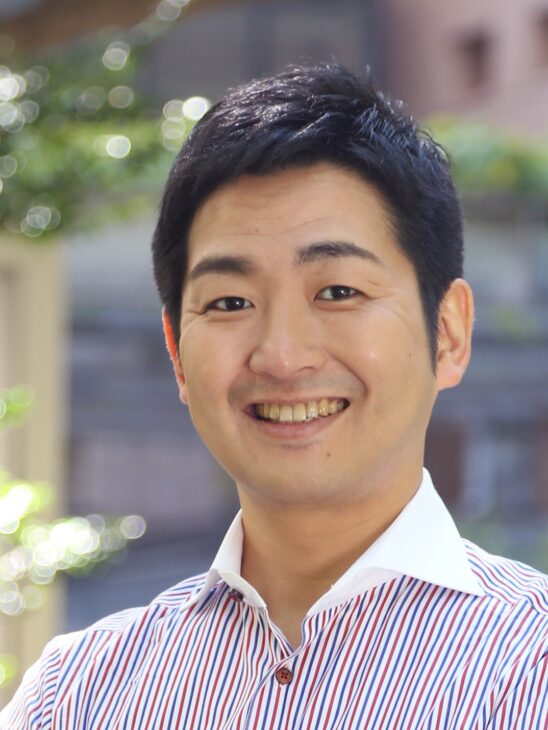 IIDA Yasuyuki,
 Professor, School of Political Science and Economics, Meiji University
Born in 1975. Graduated from the Faculty of Economics at the University of Tokyo. Completed the required coursework for the doctoral program at the university’s Graduate School of Economics. After working as an assistant professor and an associate professor at Komazawa University’s Faculty of Economics, he became an associate professor at Meiji University’s School of Political Science and Economics in 2013, and has held his current position since 2022. He has previously served as a visiting researcher at the Economic and Social Research Institute, Cabinet Office, a visiting researcher at the Research Committee on National Life, the Economy and Local Affairs of the House of Councilors, a senior researcher at the Policy Research Institute, Ministry of Finance, a member of the Ministry of Internal Affairs and Communications’ 2040 Local Government Strategy Study Group, and a member of the Cabinet Office Council for Regulatory Reform (chairman of the Agriculture and Forestry Working Group). His publications include Zaisei, Kinyu seisaku no Tenkanten: Nihonkeizai no Saisei Plan (Turning point in fiscal and monetary policy: A revitalization plan for the Japanese economy) (Chuko Shinsho) and Nihonshi ni manabu Manei no ronri (The Logic of Money Learned from Japanese History) (PHP Institute).
[1] Upon its inauguration on October 21, 2025, the Takaichi administration established three broad strategic directions as part of its “common instructions to all Cabinet ministers”: (1) realizing a strong economy, (2) growing regional areas and protecting people’s livelihoods, and (3) strengthening diplomatic and defense capabilities. Based on these directions, the administration has specifically enumerated items for each Cabinet minister to address individually.
[2] A National Institute of Technology (KOSEN) is a unique educational institution in Japan, having a five-year structure and where enrollment begins from the age of 15. https://www.kosen-k.go.jp/en/
[3] The Prime Minister’s specific directive to the Minister of Education states, “In order to cultivate human resources who can thrive in light of the needs of industry and who will take on the challenges of future growth fields, we will work on university reform and promote the enhancement of vocational education at technical colleges (KOSEN) and vocational high schools. In order for Japan to continue to develop as a science and technology-based nation, we will work with the Minister of State for Science and Technology Policy and other relevant ministers to strengthen the science and technology foundation and expand investment in cutting-edge science, technology and innovation through industry-academia-government collaboration.”
Keywords
- Sanaenomics
- strategic investments
- public-private initiatives
- labor shortage
- supply capacity
- fiscal policy
Related posts:
 Pathways to Balancing Working Hour Deregulation and Child-rearing Support
 What Is Meant by Supply Chain Resilience?
 Why Are Debates Surrounding Family and Gender So Contentious? The “Principle of Deliberation” to Which We Must Return
 From Tomiichi Murayama to Sanae Takaichi: Thirty Years After the Cold War—The Present Location of Japanese Politics
 Reading “Intergenerational Conflict”