


Special Dialogue: Prospects for Japanese Diplomacy in 2026—Advancing the Strategies of the “Free and Open Indo-Pacific” Further
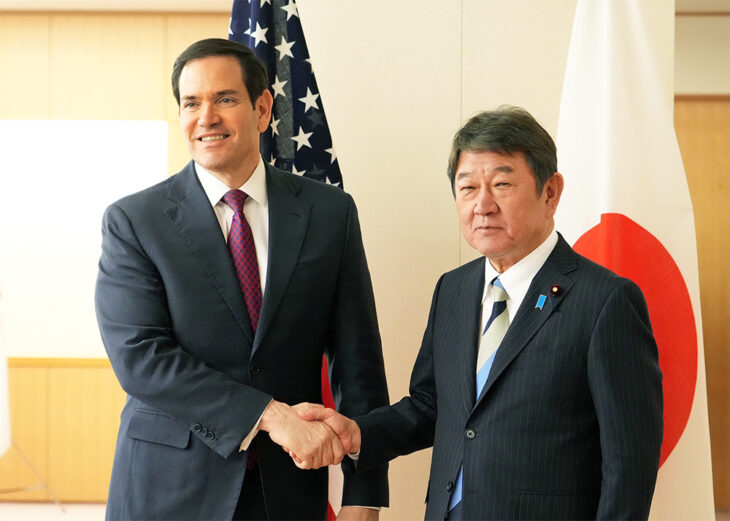
Foreign Minister Motegi Toshimitsu meets with U.S. Secretary of State Marco Rubio on October 28, 2025. The strong Japan-U.S. alliance is the foundation of Japanese diplomacy and also the cornerstone of peace and prosperity in the Indo-Pacific region.
Photo: Ministry of Foreign Affairs of Japan
Hosoya Yuichi: With the inauguration of the Takaichi Sanae administration on October 21 last year, you assumed the post of Minister for Foreign Affairs for the second time. Immediately after taking office, you actively followed a busy diplomatic schedule together with the Prime Minister, starting with meetings related to the Association of Southeast Asian Nations (ASEAN) and a Japan-U.S. Summit Meeting.
Motegi Toshimitsu: From right after the launch of the administration, important diplomatic events followed one after another, and it turned into something of a rocket start as I attended many meetings. I made three successive overseas trips: ASEAN-related Summit Meetings (October 26–27) in Kuala Lumpur, Malaysia; an Asia-Pacific Economic Cooperation (APEC) Ministerial Meeting (October 29–31) in Gyeongju, the Republic of Korea; and a G7 foreign ministers’ meeting (November 11–12) in Niagara, Canada. In addition, by the end of December I had held talks with a variety of more than 30 counterparts and others. During this period, there were also several summit meetings, including one with the United States. Looking back on the time I first became Foreign Minister in 2019, I wondered, “Was I this busy back then?” This shows how changes in the international situation have been accelerating and how the occasions involving diplomatic authorities have been increasing.
Recognizing the Growing Expectations for Japanese Diplomacy
Hosoya: During the meetings with numerous state leaders and counterparts, what kind of impressions did you have?
Motegi: I felt a growing sense of expectations toward Japan. For example, in Kuala Lumpur, Mr. Anwar Ibrahim, the Prime Minister of Malaysia, which served as the ASEAN Chair, highly appreciated the fact that, at a very important time just before a Japan–U.S. summit meeting, both the prime minister and the foreign minister attended the ASEAN-related meetings and demonstrated Japan’s presence in the region.
From Kuala Lumpur, I took an overnight flight back to Tokyo and the next day, October 28, joined the Japan–U.S. summit meeting. Prime Minister Takaichi and President Donald Trump were in such a friendly mood that it made me wonder whether this was really their first meeting. Through this summit, I believe a strong relationship of trust was formed between the two leaders.
Hosoya: At the APEC ministerial meeting, amid rising uncertainty in the world economy, artificial intelligence and digital technology were discussed, as well as the international economic order.
Motegi: As inward-looking tendencies grow stronger around the world, many countries are increasingly alarmed about the future course of the global economy. What left a strong impression on me was the World Trade Organization Director-General Ngozi Okonjo-Iweala. After many participants had their say, Director-General Okonjo-Iweala spoke last and delivered a passionate statement to the effect: “There are opinions that ‘the WTO is not functioning’ and ‘the WTO should be reformed,’ but who exactly is being referred to as the WTO? It is none other than the member states themselves. Whether free trade is kept alive or allowed to die depends on the member states.” I shared her sense of crisis and once again felt the significance of the role Japan, which has promoted free trade, ought to play. Of course, Japan’s engagement is not limited to trade and the economy. There is huge scope for Japan to contribute to resolving the various challenges facing the international community, and I believe the benefits our country can gain through such efforts are also substantial.
Hosoya: It can be said that the role Japan should play is significant in various fields.
Motegi: Through the series of diplomatic events, Prime Minister Takaichi and I personally were able to build relationships of trust with many counterparts in allied and like-minded countries. On that basis, I would like to develop “vigorous diplomacy with broad perspectives.”
Hosoya: I think “vigorous diplomacy with broad perspectives” succinctly captures what Japanese diplomacy should be. I will ask you about its content in detail later, but I believe that the clear vision and accumulation of concrete achievements in the diplomatic area have led to the high level of support for the Takaichi cabinet in public opinion polls.
Tailored Support for the Diverse Realities of Nations
Hosoya: It is only four years since you stepped down from your previous term as minister for foreign affairs, yet during that time the world has changed dramatically. Russia has invaded Ukraine, conflict has broken out in the Gaza Strip, and the prospects for both remain uncertain. The growing prominence of the so-called Global South countries is also a striking feature of the past few years. How do you view the current international situation?
Motegi: I returned to the post of minister for foreign affairs after a four-year interval, and my honest reaction was, “Has everything really changed so much?” Put simply, the diplomatic and security environment around Japan has become more severe, and uncertainty in international affairs is increasing. As inward-looking tendencies spread in many countries, authoritarian states seem to be moving to exploit the resulting divides. They are using a variety of tools—including economic coercion—to challenge democratic nations, and we are seeing such developments in many parts of the world.
Hosoya: In this kind of situation, I am concerned about developments in the U.S.
Motegi: It is true that the U.S. today is sometimes described as becoming more “inward-looking.” At the same time, it is an undeniable fact that the country continues to play an essential role—for example, in efforts to achieve peace in Ukraine and a ceasefire in Gaza. The importance of cooperating with the U.S. to tackle the challenges facing the international community is something that again should be emphasized.
As you correctly mentioned, the same is true with respect to the Global South. Four years ago, the term “Global South” was not as widely used as it is today. It goes without saying that, in order to maintain and strengthen the current free and open international order, the cooperation of the Global South—which represents the majority of the international community—is indispensable. What is crucial, however, is to bear in mind that although these countries are collectively referred to as the Global South, their situations vary a lot. While the group includes emerging major powers such as India and Brazil, it also encompasses countries that are economically vulnerable and only now beginning to develop. Always guided by this principle, and in cooperation with international organizations, we intend to propose tailored solutions and alternatives that address the specific challenges each country faces.
Japan’s relationship with ASEAN is a good example. Over the past 50 years, Japan and ASEAN have built a strong relationship of trust. Taking into account the extremely varied political and economic situations of the ASEAN member states, and the differing challenges they face, Japan has promoted cooperation in line with their respective needs. I believe that this approach has been the foundation of the trust that ASEAN countries place in Japan.
Hosoya: Japan has been ranked the most trusted major power for seven consecutive years in a survey which the ISEAS-Yusof Ishak Institute, a think tank in Singapore, has been conducting among private-sector companies, government officials and researchers in Southeast Asia to gauge international perceptions of ASEAN countries. This should be taken as reflecting high regard for Japan’s carefully tailored aid initiatives.
Building on this track record, what diplomatic principles do you most want to prioritize going forward?
Motegi: Essentially, our priority is to maintain and strengthen a free and open international order based on the rule of law. This year marks the 10th anniversary of former Prime Minister Abe Shinzo’s “Free and Open Indo-Pacific” (FOIP) initiative, first proposed at the Sixth Tokyo International Conference on African Development (TICAD VI) in Kenya.[1] By further advancing this initiative, we aim to enhance Japan’s presence in the international community.
Hosoya: Implementing foreign policy also requires public support.
Motegi: As you noted, public understanding and support are indispensable. To earn such understanding and support, clear explanations of policy are of course important, but I also believe we need to help people better grasp what is happening on the diplomatic front line. To convey, in an accessible way, the work of those at the forefront of diplomacy, we are putting particular effort into making more active use of social media.
During my overseas trips and when welcoming foreign guests, I try to share as much as possible in my own words—for example, by reporting on discussions at international conferences with a sense of immediacy, or by posting scenes from informal moments such as coffee breaks. Through this, I hope to spark greater interest in diplomacy by helping people see that it is by no means something distant but is closely connected to their daily lives.
Hosoya: Some of your social media posts have received more than a million views.
Motegi: Yes. I was fortunate that during the APEC ministerial meeting, one video I posted on X was viewed over four million times.
Hosoya: As an outreach tool for younger generations, social media is of course important, and I believe it is most effective when you communicate in your own words.
Motegi: Public interest in diplomacy is, I feel, growing. At the same time, it is essential to reach people in ways that reflect the specific concerns and interests of different segments of society. Social media, for example, allows information to be shared widely and in real time, while magazines such as this one, Gaiko (Diplomacy), play a vital role for experts, readers with a deeper interest in international affairs, and those who aspire to work in diplomacy in the future. I hope to communicate effectively by using the most appropriate tools and approaches for each audience, in line with the public’s diverse interests.
The Trump Administration Not Just “Looking Inward”
Hosoya: Next, I would like to ask about Japan-U.S. relations. You said earlier that Prime Minister Takaichi and President Trump formed a strong personal relationship of trust through the summit. In addition, an agreement document titled “Toward a NEW GOLDEN AGE for the Japan-U.S. Alliance” was released afterward. It can be said that the first Japan-U.S. summit under the Takaichi administration was a great success. Minister Motegi, too, has held meetings with senior U.S. officials, including your counterpart, Secretary of State Rubio. Minister Motegi was at the forefront of trade and diplomatic negotiations as minister of state for economic and fiscal policy and minister for foreign affairs during the first Trump administration. Based on your experience, how do you view the second Trump administration and future Japan-U.S. negotiations?
Motegi: Japan-U.S. relations are an unwavering cornerstone of Japan’s diplomacy. I believe that building a relationship of trust with the U.S. is the most important and highest priority of diplomacy for any administration.
When I joined the Japan-U.S. Summit Meeting, I felt that the second Trump administration, like the first, places great importance on relations with Japan. During the first Trump administration, Prime Minister Abe took office first and then approached President Trump while he was already active as Prime Minister in the diplomatic arena, including the G7. This time, President Trump returned to office first and then met with Prime Minister Takaichi. I felt that a relationship of trust could be formed regardless of which leader took office first and that there was no change in the strength of bonds between the leaders or governments based on the foundation of the Japan-U.S. Alliance.
As I mentioned earlier, it is said that the U.S. is becoming inward-looking. Even in this situation, however, the Trump administration is determined to engage in various pending issues facing the international community and take the lead in ending conflicts and maintaining order. This determination may be rather stronger than with the first Trump administration. With this perspective, Secretary of State Rubio and I reaffirmed the importance of Japan-U.S. relations and shared the recognition that Japan and the U.S. are essential partners in the Indo-Pacific strategy. Secretary Rubio has been known as a foreign policy expert since he was a senator and has a high level of interest in the Indo-Pacific. I would like to strengthen deterrence and response capabilities through Japan-U.S. security cooperation to ensure peace and stability in the region.
Hosoya: What about the economic area?
Motegi: With a Japan-U.S. agreement on U.S. tariffs in place, I would like to promote the interests of both Japan and the U.S. as well as our country’s economic growth, through its sincere and steady implementation. During the first Trump administration, I held trade negotiations with U.S. Trade Representative Robert Lighthizer. The talks were tough, but I think I was able to reach a win-win agreement in the end. This time, though not in the form of a trade pact, Japan and the U.S. have agreed to advance cooperation in important areas of economic security, including not only tariffs but also investment. I would like to implement this agreement surely and swiftly to make it a win-win for both Japan and the U.S.
Multi-Layered Cooperation with Like-Minded Countries Required
Hosoya: In addition to Japan-U.S. relations, I feel that the Takaichi administration attaches importance to cooperation with like-minded countries. From the perspective of stability in the Indo-Pacific region, security cooperation is advancing with like-minded countries, such as the ROK, the Philippines and Australia. On the economic front, attention is also focused on an expansion of the Comprehensive and Progressive Agreement for Trans-Pacific Partnership (CPTPP). What are your thoughts on the development of multilateral and multilayered diplomacy?
Motegi: I said earlier that “I would like to develop ‘vigorous diplomacy with broad perspectives.” Facing an international situation in which division and confrontation are intensifying, it is extremely important to develop cooperative relations with a variety of countries and regions under various frameworks.
In order to realize a free and open Indo-Pacific, I would like to further strengthen cooperation with Australia, India, the ROK, the Philippines and other countries, as you pointed out, while placing Japan-U.S. relations as the cornerstone, as well as via multilateral frameworks such as Japan-U.S.-Australia-India (Quad), Japan-U.S.-ROK and Japan-U.S.-Philippines cooperation. At the Japan-U.S.-ROK Foreign Ministers’ Meeting held on the margin of APEC in late October last year, we said “We will pursue holding a trilateral Foreign Ministers’ meeting whenever the three Ministers get together, including at international conferences.” Looking back, the first meeting of foreign ministers under the Quad framework took place when I attended the United Nations General Assembly in 2019. This led to the Quad summit in 2021, two years later. I would like to continue to actively strengthen our multi-layered cooperation.
Hosoya: On the economic front, the importance of the CPTPP has been recognized anew, and attention is focused on the moves of its “creator,” Japan.
Motegi: Japan is promoting free and fair trade, and the CPTPP plays a significant role in that. When it became inevitable that the U.S. would withdraw from the Trans-Pacific Partnership (TPP), there was a sense of crisis among its members that the TPP would drift. Japan took the lead in addressing the situation and bringing the CPTPP into effect in 2018. I took part in the negotiations as the minister responsible, and I think it can be said that this was an important example of Japan playing a leading role in the international community as a standard-bearer for free trade. In 2024, the United Kingdom became a member of the CPTPP, and negotiations with Costa Rica are currently underway. Japan will continue to play a role in promoting free and fair trade.
Japan-China Relations: Resolving Pending Issues through Dialogue
Hosoya: Finally, I would like to ask about Japan-China relations. On October 31 last year, Prime Minister Takaichi met with President Xi Jinping on the sidelines of the APEC summit, and they reaffirmed a broad direction for Japan-China relations to comprehensively promote a “Mutually Beneficial Relationship Based on Common Strategic Interests” and build “constructive and stable Japan-China relations.” Prime Minister Takaichi also mentioned various pending issues and challenges between Japan and China. The situation has become somewhat fluid since then. From a medium- to long-term perspective, how do you view Japan-China relations in 2026?
Motegi: China is an important neighbor for Japan. On October 28, prior to the summit, I spoke to Minister of Foreign Affairs Wang Yi by phone, and we reaffirmed the broad direction of comprehensively promoting a mutually beneficial relationship based on common strategic interests and building a constructive and stable relationship. Of course, I am aware that there are various challenges and pending issues between Japan and China, but it is necessary to speak frankly because there are such challenges and issues. Through dialogue, our country will say what it needs to say and ask the Chinese side to respond responsibly, while advancing cooperation in areas in which it can work jointly. Japan is always open to dialogue with China. Through dialogue, Japan will develop realistic diplomacy to reduce pending issues and challenges and increase understanding and cooperation, and it will continue to monitor the situation and make appropriate responses.
Hosoya: I also have opportunities to talk with foreign government officials and intellectuals at international conferences, and wherever I go, I get questions about Japan-China relations. I think this represents not only the high level of interest in China, but also the flip side of trust that Japan will play an active role in ensuring regional stability. Even countries that are thought to be close to China have various complaints about the state, while on the other hand, expectations for Japan are very high. I hope that Minister Motegi, who has extensive diplomatic experience and deep connections with diplomatic authorities in the U.S., China and other countries, will further enhance Japan’s presence.
(Final Confirmation: January 8)
This article was originally published at [https://www.mofa.go.jp/files/100969458.pdf]. Reprinted here with minor editorial and style changes. The original appeared as “Tokubetsu Taidan: 2026 Nihon Gaiko—‘Jiyu de Hirakareta Indo-Taiheiyo’ no Saranaru Suishin wo Special Dialogue: Prospects for Japanese Diplomacy in 2026—Advancing the Strategies of the “Free and Open Indo-Pacific” Further),” Gaiko (Diplomacy), Vol. 95 Jan. / Feb. 2026, pp. 6–13.
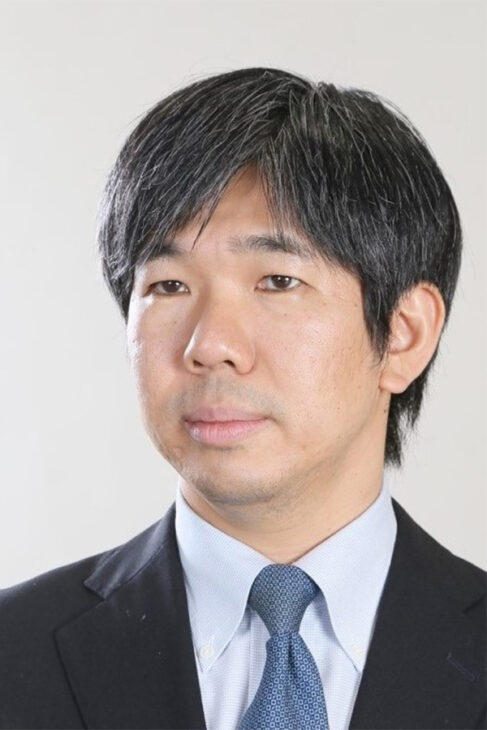 HOSOYA Yuichi, Ph. D.
Professor at Keio University
Editor-in-Chief of Gaiko (Diplomacy)
Born in 1971. Graduated from Rikkyo University, Faculty of Law. Received his Ph.D. (Law) from Keio University. He specializes in international politics and British diplomatic history. His publications include Sengo kokusai chitsujo to Igirisu gaiko (The postwar international order and British diplomacy, won the Suntory Prize for Social Sciences and Humanities), Rinriteki na senso (Ethical wars, won the Yomiuri-Yoshino Sakuzo Prize), and Kokusai Rengo no Tanjo (The birth of the United Nations). His English-language publications include Security Politics in Japan: Legislation for a New Security Environment (Tokyo: JPIC, 2019), Liberation in Postwar History II: What Is Independence and Autonomy? (parts 1 and 2), and New Geopolitics (coedited and coauthored).
[1] https://www.japanpolicyforum.jp/diplomacy/pt2021033121472611122.html
Keywords
- Japanese diplomacy
- Minister for Foreign Affairs
- Motegi Toshimitsu
- Free and Open Indo-Pacific
- Japan-US relations
- Japan-China relations
Related posts:
 Reading China’s Tactics Aiming to Change the Status Quo
 Defending Japan’s Sovereignty in the AI Era: Leveraging Linguistic Uniqueness to Build Sovereign AI
 Japan’s Strategy as a Pioneer in Central Asian Diplomacy: Observations from the First “Central Asia plus Japan” Dialogue Summit
 From Support to Participation: The Future of ASEAN-Japan Relations
 Prime Minister Modi’s Visit to Japan: Opening a “Golden Chapter” in Japan-India Relations