


The Dilemma Posed by the NPT Review Conference: The Tension Between Maintaining the NPT Regime and National Security
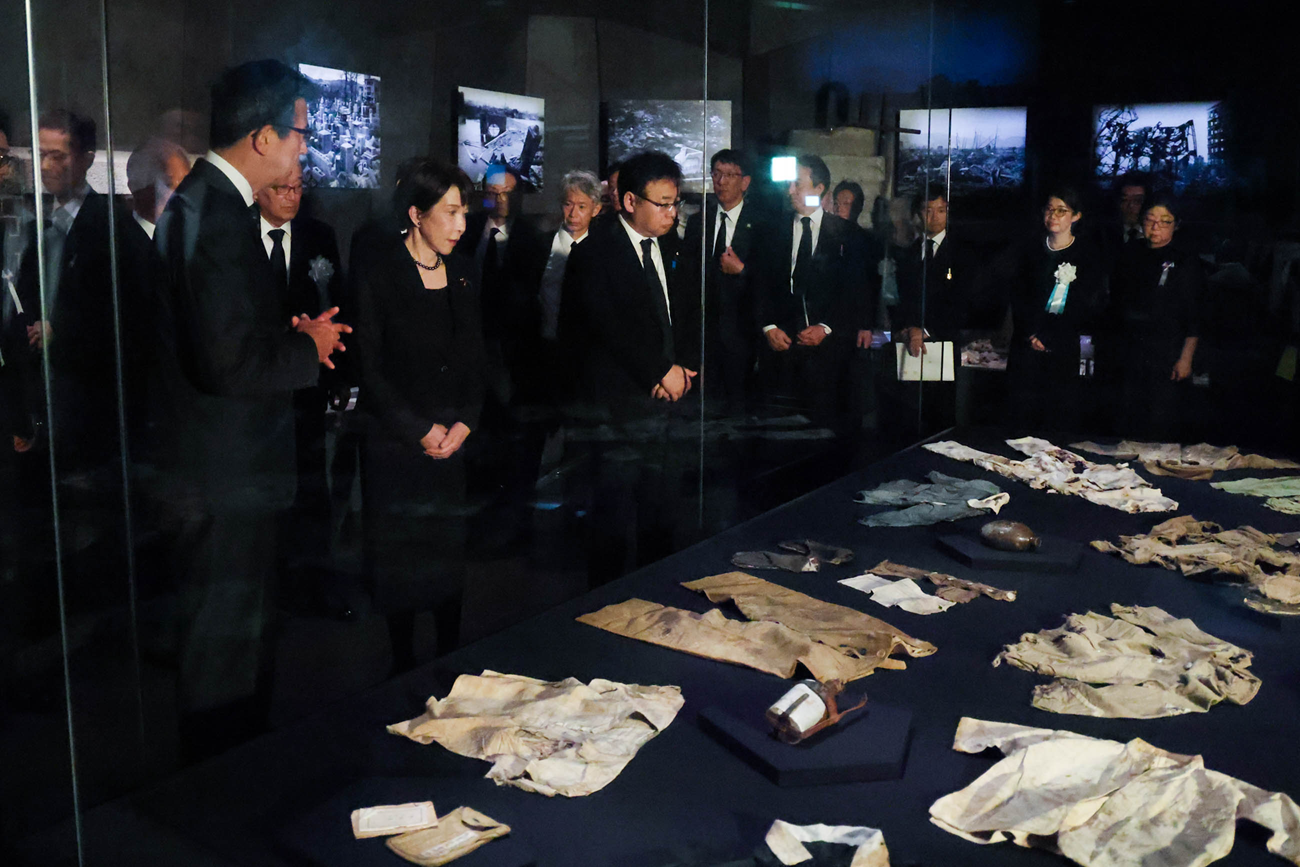
At the Hiroshima Peace Memorial Ceremony in August 2026, Prime Minister Takaichi Sanae pointed out that, as discussed at the NPT Review Conference held in today’s increasingly severe global security environment, the path to a “world without nuclear weapons” is by no means easy. She then stated, “In order to lead the international community’s efforts toward the realization of ‘a world without nuclear weapons,’ while calling for the maintenance and strengthening of the NPT regime, we are resolved to continue realistic and practical efforts under the ‘Hiroshima Action Plan.’” Following the ceremony, Prime Minister Takaichi visited the Hiroshima Peace Memorial Museum.
Photo: Cabinet Public Affairs Office
The NPT Review Conference concluded without adopting a final document. The tense relationship between the ideal of the NPT norms—which mandate nuclear disarmament and non-proliferation—and the reality of national security, which compels reliance on nuclear deterrence, is making consensus building ever more difficult.
- Deepening polarization between nuclear-weapon states and non-nuclear-weapon states is undermining the central cohesive force of the conference.
- In several instances, the successive dilution of the draft final document itself made reaching agreement even more challenging.
- Japan finds itself caught in a dilemma between its commitment to promoting the NPT and the need to safeguard its own security posture.
The 11th Review Conference of the Parties to the Treaty on the Non-Proliferation of Nuclear Weapons (NPT)—hereinafter referred to as the NPT Review Conference—held in April and May 2026, opened under an acute sense of urgency to avoid a third consecutive failure to adopt a final document, following those in 2015 and 2022. At the opening of the conference, UN Ambassador Do Hung Viet of Viet Nam, who served as President, urged that rather than taking the NPT for granted, States parties must preserve the treaty and strengthen its legitimacy and integrity, encouraging delegations to engage in “forward-looking discussions.”
While public attention often focuses solely on whether a final document is adopted, the role of the Review Conference extends well beyond that outcome. The conference is inherently a forum for addressing emerging challenges to the operation of the treaty at that given moment, which has historically sparked intense political friction. The NPT Review Conference is often understood as a technical forum to access the implementation of the treaty. In reality, however, this is not the case. Rather, the conference serves as a forum for diplomatic negotiations in which divergent national perceptions on nuclear disarmament, nuclear deterrence, and regional security clash directly, and its success or failure has always hinged on the political compromises forged there.
The latest Review Conference was no exception. Indeed, against the backdrop of a rapidly deteriorating global security environment, the 11th Review Conference became an arena where divergent national security outlooks and strategic perceptions of participating states came into increasingly sharp conflict.
The Absence of Consensus on the Final Draft Document
At this Review Conference, the draft final document underwent four revisions. In departure from past practice, a “zero draft” was circulated at an unusually early stage—on May 6 (local time), just ten days after the conference opened. By that time, the General Debate had concluded, and discussions were underway in the Main Committees (I, II, and III) and Subsidiary Bodies. Subsequently, the first revised draft incorporating feedback on the zero draft was presented on the evening of May 13, followed by the second revision on the evening of May 17, the third in the early morning of May 21, and the fourth in the early morning of May 22. Informal consultations between the President and relevant delegations over the draft continued until the evening of May 22. However, at the subsequent plenary session, the President indicated that despite “a genuine attempt to find common ground,” no consensus has been reached, and he therefore announced that the final draft document would not be put forward for adoption.
Compared with the preceding four iterations, the content of the draft final document had been substantially diluted. Overall, the phrasing of various provisions was weakened, and several issues originally included in the draft were removed. Furthermore, it was obvious that if consensus on the draft document failed to materialize, the media and observers would criticize the NPT as having been “hollowed out” or reduced to a mere formality. While both the President and the States parties participating in the Review Conference were fully aware that such criticism was inevitable, a consensus ultimately proved elusive.
This outcome gives rise to two key questions. First, why did the differences between the positions of various countries remain unresolved even after the draft document was drastically watered down? Second, why did certain countries conclude that they could not agree to the draft document precisely because it had been diluted? While these two questions may appear contradictory at first glance, examining both perspectives together is essential to understanding the dynamics of this Review Conference.
As President Viet noted, even if the goal of a “world without nuclear weapons” is shared among States parties, they cannot reach that ultimate destination without agreeing on the pathway to get there and on what to prioritize along the way. This Review Conference served as an arena where differences in national perceptions of that pathway became more starkly visible than ever before in debates over reaching consensus on the final document.
Structural Changes in Both Form and Substance in the Negotiations
To address the first question, it is necessary to focus on the fact that the structure of the negotiations itself underwent a shift. At this Review Conference, two distinct structural changes could be identified: first, a surface-level change in how negotiations were managed by the President, and second, a deep-seated change in inter-state relations driven by the changing security environment. It was precisely this latter shift that made it increasingly difficult to bring states’ positions closer together through conventional negotiation methods, thereby making new procedural approaches, such as the one described above, unavoidable.
The first change concerned the way President Viet managed the negotiations. As noted earlier, the zero draft was circulated after the General Debate had concluded. In other words, the so-called “reverse Christmas Tree” approach was adopted, in which a complete overview—including contentious issues expected to generate friction—was presented, with the aim of subsequently narrowing down the text through negotiations. In light of the failures to adopt a final document in 2015 and 2022, this was a novel attempt driven by President Viet’s strong determination to achieve a consensus on a draft final document this time.
However, this shift in negotiation methodology was not merely a procedural innovation. Rather, it reflected a recognition, based on the failure to adopt a final document at the previous two Review Conferences, that traditional negotiation methods could no longer easily yield consensus. The backdrop was a deteriorating international security environment and the growing complexity of inter-state relations. With two wars involving nuclear-weapon states taking place simultaneously, states were increasingly compelled to prioritize their own national security. Consequently, divisions among states became increasingly multi-layered, exerting a profound influence on the negotiations themselves. Here lies the second structural change in the negotiations—the transformation of the underlying structure of inter-state relations.
The NPT inherently embodies an institutional inequality based on the distinction between nuclear-weapon states and non-nuclear-weapon states. Precisely because of this structure, non-nuclear-weapon states have historically been able to leverage their shared position to exert collective pressure on nuclear-weapon states to pursue and implement nuclear disarmament in good faith.
At the latest Review Conference, however, in addition to the traditional divide between states based on the possession of nuclear weapons, fault lines among nuclear-weapon states (the US, UK, and France vs. China and Russia) and differences in position among non-nuclear-weapon states (states under a nuclear umbrella vs. proponents of the Treaty on the Prohibition of Nuclear Weapons [TPNW]) became far more pronounced. Furthermore, the weakening of group politics was evident. While multiple groups formed by non-nuclear-weapon states—such as the Non-Aligned Movement (NAM), the New Agenda Coalition (NAC), and the Arab Group—continued to exist, their ability to speak with a common voice across these groups became limited. As a result, it became more difficult for non-nuclear-weapon states to strongly unite and exert collective pressure on nuclear-weapon states.
Nevertheless, even among nuclear-weapon states whose differences were initially stark, efforts were reportedly made to coordinate positions during the drafting and revision process of the final document. This demonstrates that while fault lines exist among nuclear-weapon states, traditional NPT politics—in which these states cooperate when necessary—remain in place. Similarly, non-nuclear-weapon states were not entirely fragmented, as they also demonstrated coordinated action on specific issues. Still, the increasingly multi-layered nature of inter-state relations became more pronounced than in the past, complicating the negotiations and ultimately making consensus building even more difficult.
The Watering Down of the Draft Document and Tension with NPT Norms
Thus far, the analysis has focused on changes in the negotiation structure. However, structural shifts alone do not fully explain the outcome. It is equally essential to examine the position of states that viewed the dilution of the draft document itself as problematic and concluded that they should refrain from agreeing to the draft for that very reason, as well as the context behind their stance.
A weakening of the language in the document risks diluting the normative significance of the NPT itself, along with the ultimate goals to be achieved through it. In multilateral negotiations, the use of ambiguous language is generally understood as a tool to facilitate compromise. At this conference, however, that basic premise itself was undermined.
The removal of references to the Zaporizhzhia Nuclear Power Plant in Ukraine and to North Korea from the draft document was far more than a minor editorial change. A considerable number of states viewed that failing to directly address the pressing challenges the NPT would ultimately erode the treaty’s normative significance.
To what extent is it truly effective to pursue agreement by weakening the language of the draft final document? Throughout these negotiations, specific and substantive issues were repeatedly removed, and language was consistently softened in pursuit of agreement. Yet, there was also a shared concern among states that this process itself could undermine the NPT’s normative significance and create security risks. In other words, two opposing views coexisted: the belief that diluting the text would bring states closer to agreement, and the belief that doing so would make agreement more difficult to achieve. As a result, reaching consensus proved extraordinarily difficult regardless of which path was chosen.
What this Review Conference demonstrated was not that the NPT has been hollowed out or rendered a mere formality. Rather, it exposed a stark reality: states hold fundamentally divergent perceptions regarding how to preserve the very norms that the NPT has upheld. Should agreement be prioritized even at the cost of weakening the text, or should it be set aside to preserve normative consistency? The collision between these two opposing logics meant that no consensus could be reached. In this sense, the politicization that became so prominent at this conference was less a reflection of institutional failure than a direct projection of participating states’ national security outlooks and normative perceptions onto the NPT regime itself.
Two Dilemmas Facing Japan
On the day following the conclusion of the Review Conference, the Japanese government issued a Statement by the Foreign Minister expressing the view that “it is extremely regrettable that, ultimately, President Viet has announced that consensus of the final draft document could not be achieved.” What this conference confronted Japan with, however, was not merely the failure to adopt a final document. More importantly, it highlighted a growing tension between maintaining the NPT regime and ensuring national security—a tension that manifested itself in two distinct dilemmas.
The first dilemma concerns how far Japan can and should go in accepting political compromises and encouraging other states to do the same in order to prioritize the maintenance of the NPT regime. There has long been a tacit understanding that building consensus on the final document at Review Conferences is essential to preserve the very existence of the NPT. Consequently, the failure to adopt a final document has frequently invited criticism that the NPT is becoming “a mere formality” or is being “hollowed out.” In an environment where forging consensus among states has become increasingly difficult, should Japan—positioning itself as a “guardian” of the NPT—prioritize consensus building, even if doing so requires encouraging political compromises among states, or should it prioritize non-negotiable national security interests? This question will remain a major challenge for Japanese diplomacy moving forward.
The second dilemma is whether Japan itself can accept the removal of references to issues crucial to its national security from the final document in the interest of achieving consensus. It is reasonable to infer that many countries were cautious about adopting a draft final document that lacked language on North Korea. This interpretation is supported by the fact that 86 countries joined a joint statement on North Korea’s nuclear issue led by France and the Republic of Korea, alongside the repeated expressions of grave concern regarding North Korea voiced by numerous states in both formal and informal settings. The North Korean nuclear issue is not merely a regional concern. North Korea, which originally joined the NPT as a non-nuclear-weapon state, has violated Article II (prohibiting non-nuclear-weapon states from receiving or manufacturing nuclear weapons) and abused Article X, Paragraph 1 (the withdrawal provisions)—thereby striking at the very core of the NPT regime. At the same time, it represents one of Japan’s most critical national security challenges and can under no circumstances be overlooked.
Regarding this North Korean issue, Japan faced two potential options, each of which would have carried serious political consequences. The first scenario would have involved Japan feeling compelled to support a draft final document from which references to North Korea had been removed. Had Japan supported the adoption of a draft final document that made no mention of North Korea, such a decision would have signified more than mere endorsement of a single document; it would also have risked sending a political message that the North Korean nuclear issue was no longer regarded as a central issue in the NPT review process.
The second scenario would have been for Japan to take a stand against the draft final document from which language on North Korea had been removed. Had Japan, as a self-described “guardian of the NPT,” expressed opposition to the final draft document by prioritizing its own national security, that stance would have been interpreted as a political message or considerable significance regarding the future and nature of the NPT regime itself.
With regard to the draft final document, many countries—including Japan—faced national security concerns that could not be overlooked, despite their general support for the NPT. As the draft final document was ultimately not put forward for adoption, Japan was not required to take a position either way. Nevertheless, this negotiation process clearly indicates that Japan will continue to face difficult choices between maintaining the NPT regime and safeguarding its national security.
More fundamentally, what this Review Conference brought into sharp focus was not the limitations of the NPT regime itself, but rather the reality that, for many states, maintaining the NPT regime and ensuring national security are no longer necessarily aligned. Moving forward, Japan is called upon to formulate and implement concrete diplomatic policies with short-, medium-, and long-term perspectives in mind, seeking to strike a balance between maintaining the NPT regime and safeguarding national security, while taking the initiative to demonstrate to the international community that upholding the NPT also contributes directly to national security.
Translated from “NPT Unyo Kento Kaigi ga Tsukitsuketa Jirenma — NPT Taisei no Iji to Kokka Anzen Hosho no Kincho Kankei (The Dilemma Posed by the NPT Review Conference: The Tension Between Maintaining the NPT Regime and National Security),” Gaiko (Diplomacy), Vol. 98 Jul. / Aug. 2026, pp. 128–133. (Courtesy of Jiji Press) [October 2026]

MUKAI Wakana, Ph.D.
Associate Professor, Asia University
Graduated from Tokyo University of Foreign Studies, completed doctoral studies at the University of Tokyo Graduate School of Law and Politics. Earned her Ph.D. in Law. After serving as research fellow at the Ocean Policy Research Foundation (currently the Sasakawa Foundation) and Project Assistant Professor at the Policy Alternative Research Institute (currently the Institute for Future Initiatives), The University of Tokyo, she became a full-time lecturer at Asia University, and has held her current position since 2021. Co-authored books include Gunshuku-mondai Nyumon Dai 5-han (Issues in disarmament: An introduction 5th ed.) (Toshindo, 2025) and The Age of Hiroshima (Princeton University Press, 2020; Japanese translation [Kokusai Kyodo-kenkyu Hiroshima no Jidai: Genbaku-toka ga Kaeta Sekai] published by Iwanami Shoten Publishers, 2022).
Keywords
- non-proliferation
- NPT Review Conference
- NPT regime
- national security
- nuclear-weapon states
- non-nuclear-weapon states
- consensus
Related posts:
 How the “Free and Open Indo-Pacific” Has Evolved: The New Scope of “FOIP 3.0”
 “A World with America” and “A World without America”
 Defending Japan’s Sovereignty in the AI Era: Leveraging Linguistic Uniqueness to Build Sovereign AI
 From Support to Participation: The Future of ASEAN-Japan Relations
 Trials facing Japanese diplomacy beyond “Plan A′”: A new course demanded by multiple wars