


How the “Free and Open Indo-Pacific” Has Evolved: The New Scope of “FOIP 3.0”
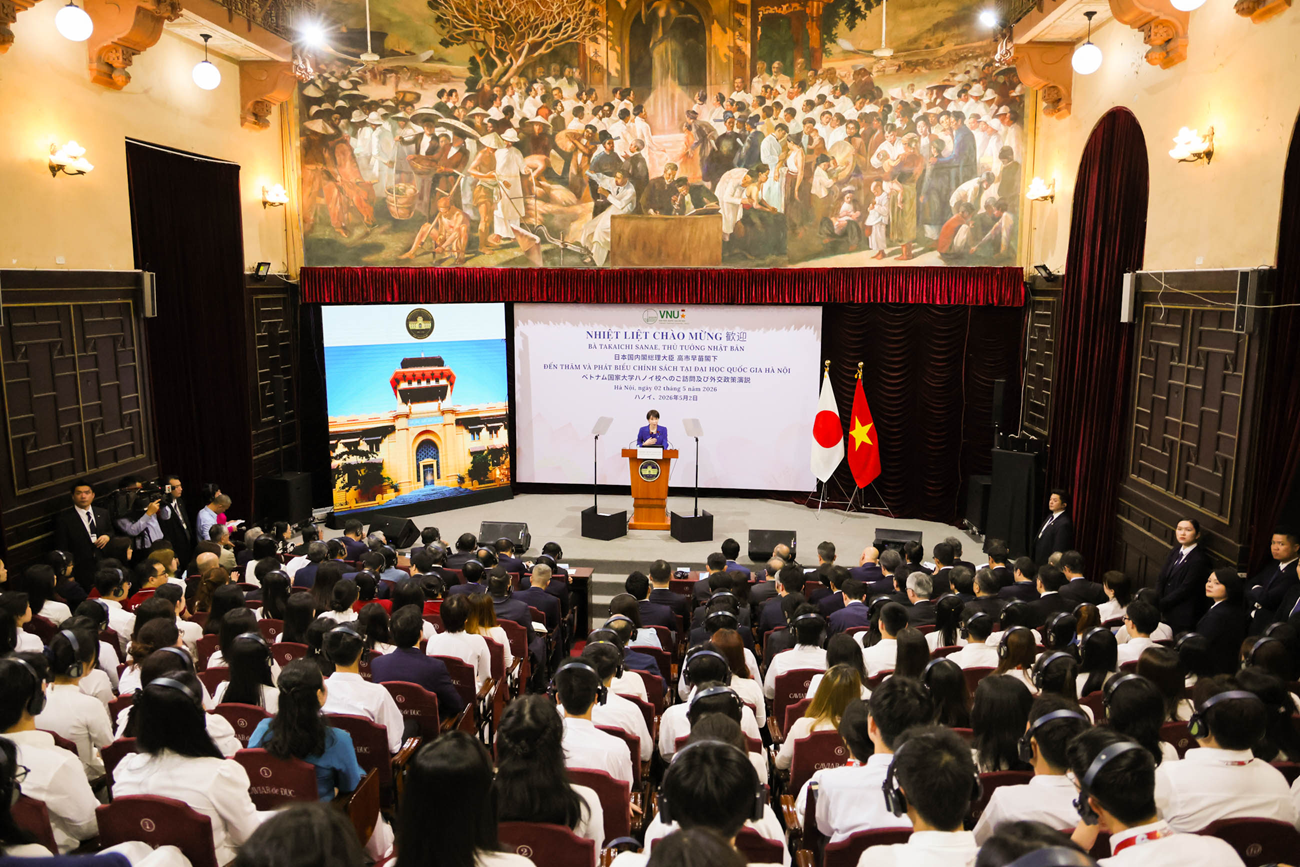
Prime Minister Takaichi Sanae outlines her vision for an “Updated FOIP” in Hanoi on May 2, 2026, reaffirming her commitment to building upon the diplomatic legacy of former Prime Minister Abe Shinzo.
Photo: Cabinet Public Affairs Office
Ten years have passed since then-Prime Minister Abe Shinzo first proposed the Free and Open Indo-Pacific (FOIP) vision in 2016. Connecting the United States, Japan, Australia, India, and ASEAN nations, FOIP has evolved into a framework aimed at regional stability and prosperity, grounded in the rule of law and free economic activity. Meanwhile, the environment surrounding the Indo-Pacific has shifted dramatically, marked by intensifying geopolitical competition and the fragmentation of supply chains. In May 2026, Prime Minister Takaichi outlined a direction to further evolve FOIP, positioning “autonomy” and “resilience” as its new central pillars.
On May 2, 2026, during her visit to Vietnam, Prime Minister Takaichi Sanae delivered a major foreign policy speech at Vietnam National University, Hanoi, centered on the theme of an updated “Free and Open Indo-Pacific (FOIP).”
This year, 2026, marks exactly a decade since Prime Minister Abe Shinzo announced the “Free and Open Indo-Pacific” Initiative in August 2016.[1] As a leader who takes pride in carrying on the legacy of Abe’s diplomacy, inheriting, developing, and advancing that diplomatic vision was likely a crucial mission for Prime Minister Takaichi. During the general election in February 2026, the Liberal Democratic Party (LDP) led by Prime Minister Takaichi pledged in its foreign policy platform to “vigorously promote the ‘Free and Open Indo-Pacific (FOIP)’ as a core pillar of diplomacy, centered on the Japan-US alliance.” After securing a solid governing foundation with a historic victory in that election,[2] Prime Minister Takaichi stated in her Policy Speech on February 20 that her administration would “strategically evolve our FOIP initiatives” as a vital core of Japan’s diplomatic capabilities.
What diplomatic objectives, then, does Takaichi’s diplomacy seek to achieve through FOIP? Furthermore, what possibilities and challenges does this approach entail? Taking Prime Minister Takaichi’s FOIP speech in Hanoi as a primary reference, this article examines its current outline and direction.
As the Successor to Abe’s Diplomacy
In her book Nippon wo Mamoru, Tsuyoku Yutakani (Protecting Japan, strong and prosperous), published in September 2024—about a year before assuming the premiership—Prime Minister Takaichi titled the introductory chapter “Carrying on the Will of Former Prime Minister Abe Shinzo!” She further noted, “I wrote this book with the sentiment of dedicating it to former Prime Minister Abe.”
How, then, will Prime Minister Takaichi carry forward Abe’s diplomatic legacy? Having previously served in key cabinet positions such as Minister in charge of Economic Security and Minister of Internal Affairs and Communications, Takaichi demonstrates a keen interest in economic security and cybersecurity within the realm of foreign policy. She has also frequently referred to the “Free and Open Indo-Pacific” diplomatic concept, which served as the signature initiative of Abe’s foreign policy. Against this backdrop, in May 2025 under the Ishiba Shigeru administration, key figures from the then-“non-mainstream” faction—including LDP Supreme Advisor Aso Taro, former Economic Security Minister Takaichi, and former Secretary-General Motegi Toshimitsu—came together to form the Headquarters for Free and Open Indo-Pacific (FOIP) Strategy within the Policy Research Council at LDP Headquarters. This move was viewed by the media as laying the groundwork for a post-Ishiba administration.
The inaugural meeting was held on May 14 at LDP Headquarters, attending by roughly 60 members of Parliament. The guest speaker was Akiba Takeo, former Secretary General of the National Security Secretariat, who was deeply involved in drafting and expanding FOIP during his tenure as Vice-Minister for Foreign Affairs. Incidentally, the author was invited as a speaker for the second meeting on May 27. On that occasion, the author contextualized FOIP within Japan’s modern diplomatic history, stating that “FOIP represents the most successful diplomatic vision since the Meiji period (1868-1912).”
Thereafter came Prime Minister Ishiba’s resignation announcement in September and the launch of the LDP presidential election, thrusting the political scene into election mode. When Takaichi emerged victorious on October 4 in her third bid for the party leadership, key members from this FOIP Strategy Headquarters assumed central positions in the Takaichi administration. Aso, who headed the Headquarters as Supreme Advisor, became LDP Vice-President; Kihara Minoru, former Defense Minister and head of the committee’s secretariat, was appointed Chief Cabinet Secretary; Kobayashi Takayuki, former Economic Security Minister and Acting Secretary-General, became Chairperson of the LDP Policy Research Council; and Ozaki Masanao, who served as Director General, became Deputy Chief Cabinet Secretary.
Furthermore, foreign policy experts deeply connected to FOIP gathered at the core of the Takaichi administration. Ichikawa Keiichi, former Director-General of the Foreign Policy Bureau at the Ministry of Foreign Affairs who played a major role in drafting FOIP during the second Abe administration, became Secretary General of the National Security Secretariat to support Prime Minister Takaichi closely. Motegi, who served as Foreign Minister under the second Abe administration, returned to the post of Foreign Minister. Bringing together experienced personnel who played active roles at the center of the Abe administration was a prudent move at a time of rising opacity and uncertainty in international affairs.
FOIP Enhancing “Inclusiveness” Over Time
Over the past decade, the international environment has undergone a radical transformation. When FOIP was proposed in 2016, the Abe administration had established cooperative diplomatic relations with both President Xi Jinping’s China and President Vladimir Putin’s Russia, actively engaging in summit-level diplomacy. Furthermore, ten years ago, trends that dominate current headlines—such as decoupling and de-risking from China in economic security, geoeconomic confrontation, the restructuring of critical mineral supply chains, and the rise of the Global South—were not yet receiving significant attention.
However, with the release of the US National Security Strategy in late 2017, the US government shifted to viewing China and Russia not as partners, but clearly as “competitors” or “threats” within a framework of “Great Power Competition.” Subsequently, with the outbreak of the war in Ukraine in 2022 and the war in Iran this year, the world has witnessed multiple high-intensity wars between sovereign states.
On the other hand, against the backdrop of these shifts in the international environment, FOIP—announced in 2016 under the second Abe administration—underwent its own unique evolution. During the first Abe administration, the origins of FOIP could be traced back to Foreign Minister Aso’s November 2006 speech “Arc of Freedom and Prosperity,” Prime Minister Abe’s August 2007 speech to the Indian Parliament “Confluence of the Two Seas” and Abe’s op-ed published shortly after launching his second administration, “Asia’s Democratic Security Diamond” (Project Syndicate, December 27, 2012). These early iterations emphasized the need for Japan to align with major democracies in the Indo-Pacific—namely the United States, Australia, and India—to counter a rapidly rising China. Centered on the Japan-Australia-India-US Quad, this approach was widely perceived as a strategy to encircle China. In this article, I designate this stage as “FOIP 1.0.”
However, nations in the Association of Southeast Asian Nations (ASEAN) tended to shy away from concepts that threatened to divide the Indo-Pacific between the US and China, forcing ASEAN countries to choose between Washington and Beijing. Consequently, the Japanese FOIP initially drew substantial criticism. Under his second administration, Prime Minister Abe chose Vietnam—an ASEAN member state—as his first overseas destination, and Japan-ASEAN cooperation continued to strengthen thereafter. In reality, advancing FOIP without securing support from ASEAN, situated as the vital nexus connecting the Indian and Pacific Oceans, was simply not feasible.
Accordingly, between 2017 and 2018, the Japanese government sought to improve relations with China and promote a more inclusive vision for the regional order, aimed both at winning ASEAN’s understanding and responding to requests from Japan’s business community. A major turning point arrived in 2019 when the ASEAN Summit adopted the “ASEAN Outlook on the Indo-Pacific (AOIP),” an ASEAN-led vision for the Indo-Pacific. This new concept of FOIP, which placed inclusiveness and diversity at its core, can be termed “FOIP 2.0.”[3]
Thereafter, the FOIP diplomatic vision was faithfully maintained through successive leadership changes, passing from the Abe administration to the Suga Yoshihide administration, and subsequently to the Kishida Fumio administration. On March 20, 2023, Prime Minister Kishida delivered a major foreign policy speech in New Delhi, India, unveiling the “New Plan for a ‘Free and Open Indo-Pacific (FOIP)’”—marking the Japanese government’s first comprehensive, concrete, and explicitly articulated policy document on FOIP. Until then, the Japanese government had intentionally avoided codifying the concept into a systematic document, using the term “FOIP” flexibly to ensure it remained broadly acceptable to diverse nations and international bodies, allowing each actor to interpret it independently. In contrast, Kishida’s speech formally established five core principles at the heart of FOIP: respect for “freedom,” “openness,” “diversity,” “inclusiveness,” and the “rule of law” (the codified “FOIP 2.0”).
In 2026, a decade after Prime Minister Abe first articulated “FOIP 1.0,” the diplomatic vision unveiled by Prime Minister Takaichi in Hanoi represents what can be termed “FOIP 3.0.” What, specifically, does this “FOIP 3.0” entail? Drawing on Prime Minister Takaichi’s speech, the following section examines its substance and direction.
Three Pillars of the “Updated FOIP”
Several reasons likely account for Prime Minister Takaichi’s choice of Hanoi, Vietnam, as the venue to announce the “Updated FOIP.” First, as previously mentioned, Vietnam was the very first foreign destination Prime Minister Abe visited upon launching his second administration. As a successor to Abe’s diplomacy, it is natural that Takaichi placed primary emphasis on strengthening bilateral ties with Vietnam. Second, as already noted, lies the importance of ASEAN as the vital crossroads connecting the Pacific and Indian Oceans. Without ASEAN’s buy-in, FOIP would inevitably founder. Third, from the standpoint of economic security, Vietnam plays a crucial role in restructuring supply chains. Furthermore, given the warm and friendly bilateral relations between Japan and Vietnam, the Takaichi administration could reasonably expect to gain endorsement and support for Japan’s diplomatic vision.
In her speech explaining FOIP, Prime Minister Takaichi began by invoking an international order based on five core principles: “freedom,” “openness,” “diversity,” “inclusiveness,” and the “rule of law.” This demonstrated continuity with “FOIP 2.0.” At the same time, she also addressed new global trends—namely, a “structural change in the international order” driven by “intensifying geopolitical competition,” “accelerating technological innovation,” and “the rise of the Global South,” all of which have become increasingly pronounced in recent years. Consequently, FOIP, as a central pillar of Japanese diplomacy, must likewise evolve to adapt to these international shifts.
How, then, should FOIP evolve amid this increasingly severe international environment? The key lies in “autonomy” and “resilience.” These two concepts also represent core principles that Prime Minister Takaichi cultivated during her tenure as minister in charge of economic security. China has advanced the “weaponization” of economics and intensified coercion against neighboring nations. Meanwhile, the United States under the second Trump administration—as illustrated by its policy of “reciprocal tariffs”—has at times viewed even allies and friendly nations with hostility, pressing unprecedentedly harsh demands. Under these circumstances, it has become essential for both Japan and ASEAN to foster the resilience necessary to stand autonomous and withstand coercion. Based on this recognition, Prime Minister Takaichi explicitly outlined three “Priority Areas” for the “Updated FOIP” in her speech. Given their complex and multifaceted nature, they are summarized below.
The first pillar is to “establish new economic infrastructure suited to the changing era.” This encompasses efforts to “enhance the resilience of supply chains for energy and critical materials” and respond to “the age of AI and data.” Amid a rapidly changing international landscape, the risks surrounding Japan are diversifying, demanding more resilient supply chains. Enhancing one’s own autonomy and resilience serves as the foundation for this effort.
The second pillar is “updating rules” (rule sharing). Through the rise of the Global South, “America First” unilateralism in the United States, the war in Ukraine, and China’s economic weaponization, the rules-based international order is being severely shaken. Even amidst such instability, Japan is called upon to unite its public and private sectors to bolster connectivity for economic growth and defend the free trade system in order to expand economic opportunities. Defending an international order based on the “rule of law” must also remain a pillar of Japanese diplomacy.
The third pillar is “enhancing cooperation in the field of security.” While previous iterations—FOIP 1.0 and FOIP 2.0—primarily sought to expand cooperation in the economic realm, FOIP 3.0 aims to expand cooperation in the security domain across the Indo-Pacific region as well. At the same time, this focus remains anchored in areas where Japan has built a track record, such as Official Development Assistance (ODA), Official Security Assistance (OSA), defense equipment transfers and related cooperation, and expanding joint training with allies and like-minded partners.
In this way, FOIP is seen as needing to evolve so that Japan can respond appropriately to structural changes in the international order.
Continuous Evolution to Expand International Support
The “Updated FOIP” announced by Prime Minister Takaichi was warmly welcomed in Vietnam, and the Indian government subsequently expressed its support as well. At the Quad Foreign Ministers’ Meeting between Japan, the United States, Australia, and India held in New Delhi on May 26, 2026, Indian External Affairs Minister Subrahmanyam Jaishankar expressed a strong desire to align with Japan’s diplomatic trajectory, affirming the goal to strengthen the Quad’s role as a strategic platform for a “Free and Open Indo-Pacific.”
Furthermore, during the Japan-India Summit on July 2 on the occasion of Prime Minister Takaichi’s visit to India, Prime Minister Narendra Modi welcomed Japan’s “updated FOIP” in the joint statement, expressing New Delhi’s intention to deepen synergy with its own Indo-Pacific framework (Mutual and Holistic Advancement for Security And Growth Across Regions, or MAHASAGAR). Through its “updated FOIP” initiative, Japan is exercising diplomatic leadership in the region—precisely what Prime Minister Takaichi sought to achieve.
At the same time, precisely because it has evolved, the “Updated FOIP” has grown more complex, expanding the policy domains it covers. Incorporating the latest global developments and addressing numerous policy spheres, Prime Minister Takaichi’s “Updated FOIP” speech is not easily grasped in its entirety. It is imperative that the Japanese government invest even greater effort in public diplomacy to foster deeper understanding among domestic and international media as well as public opinion.
Around the world, the international order based on the rule of law is fracturing, and the free trade system faces multifaceted challenges. Given the profound transformation in the structure of the international order, conventional thinking and policies will inevitably run up against strict limits. Only by continuing to evolve can Japan inherit and sustain the strategy of a “Free and Open Indo-Pacific”—the most successful diplomatic vision in modern Japanese history.
Translated from “Tokushu ‘Sekai wa Jiritsu wo Mosakusuru’: ‘Jiyude Hirakareta Indotaiheiyo’ wa Ikani Shinkashitaka (How the “Free and Open Indo-Pacific” Has Evolved — The New Scope of “FOIP 3.0” (Special Feature ‘A World in Search of Autonomy’: Free Trade Regimes Without the United States and Choices for the Global South),” Gaiko (Diplomacy), Vol. 98 Jul. / Aug. 2026, pp. 6–11. (Courtesy of Jiji Press) [September 2026]
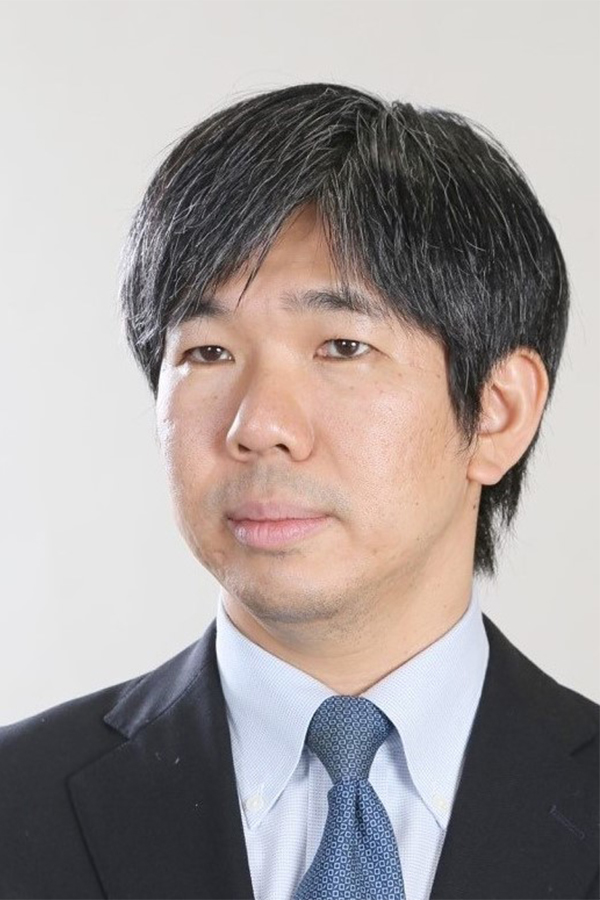
HOSOYA Yuichi, Ph. D.
Professor at Keio University
Editor-in-Chief of Gaiko (Diplomacy)
Born in 1971. Graduated from Rikkyo University, Faculty of Law. Received his Ph.D. (Law) from Keio University. He specializes in international politics and British diplomatic history. His publications include Sengo kokusai chitsujo to Igirisu gaiko (The postwar international order and British diplomacy, which won the Suntory Prize for Social Sciences and Humanities), Rinriteki na senso (Ethical wars, which won the Yomiuri-Yoshino Sakuzo Prize), Kokusai Rengo no Tanjo (The birth of the United Nations), and Kiki no Sanju-nen: Reisengo Chitsujo wa Naze Hokaishitaka (Thirty years of crisis: Why did the international order collapse after the Cold War?). His English-language publications include Security Politics in Japan: Legislation for a New Security Environment (Tokyo: JPIC, 2019), Liberation in Postwar History II: What Is Independence and Autonomy? (parts 1 and 2), and New Geopolitics (coedited and coauthored).
[1] https://www.japanpolicyforum.jp/politics/pt2022111610350112684.html
[2] In the 51st General Election for the House of Representatives, the LDP won a historic landslide, securing 316 seats on its own—surpassing the two-thirds threshold of the 465 total seats. This stands as the highest number of seats ever won by a single political party in Japanese history.
[3] Hosoya, Y. (2019). FOIP 2.0: The Evolution of Japan’s Free and Open Indo-Pacific Strategy. Asia-Pacific Review, 26(1), 18–28. https://doi.org/10.1080/13439006.2019.1622868
Keywords
- Free and Open Indo-Pacific
- Updated FOIP
- FOIP 3.0
- autonomy
- resilience
- inclusiveness
- rule of law
Related posts:
 “A World with America” and “A World without America”
 Xi Jinping’s Regime: Political Dynamics of Personal Dictatorship
 Defending Japan’s Sovereignty in the AI Era: Leveraging Linguistic Uniqueness to Build Sovereign AI
 From Support to Participation: The Future of ASEAN-Japan Relations
 Trials facing Japanese diplomacy beyond “Plan A′”: A new course demanded by multiple wars