


Thoroughly Deconstructing the Takaichi Administration’s “Social Media Strategy”: How Japan Should Respond in an Era Where Social Media Shakes Politics
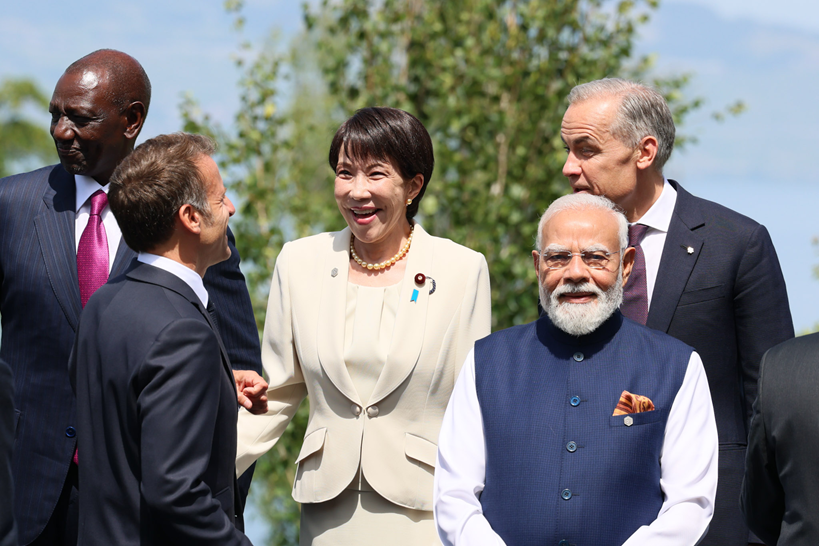
A photo posted to X by @PressSec_JP on June 17 with the caption: “Chatting with nearby leaders before the photo shoot.”
Source: Cabinet Public Relations Secretary (Experimenting with various posts) X account
In mid-June 2026, the X (formerly Twitter) account “Cabinet Public Relations Secretary (Experimenting with various posts),” which has attracted attention as a new departure in the communication strategy of the Takaichi Sanae cabinet, became embroiled in an online backlash.
The catalyst was a post featuring an image from the G7 Evian Summit held in the French resort town of Evian. On the morning of the second day—the start of substantive proceedings—a photo session brought together all attending leaders on a platform set up on the lawn outside the venue, during which they chatted amongst themselves. The posted image depicted Prime Minister Takaichi, position in the center, appearing to converse with a smile alongside French President Emmanuel Macron and Canadian Prime Minister Mark Carney. It was accompanied by the caption “Chatting with nearby leaders before the photo shoot.” However, video footage of the same moment shows that the conversation was taking place between President Macron and Prime Minister Carney; Prime Minister Takaichi does not appear to be participating in the dialogue. Yet, sandwiched between the two leaders, Prime Minister Takaichi was, for some reason, beaming broadly. Extracting that single moment created an image conveying “Prime Minister Takaichi deepening friendships in English with prominent Western leaders.”
An anonymous account flagged this as an attempt to manipulate impressions and posted a comparison between the video and the published image. The post accumulated over four million views, and as experts reposted it, criticism of the image continued to spread widely.
Whether this post was an intentional effort at information manipulation can be judged from the interview with the Cabinet Public Relations Secretary later in this article [not reproduced in this translation], but there is no question that this initiative—along with other posts—represents an unprecedented PR strategy compared to past administrations.
The account was established on May 1, 2026, as a trial run by the Cabinet Public Relations Office. Although initially labeled as temporary through the end of May, its follower count expanded beyond 100,000. From June 1 onward, Cabinet Public Relations Secretary Saiki Kozo, 51, revealed himself as the individual operating the account and continued posting. This effort deploys an information strategy that moves beyond traditional forms of communication, such as long-standing official Prime Minister’s Office accounts, press briefings, and the official website. This article analyzes the Takaichi cabinet’s communications through a comparative lens with the Donald Trump administration’s social media strategy, with which it shares notable similarities.
Former Prime Minister Abe’s speechwriter
Cabinet Public Relations Secretary Saiki was recalled to assume his post in January 2026, following the formation of the Takaichi cabinet, from his position as Director of the JETRO Brussels Office. Saiki hails from the Ministry of Economy, Trade and Industry (METI). During the second Abe Shinzo cabinet, while still in his early 40s and without prior experience as a division director, he was selected as Executive Secretary to the Prime Minister, utilizing his deep grounding in classical literature to serve as the prime minister’s speechwriter. The role of Cabinet Public Relations Secretary is considered a vice-ministerial position. Saiki’s appointment without prior experience as a director-general was reported by the Sankei shimbun on June 5 with the following observation: “A source close to the Prime Minister’s Office explained, ‘Saiki is expected to play a role akin to Japan’s Karoline Leavitt (author’s note: [then] White House Press Secretary).’”
Let us examine the latest developments in the communication strategy of the Trump administration.
President Trump is frequently characterized as an unpredictable troublemaker in terms of both policy and personal demeanor. From the perspective of PR and information strategy, however, his second administration employs a far more sophisticated approach than his first. Its social media strategy delegates distinct roles across diverse outlets, creating an integrated system where these sources interact organically to widen the circle of its message.
At the center of that circle stands President Trump himself. After being banned from Twitter (now X) for allegedly inciting the January 2021 Capitol attack, he created his own social media platform, Truth Social, where he posts text and images more than ten times a day. While many posts lean toward the unconventional—such as depicting himself in the image of Jesus Christ—or feature crude “insults” directed at journalists and politicians he dislikes, major policy decisions are frequently announced there first, keeping the world intently focused on his feed.
In addition to social media, President Trump also communicates an exceptionally large amount through face-to-face interactions with reporters. He takes questions from reporters almost daily at press conferences and Oval Office events, aboard Air Force One, and during meetings with foreign leaders. He also grants frequent exclusive interviews to media outlets, notably his favorite, Fox News. In addition, he actively creates visually compelling moments—appearing at mixed martial arts events, ordering and accepting McDonald’s delivery on camera, or visiting Elvis Presley’s mansion. Every one of these events serves as content, which is expanded and amplified through the White House’s various social media channels.
At the core of this distribution engine are three distinctive PR professionals who hold offices in the West Wing, the same wing of the White House as the Oval Office.
Serving as White House Communications Director is Steven Cheung, an American of Chinese descent. Transitioning from his previous role as Director of Communications and Public Affairs for the Ultimate Fighting Championship (UFC), his imposing physique and intimidating appearance, reminiscent of a fighter himself, have earned him the reputation of having “brought a cage (a cage used in mixed martial arts) to White House public relations.”
Alongside Cheung are two digital-native executives tapped for senior roles, both women: Margo Martin, 30, Special Assistant to the President and Communications Advisor, and Karoline Leavitt, 28, Press Secretary. [This article was published before Leavitt announced her resignation on August 12.]
What these three share in common is their background as women or ethnic minorities (non-white), alongside self-made career paths originating from lesser-known universities or non-traditional educational routes. In doing so, they embody one of the core messages of President Trump’s PR strategy: “anti-establishment.”
The strategy of “rapid response”
Within this system, Communications Director Cheung specializes in a crucial informational strategy known as “rapid response.” This involves delivering swift responses across media and social media—countering hostile messaging while rapidly amplifying positive news, images, and videos. When significant criticism of the administration surfaces in the information space, failing to neutralize it before it spreads widely makes damage control nearly impossible. Conversely, seizing and immediately broadcasting favorable moments—such as high-profile media appearances by figures like President Trump—is equally essential.
Practicing this approach on X is an account operated directly under Director Cheung, aptly named “Rapid Response 47” (the number “47” deriving from Trump’s position as the 47th President).
The account routinely clips and posts broadcasts from news outlets critical of the administration, such as CNN, mocking their anchors, while never failing to rebut reports alleging internal administration friction. On the other hand, whenever key figures like President Trump, Vice President JD Vance, or Secretary of State Marco Rubio appear on television or make striking appearances at events, short clips ranging from several dozen seconds to about a minute are edited and disseminated almost instantly following the broadcast. Additionally, whenever President Trump publishes major policy statements on Truth Social, the account shares screenshots of those posts. Following this feed provides an efficient, real-time window into the movements and statements of President Trump and his key cabinet members, making it a tool I consult regularly in my own research.
Maintaining this flow of content requires continuous monitoring of the “vast ocean” of social media and news reports, demanding an immense workload. According to reporting by The Washington Post and other outlets, Director Cheung oversees a rapid response team of approximately twelve staff members, backed by a dedicated video-clipping unit.
Separately, Cheung operates a personal X account under his own name, where he personally targets posts he finds objectionable with astonishingly vitriolic language—describing adversaries, for instance, as a “slope-brained, mouth-breathing moron.” While his targets are typically critical media outlets and influencers, he occasionally directs his fire at neoconservative figures who served in the first Trump administration, such as Mike Pompeo.
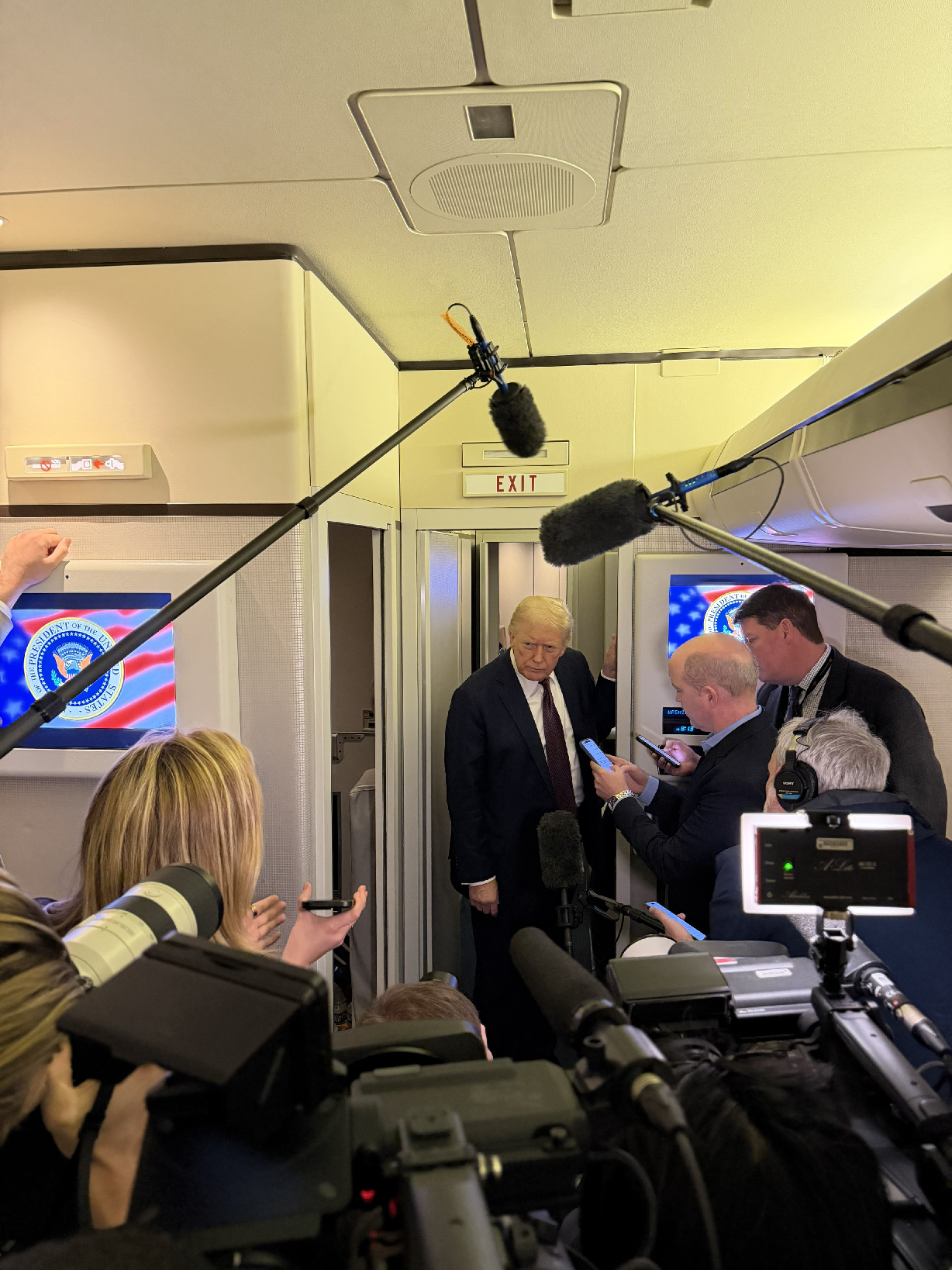
A photo posted to X by @MargoMartin47 on March 16 with the caption: “President @realDonaldTrump takes questions from the press on Air Force One while en route to Washington, DC”
Source: Margo Martin X account
Yet, in a feature profile on Director Cheung published in The New Yorker, a mainstream reporter who interacts with him testified to his strong communication skills: “I like dealing with him. He’s not a white nationalist. He gets back to you.” Cheung’s “aggressive PR tactics,” in short, are best understood as a calculated, professional information strategy.
Press Secretary Leavitt also belongs to this aggressive school of communication. At press briefings, maintaining a fresh smile, she excels at criticizing the elite reporters arrayed before her with machine-gun-fast retorts, delivering sharp rebukes like “Only The New York Times would ask a question like that” or “That sounds like a question from a high schooler.” At the same time, having recently given birth to her second child, she posted a photo on X holding her newborn, which generated over 20 million views.
Equally noteworthy is the approach taken by Special Assistant to the President and Communications Advisor Margo Martin, whose public persona resembles that of a professional model. Free of aggression, Martin’s posts focus entirely on visually refined images and high-quality video content. Constantly accompanying the president with a smartphone in hand, she captures candid, behind-the-scenes glimpses of President Trump and dynamic visuals from angles and moments inaccessible to the press pool. She manages personal accounts on X and Instagram alongside a short-video-focused account (@teamtrump) on Instagram and TikTok, tailoring edits specifically for each platform and occasionally generating view counts well into the hundreds of millions.
Martin excels at framing President Trump together with the surrounding press corps, cultivating the image of a leader at the center of world attention. The image above was taken aboard Air Force One, captured from a high vantage point inside the narrow, moving cabin. Similarly, during President Trump’s visit to China, she posted a video clip on Instagram styled like a dramatic movie trailer set to a heavy score, framing both American and Chinese leaders with dignity while reflecting deep respect for Chinese history and culture.
During Prime Minister Takaichi’s visit to the United States in March 2026, Martin captured a close-up video at the entrance of the White House as Takaichi practically threw herself into President Trump’s arms for a hug. Set to the Beatles’ “All You Need Is Love,” the clip was uploaded to Instagram and TikTok. While Japanese observers may view such framing with mixed feelings, Fumiaki Wakui, chief of TBS’s Washington bureau, offered an insider’s perspective on podcast Washington Weekly 2026 by TBS (Ep. 107)[1] after observing her at a White House briefing: “She arrived 30 minutes before the start and spent the entire 90-minute session filming 30-second clips, reviewing them repeatedly so as not to miss a single key moment. It offered a glimpse into the painstaking labor behind these posts.”
Lending an unexpected layer of elegance above these communicative efforts is White House Chief of Staff Susie Wiles, who oversees the three PR executives. Her posts on X consist primarily of text, highlighting milestones such as the signing of a memorandum with Iran or visits from lunar exploration crews. Declaring “I welcome different viewpoints,” she projects values centered on defending free speech. When reports emerged—erroneous, in her view—that she was stepping down, she responded with dry irony, avoiding profanity or terms like “fake news”: “After an accomplishment filled week by President Trump, I have the pleasure of reading a piece of Friday fiction, courtesy of the Daily Mail.” Firm yet refined, her denial firmly shut down the rumors.
Run almost entirely by Saiki alone
As these examples illustrate, the Trump administration’s social media strategy in its second term employs a system in which diverse communication sources reach various demographics, realizing unified and effective message marketing. Personnel stability is also entirely different from the first term, with the core members introduced here remaining unchanged since the administration’s launch.
By contrast, how does the Takaichi administration’s social media strategy hold up? Carrying over from previous cabinets, the Cabinet Public Relations Office runs the official Prime Minister’s Office accounts (@kantei) across X, Instagram, Facebook, and other platforms, alongside Takaichi Sanae’s personal accounts as an individual politician. Joining these is the Cabinet Public Relations Secretary X account mentioned at the beginning of this article. While the overall PR team under Cabinet Public Relations Secretary Saiki numbers between 70 and 80 people, that headcount covers all public relations duties, including press relations, newspaper advertising, and the production of government PR programs for television; only four staff members are stationed directly in Saiki’s office at the Prime Minister’s Office. The Cabinet Secretary account is run almost entirely by Saiki alone, creating a situation where the heavy workload makes him hesitant to expand operations to platforms like Instagram. Furthermore, because Takaichi’s personal accounts fall outside the jurisdiction of the Cabinet Public Relations Office, there is little coordination. Conversely, the official Prime Minister’s Office account (@kantei) and the Cabinet Secretary account frequently repost each other, giving the impression that their roles are not clearly delineated.
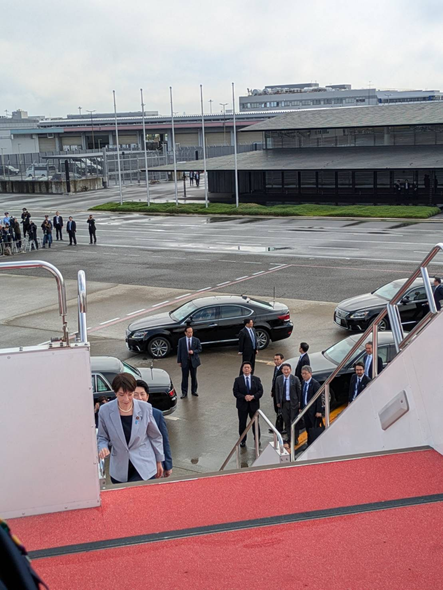
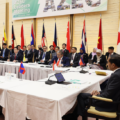
A photo posted to X by @PressSec_JP on May 1 with the caption “Departing for Vietnam now”
Source: Cabinet Public Relations Secretary (Experimenting with various posts) X account
Compared to the Trump administration—where Martin focuses exclusively on video and image distribution with daily creative refinements, supported by dedicated rapid response teams and additional personnel—Takaichi’s operation is vastly understaffed. Yet, within these constraints, the Cabinet Secretary account launched by Saiki exhibits traits that clearly overlap with the Trump administration’s strategy: “close-range smartphone photography” and “rapid response.”
Looking first at the close-range photography, Saiki frequently posts photos taken from extremely close proximity to the Prime Minister, in spaces inaccessible to the press pool—a technique reminiscent of Martin. However, the similarity ends with the method; the quality of the uploaded images falls far short of Martin’s standard. In the photo above, Prime Minister Takaichi is pushed to the edge of the frame with her lower body cut off, while an individual in the background resembles an ominous shadow. The reporters behind her are similarly bisected. In many of Saiki’s other photographs, subjects are routinely cropped out awkwardly. Perhaps because of my own background in television, I sense a lack of respect for visual expression in these posts. For Saiki, who is already burdened with numerous other duties, taking photos on the side inevitably has its limits.
On the other hand, Saiki’s concept of rapid response appears to be yielding positive results.
One series of posts that caught my attention appeared on May 9, 2026, concerning METI’s plan to send officials to Moscow. Media reports surfaced indicating a plan to visit Russia alongside Japanese business representatives operating locally, triggering criticism on X that this represented a new pro-Russia shift. Yet such visits have been ongoing; Japan has not severed diplomatic ties with Russia, and local business operations continue. As a general principle, whether from the standpoint of energy security to protect citizens or given the international situation where diverse nations from the United States to ASEAN maintain summit-level dialogue with President Putin, maintaining a degree of administrative and economic exchange is routine. For online sentiment that would be difficult for the official Prime Minister’s Office account to address directly, the Cabinet Secretary account promptly reposted METI’s explanation and offered as much context as possible, an effort that deserves credit.
Inseparable from monitoring speech
Another example of an agile response to overseas posts occurred when an extreme account with a history of anti-Islamic rhetoric claimed that Prime Minister Takaichi said, “A shrinking population is better than filling the country with low-skilled immigrants from different cultures.” The Cabinet Secretary account refuted this directly in English: “Prime Minister Takaichi Sanae made no such statement,” citing her actual remarks to demonstrate the discrepancy. The post gained nearly 500,000 views. Being labeled an anti-Islamic xenophobe would deal a catastrophic blow to Japanese diplomacy; proactive efforts to prevent such mischaracterizations demonstrate the account’s functional value.
At the same time, this application of rapid response raises legitimate concerns. Posts have highlighted domestic critical reporting on Takaichi, stating that checks with the relevant ministries and with Takaichi herself had found the reports to be contrary to the facts. However, journalism cannot simply accept official assertions of internal verification at face value without third-party verification. Furthermore, government-led rapid response frequently functions to monitor criticism within the information space, creating a thin line that borders on suppressing journalism. A precedent occurred in the United Kingdom, where the government established a Rapid Response Unit (RRU) in 2018. It later came to light that, during the COVID-19 pandemic, the unit had compiled lists of journalists who expressed even mild skepticism toward vaccines and had passed that information on even to the US government. When a radio host on the list—who had actually been vaccinated and regularly communicated vaccine efficacy—demanded disclosure and correction, the government was forced to apologize. The RRU was also abolished.
The philosophy behind rapid response carries a dual nature: on one side, it stems from the PR information warfare techniques developed over successive US presidential campaigns by both Democratic and Republican administrations, as seen in the Trump White House; on the other, it reflects an intelligence mindset that uses combating disinformation as a banner to monitor and pressure speech, as demonstrated in the British example. I do not think the Trump administration’s vitriolic attacks are a good thing, but at least they are carried out in the open. We must ensure that rapid response does not lead to the kind of undemocratic covert maneuvering carried out by intelligence agencies and the like. What Cabinet Secretary Saiki is trying to do appears to fall into the former category, but it warrants continued scrutiny. With the Ministry of Defense spokesperson recently initiating posts on X as well, maintaining this vigilance becomes all the more essential.
Today, it has become standard practice for world leaders, cabinet ministers, and spokespersons across both East and West to communicate via social media. President Trump built a staff and infrastructure capable of handling information warfare through long, grinding political battles to secure the Republican nomination and win the US presidency. Establishing a comparable apparatus under the Takaichi cabinet is a daunting task. Methodologies relying on vitriol are effective primarily in America, where media and societal polarization have reached extreme levels that the Trump administration actively incorporates into its strategy—an approach that remains ill-suited for Japan.
What the Takaichi cabinet is missing
Yet, compared to the United States, what is fundamentally missing from the Takaichi cabinet’s information strategy is communication from Prime Minister Takaichi herself. As pointed out in various quarters, her opportunities for direct interaction with reporters are scarce compared to past administrations, and even when they occur, time and the number of questions are tightly restricted. Answers and questions are largely prearranged, with most “press conferences” showing the Prime Minister speaking with her eyes fixed on a script. Visually “compelling exposure” is also minimal, particularly in domestic political settings. As a result, the administration resorts to forced image distribution in diplomatic contexts, triggering online backlashes like the one described at the beginning of this article.
One post on the Cabinet Secretary account that I found intriguing featured a video of a brief press conference held prior to Prime Minister Takaichi’s visit to South Korea on May 19, 2026. Stating that viewers could watch the unedited Q&A with reporters—including questions unrelated to the South Korea visit—the post showed Takaichi responding to the “defamatory video issue.”[2] This segment alone appeared unscripted and carried a sense of tension. Fundamentally, press conferences between a leader and journalists ought to be a battlefield of words. Former Prime Minister Abe Shinzo, whom Prime Minister Takaichi regards as her mentor, frequently took the opportunity to speak in his own words before cameras to reporters and news anchors, despite drawing considerable criticism. I hope to see Prime Minister Takaichi adopt a similar approach. The debate generated through such exchanges could serve as a catalyst for many citizens to re-engage with politics.
From my sense during his interview with Cabinet Secretary Saiki [not reproduced in this translation], his passion for PR under a Takaichi cabinet whose views align with his own is extraordinary. I was also struck by Saiki’s keen insight in identifying the vast silent majority that exists between those intent on criticizing everything Takaichi does and those intent on defending her unconditionally. However, in his extreme caution against questions designed to catch her off guard, his awareness of confronting journalism’s inherent spirit of critique appears thin. There is also little appreciation for the “editorial” function of media and the positive creativity it generates. That insight was possessed by politicians who now seem to belong to the “good old days,” such as former Prime Minister Ishiba Shigeru, but appears lacking in Prime Minister Takaichi.
Looking at the Trump administration, however, once a government acquires social media as a weapon to speak directly to the public, attempting to utilize it is a natural impulse. The question then becomes how journalism will fulfill its own role in response—a challenge that ultimately rests on the shoulders of the press.
Translated from “Takaichi Kantei ‘SNS Senryaku’ Tettei Kaibo: SNS ga Seiji wo Yurugasu Jidai ni Nihon wa Doarubekika (Thoroughly Deconstructing the Takaichi Administration’s “Social Media Strategy”: How Japan Should Respond in an Era Where Social Media Shakes Politics),” Bungeishunju, August 2026, pp. 116–124. (Courtesy of Bungeishunju, Ltd.) [November 2026].
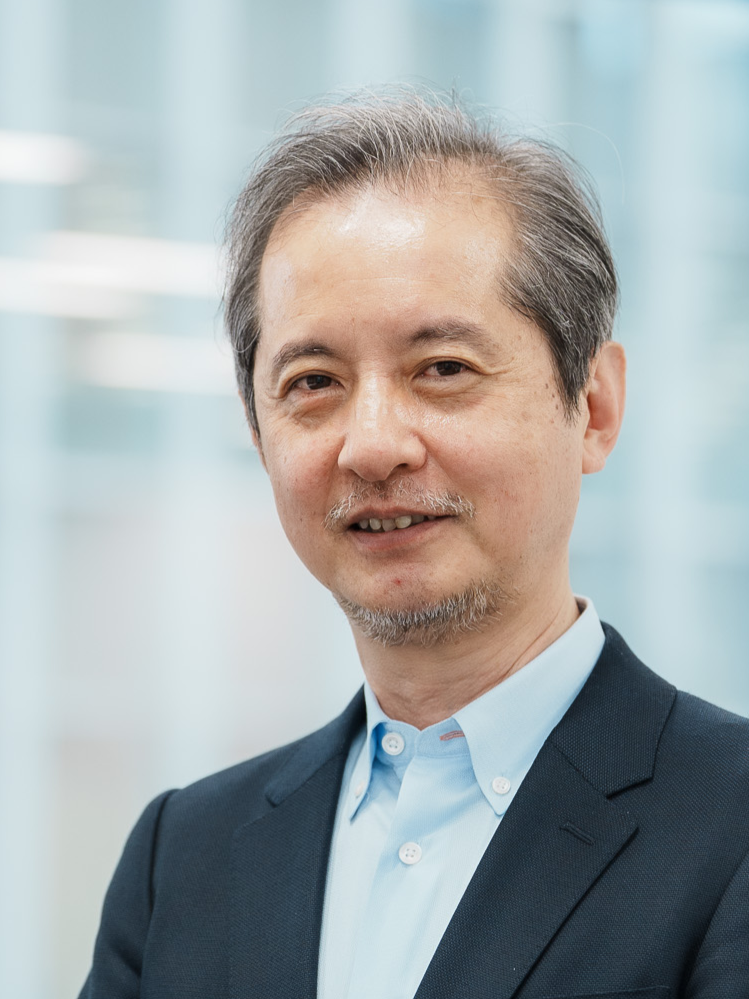
TAKAGI Toru
Non-fiction writer / Visiting Professor, Graduate School of Social Design Studies, Rikkyo University
Born in Tokyo in 1965. After graduating from the Faculty of Letters at the University of Tokyo in 1990, he joined NHK. As a director, he produced numerous major documentaries, including NHK Specials such as Minzoku Joka: Yugo, Johosen no Uchimaku (Ethnic cleansing: Behind the scenes of information warfare), Bamian: Daibutsu wa Naze Hakai Saretanoka (The Destruction of the Bamiyan Buddhas), Joho Seisen: Arukaida Nazo no Media Senryaku (Sacred information war: Al-Qaeda’s mysterious media strategy), Paru Hanji wa Nani o Toikaketanoka: Tokyo Saiban, Shirarezaru Kobo (What did Justice Pal question? The unknown battle of the Tokyo Trial), Indo no Shogeki (The Indian shock), and Futto Toshi (Boiling cities). He also conceived, scripted, and produced the historical drama series Dorama Tokyo Saiban (Tokyo Trial), which was nominated for an International Emmy Award. His book Dokyumento Senso Kokoku Dairiten (Document: War Advertising Agency) (Kodansha Bunko), based on his documentary work, won both the Kodansha Non-Fiction Award and the Shincho Document Award. His second book, Daibutsu Hakai: Bin Radin, 9.11 e no Pureryudo (The destruction of the Great Buddha: Bin Laden and the prelude to 9/11) (Bungeishunju), received the Oya Soichi Non-Fiction Prize.
[1] https://radiko.jp/podcast/episodes/da09f1f3-beac-41da-a97b-6c8b49b8476a?play=auto (in Japanese)
[2] Translator’s note: Refers to allegations reported by certain weekly magazines that Prime Minister Takaichi Sanae’s campaign was involved in creating and circulating defamatory videos targeting rival candidates in past elections and party leadership contests, sparking debate in the Diet and on social media.
Keywords
- Takaichi Administration
- Cabinet Public Relations Office
- social media
- X
- rapid response
- Cabinet Public Relations Secretary
- Saiki Kozo
Related posts:
 Why Did the “Shidehara Initiative Theory” Emerge? Historical Facts and “Myth” Surrounding Article 9 of the Japanese Constitution
 Inside the Hashimoto Administrative Reform Council: New Documents Reveal the Inner Workings 30 Years On
 New Class Society, Transformation of Hardcore Conservative Base
 How the “Free and Open Indo-Pacific” Has Evolved: The New Scope of “FOIP 3.0”
 The Strategic Logic of “Autonomy” in Asian Decarbonization: What Should Japan Connect?