


The LDP Faces Tectonic Shifts in Japanese Politics
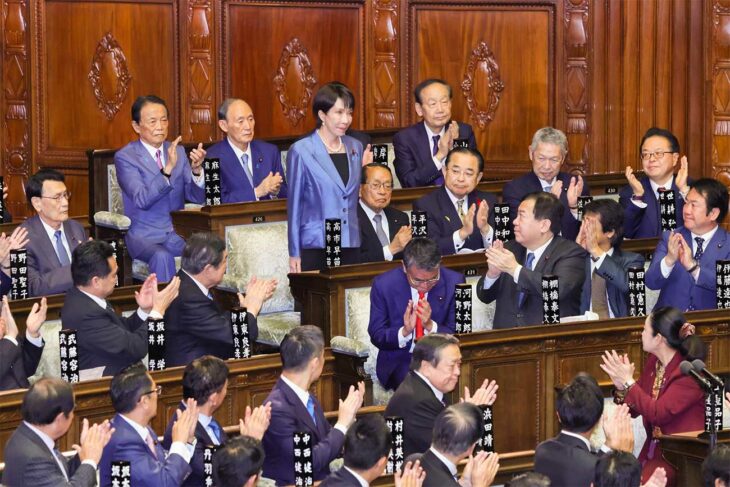
After this article was published, the Takaichi Sanae administration was launched. As the author predicted, “a new government will have been formed under the new president, and the LDP will likely have high expectations.” The administration enjoyed high approval ratings. However, the author points out that the LDP’s difficulties will continue.
Photo: Cabinet Public Affairs Office
The LDP’s difficulties will continue in the next election
As of this writing, the Liberal Democratic Party (LDP) has not yet chosen a new president. However, by the time this issue of Chuokoron is published on October 10, 2025, a new government will have been formed under the new president, and the LDP will likely have high expectations.[1] Nevertheless, the new president’s popularity and the LDP’s recovery in approval ratings may not endure this time. The LDP’s poor performance in both the Lower House general election in October 2024 and the Upper House regular election in July of this year is due to tectonic shifts in Japanese politics. The LDP’s inability to respond adequately to these shifts is at the heart of the problem.
Throughout its history, the LDP has typically recovered in the following election, even if it performed poorly in either the Upper or Lower House election. This is because the scandals and other issues that occurred were resolved by the time of the next election.
However, this time, voters have negative views of the political fundraising scandals that have caused the LDP’s decline. Opinion polls show little expectation that these problems will be resolved. It is reasonable to assume that voters’ negative views of the LDP and other established parties will persist. We often hear the criticism, “Putting a new face on an old problem,” but it is rare to hear it expressed so strongly this time. LDP politicians are aware of the difficult situation, of course, and are calling for a “dissolution and a fresh start,” but what kind of reforms are needed? I would like to discuss the LDP’s predicament in relation to seismic shifts in Japanese politics.
The “perpetual ruling party mentality” is the cause of the LDP’s significant loss of seats
The LDP was said to have been “defeated” in two national elections, in 2024 and 2025. However, there has been no change in the government, and the LDP-Komeito administration continues.[2] The assumption underlying this “defeat” was that the LDP-Komeito coalition government would maintain a majority in the national elections. However, this assumption appears to be crumbling. Many voters were positive about the election results and appear hopeful about politics based on a minority government. This is an unacceptable situation for the LDP, the “perpetual ruling party.” It’s understandable that they’re having difficulty accepting this reality, but unless they do, the party’s future is uncertain.
The LDP lost many seats in the Lower and Upper House elections for three main reasons.
First is the poor economic situation. As real wages decline, people naturally become more critical of the ruling party. This trend is common in any country. Although corporate performance is good and stock prices continue to rise, it’s possible that politicians have not grasped the severity of the situation. However, elections reflect the will of the people.
Second, right-wing parties have grown and stolen votes from the LDP. In previous elections, parties opposing the LDP were positioned on the left and were divided. In contrast, the LDP had no rivals on the right. Thus, it only needed to solidify its base on the right before moving toward centrist votes. However, right-wing parties such as the Conservative Party of Japan (CPJ) and Sanseito have emerged. Additionally, a growing number of LDP supporters now consider active fiscal policy to be a conservative ideology. This group has lost some support to parties that advocate for tax cuts, such as the Democratic Party for the People (DPP).
Third, the “perception gap” between ordinary voters and politicians from established parties, including the LDP, remained unresolved. Regarding the issue of “slush funds” by LDP factions, voters view politicians’ financial sense and distinction between public and private matters critically. Simply dissolving factions will not convey a change in the “nature of politics.” However, the mainstream opposition parties pursuing the LDP are also viewed critically. Their pursuit is seen as missing the point, which has led to criticism of established parties as a whole.
In this light, the LDP’s predicament is not temporary. Although the LDP dominated during Shinzo Abe’s second administration (2012–2020), evoking nostalgia among its members, a return to the Abe era will not solve the problem. Although supported by a robust economy, the Abe administration continued to win landslide victories in national elections due to opposition party division and low voter turnout. However, it did not reverse the LDP’s long-term decline.
Established political parties have been left behind by the times
The LDP had been in a long-term decline since the 1990s, but had managed to overcome this by forming a coalition with Komeito and cooperating in elections since the 2000s. However, when the economy fell into a tailspin due to the global financial crisis (GFC), the LDP suffered a major defeat in the 2009 general election and lost power to the Democratic Party of Japan (DPJ, 1998–2016). Though the Abe administration continued to win national elections after returning to power in 2012, the LDP’s vote share rarely increased, and the party as a whole was unable to escape its long-term decline.
In other words, the opposition parties remained divided while the Abe administration seized the power to set the agenda. Then, the administration suddenly dissolved the Diet to force elections with unclear issues, resulting in low voter turnout. This allowed the LDP to win a large number of seats. This trend continued in the two national elections under the Kishida Fumio administration (2021–2024), though it was largely due to the weakness and fragmentation of the mainstream opposition parties. As trust in the LDP is declining due to distrust in politics, a situation is emerging in which the LDP cannot win, even if the opposition parties are divided.
The conventional view is that if the opposition parties are divided, they will compete for votes, and no party will emerge that can rival the LDP, ensuring the LDP’s safety. However, in reality, the Constitutional Democratic Party of Japan (CDPJ) has not garnered enough support to become one of the two major parties, and the opposition parties are competing for votes. Nevertheless, the LDP failed to secure its target number of seats in the last two national elections.
In other words, we are now in an era in which elections cannot be predicted based solely on the performance of established parties. The LDP relied on Komeito, but it has seen a significant decline in its vote-gathering power, even in proportional representation seats. Many LDP candidates need electoral cooperation from Komeito to win, but Komeito is no longer as reliable as it once was.
The CDPJ has been unable to take the lead in politics or set an aggressive agenda in the election. Instead, it has adopted a passive stance, relying on the LDP’s unpopularity to gain more seats. Its stagnation is evident, and its approval ratings are being surpassed by new parties. The Japanese Communist Party (JCP) has also seen a notable decline, losing ground to Reiwa Shinsengumi, launched in 2019, which shares similar views and is gaining momentum.
A common feature of these established parties is the aging of their supporters. In Japan’s super-aging society, which has a large elderly population, support from older people is significant. However, the problem is that they receive little support from younger generations. In short, both the ruling and opposition parties are losing touch with how they previously assumed voters would behave, and established parties are falling behind the times.
Human relationships at the core of political activity
To date, building human relationships has been central to Japanese politics and elections. With the exception of the JCP, political parties are formed from various social groups, and the degree of organization within these parties is low. Political parties and politicians have primarily relied on creating networks of human relationships within groups organized for nonpolitical purposes, such as companies, industry groups, labor unions, religious groups, alumni organizations, and local ties. However, individual politicians, rather than political parties, actually mobilize these networks, and voters tend to support individuals more than parties.
For this reason, politicians from the LDP, CDPJ, and DPP have based their political activities on “personal support groups” organized specifically for their elections. These groups primarily consist of secretaries hired with political funds raised by the politicians. The secretaries gather local influential figures and industry association executives and use these personal networks to appeal for support on various occasions. Thus, politicians receive various petitions from their supporters and convey them to government agencies, which is an important aspect of their activities. When politicians perform these errands for various people in their local communities, the voters who receive their support want to repay them in the election. Their political activities are based on an accumulation of these obligations and human relationships.
Politicians frequently attend events such as New Year’s parties, Bon Odori (Bon Dance), and local festivals to confirm personal relationships. They also give greetings at various meetings and personally attend or send secretaries to the funerals of supporters. Politicians and candidates also regularly participate in greeting commuters in front of train stations, where they hand out flyers while giving speeches. This helps them remember faces and names, and they greet acquaintances individually to confirm connections. Although handshakes are uncommon in Japan, politicians make an exception because they are an effective way to establish intimacy in a short amount of time.
These everyday activities make it clear that, when it comes to elections, the most memorable moment is when a candidate announces their name over a loudspeaker from a campaign vehicle. However, the real campaign work is phone campaigning. Using phone numbers obtained from various organizations, campaigners call people to ask them to vote in the election. If they have a high-quality list of names, they can generate a decent response rate.
However, such activities have become less effective in recent years. In the past, people would socialize with their relatives, prioritize being around others at work, and value personal connections in their local communities. In these environments, human networks were dense, and obligations arose from small relationships of debt and favor. People would often repay these favors by voting for those who had helped them, but this practice is now being questioned.
For example, since the start of the COVID-19 pandemic, funerals have tended to be limited to family members, with fewer people in attendance. Traditionally, wakes and funerals were events that people had to attend at all costs. A change in this pattern signifies a shift in the nature of human relationships. While the extent of this change may vary, it is undeniable that the sense of obligation and debt on which traditional human relationships are based is weakening. It is only natural that the nature of politics and elections, which are based on these relationships, will change.
Furthermore, sources of political information vary greatly by generation. The media used as information sources differ by age group. Older people rely on television and newspapers. Middle-aged and older people rely on television, social media, and aggregation sites. Younger people are heavily influenced by social media and video sites. Therefore, traditional approaches can no longer reach younger generations. Former Prime Minister Ishiba Shigeru often says, “You can only get as many votes as you shake hands,” but the DPP and Sanseito have successfully reached young people through X and YouTube, equivalent to a handshake.
Politicians from the LDP and other parties often say, “Our party should strengthen its online information dissemination,” but this is a mistake. Social media is not just a tool for advertising. It’s important that it gives voters the feeling that they’re engaging in a dialogue with politicians and candidates. DPP President Tamaki Yuichiro continues to post every spare moment in order to evoke such reactions.
What is noteworthy about Sanseito is the spontaneous political activity of its supporters
Sanseito’s growth stems from its innovative political activities. Although Sanseito tends to draw attention for its policy positions, such as “Japanese people first,” the group adapts its policy themes as needed. What is more noteworthy, however, are its organizational principles. Although the group has a basic political direction, its members deliberately select candidates and decide how to campaign. Voters also volunteer to participate, making Sanseito a voter-driven movement. Voters’ willingness to discuss and engage in political activities is similar to that of organized political parties in the West. Similar elements exist in organized Japanese political parties, such as the JCP and Komeito. While Sanseito may have taken inspiration from these established parties with fixed policies and forms of activity, it offers greater room for its members to express their creativity and ingenuity. This active political engagement provides a valuable opportunity for individuals dissatisfied with the current political landscape to express their desire to participate.
Established parties, such as the LDP, tend to treat voters as customers because their activities are based on personal support groups. The core of these activities consists of the politicians themselves and their office secretaries. While supporter club leaders participate voluntarily, other supporters engage in political activities through influence and cooperation. Most people join a party through support clubs and only become aware of their membership when paying dues or during leader elections.
Of course, there’s a big difference in enthusiasm between participating in activities at the request of politicians or influential supporters, and participating voluntarily as a party member for the sake of political activity itself. The latter allows for activities with a noticeable presence, even with a small number of members. Sanseito is unusual among new nationwide parties because it has been able to elect local assembly members thanks to this style of activity.
When Sanseito was first launched, it had a small number of supporters. People with unconventional views, which had previously been ignored by politicians, joined, making it appear biased. However, as Sanseito’s influence has grown, its membership and activities have become more diverse. While Sanseito’s future remains uncertain, the proven effectiveness of this type of political activity suggests that similar parties will emerge. Furthermore, when a new party engages in voter-driven political activities and proposes policies that resonate with a wider audience, its influence is likely to grow significantly.
Fundamental issues that must be addressed
So, how should the LDP respond to these developments? At least two things need to be done.
The first step is to establish interactive communication channels with voters. Many ordinary voters are frustrated that politicians do not listen to their opinions. The LDP’s previous method of gathering feedback involved politicians holding roundtable discussions and meetings with voters. The politicians would then connect the voters to government officials, promising to make their requests a reality. However, politicians’ jobs are to meet with people. While they listen to a variety of opinions, it’s undeniable that the people they listen to are biased. A broader base of contact is needed.
However, translating voters’ desires directly into policy is often neither feasible nor sustainable. In that sense, it’s important for us as politicians to find our purpose, engaging in an interactive approach that explains the world and how policies work, persuades voters, and ultimately delivers. Depending on how they’re used, new media, such as social media, have the potential to serve as interactive communication tools. However, if politicians respond individually, the political party as a whole will not become balanced. What is needed is incorporating politicians’ human touch into political parties’ and other organizations’ responses.
Second, a form of activity must be adopted that allows party members and voters to actively participate in policy-making. Instead of treating voters as customers, politicians should participate in voter-led activities, through which new political initiatives can emerge. While voters who participate voluntarily are powerful, they are not convenient labor. They hold diverse opinions and are not easily united. From an organizational perspective, further exploration is needed to determine how to aggregate opinions and balance spontaneity with overall unity.
Recently, there has been suspicion that the policies put forth by the LDP-Komeito government are ineffective. There is also a growing feeling that politicians, including those in the LDP, are out of touch with ordinary voters. This is likely because interactions with voters have become routine, resulting in fewer opportunities to address real social issues. Therefore, it is essential to change the way we interact with voters.
However, voter-driven party activities conflict with the interests of politicians, including current Diet members. The foundation of LDP politics is politics centered on personal support groups. LDP politicians have frantically raised political funds, established offices, and steadily built up personal connections in order to become politicians. If they win multiple elections, they have the opportunity to achieve great things, such as becoming a minister. Fundraising and maintaining personal connections are inherently difficult. However, winning elections with their own organization allows them to act according to their own ideas. Furthermore, once they have established a political base, people and money often come to them. When it comes time to retire, they can pass their support groups on to their children or others and retire with honor. Japan’s high number of dynastic politicians is due to politics centered on personal support groups. Dynastic politicians who inherit this system avoid the initial difficulties and are able to establish themselves early on. This explains why there are so many hereditary politicians among the LDP’s executives.
Can voter-led activities be introduced into the politician-led activities that have continued for so many years? Can the activities be reorganized into party-led political activities to aggregate and streamline public opinion? Such reforms would significantly weaken the autonomy of politicians who currently rely on personal support groups. However, the LDP will not be able to be reborn unless it can resolve both the difficult issues of opposition to such reforms and the need to establish a new organizational structure. Without a revival, established parties like the LDP will inevitably become impoverished.
While measures such as bringing in a popular new leader to bring about a change of mood, proposing innovative policies, or expanding the coalition to end minority ruling parties in the Lower and Upper Houses may be necessary, they only postpone the fundamental problem. Until now, the LDP has maintained its position as a ruling party by reforming itself. The LDP is at a major crossroads and must decide whether to reform its very foundation.
Translated from “Jiminto ga Chokumensuru Nihonseiji no Chikakuhendo (The LDP faces tectonic shifts in Japanese politics),” Chuokoron, October 2025, pp. 130–137 (Courtesy of Chuo Koron Shinsha) [January 2026]
 IIO Jun, Ph.D.
Professor, National Graduate Institute for Policy Studies (GRIPS)
Born in Hyogo Prefecture in 1962. Graduated from the Faculty of Law, University of Tokyo in 1986. Completed the doctoral program at the Graduate School of Law and Politics, University of Tokyo, in 1992. He earned his Ph.D. in Law. He has served as an associate professor at the Graduate School of Policy Science, Saitama University, and the National Graduate Institute for Policy Studies before assuming his current position. His publications include Nihon no Tochi Kozo (Japan’s governing structure) (Suntory Prize for Social Science and Humanities) and Gendai Nihon no Seisaku Taikei (Contemporary Japanese policy systems).
[1] The Takaichi Sanae administration was inaugurated on October 21, 2025. Subsequently, the cabinet received an approval rating of 66% from NHK, and achieved similarly high ratings in opinion polls conducted by various media outlets.
[2] On October 10, 2025, Komeito announced its withdrawal from the LDP administration, citing the LDP’s lack of clear and concrete cooperation in addressing issues surrounding “politics and money.”
Keywords
- Japanese politics
- Liberal Democratic Party
- reform
- support groups
- media
- interactive communication
- voter-led activities
Related posts:
 New Class Society, Transformation of Hardcore Conservative Base
 The Dilemma between Free Trade and Economic Security
 What Is Meant by Supply Chain Resilience?
 Recent Cyber Situations and the Bill Introducing Active Cyber Defense
 From Tomiichi Murayama to Sanae Takaichi: Thirty Years After the Cold War—The Present Location of Japanese Politics