


Xi Jinping’s Regime: Political Dynamics of Personal Dictatorship
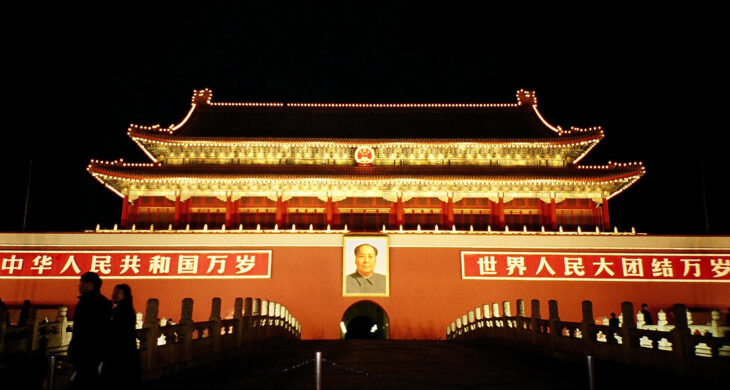
The post of “Chairman of the Chinese Communist Party” was abolished in 1982, six years after Mao Zedong’s death. Xi Jinping has solidified his power base within the party’s central leadership and is expected to serve a third or even fourth term in power…. Professor Kawashima Shin asked, “Is there a chance that Xi will become chairman of the CCP?” to which Professor Suzuki Takashi replied, “That’s possible.”
Photo: iroha@ / Photolibrary
The Xi Jinping administration is now on a stronger footing than ever, based on Mao Zedong’s governing philosophy (Maoism). Is Xi’s rule unshakable? Where does Xi’s power come from? In this dialogue, two China experts explore Xi Jinping’s domestic governance, global strategy, and succession. [Editor’s note: This dialogue took place on October 2, 2025.]
Kawashima Shin: The Xi Jinping administration is currently midway through its third term. To assess its future, let’s first consider China’s political schedule.
Suzuki Takashi: The end of his third term in 2027 will mark a turning point, but barring any unforeseen events, I believe the Xi Jinping administration will see a fourth term (until 2032). In the long term, China aims to become a “great modern socialist country” by 2049, the 100th anniversary of the People’s Republic of China’s founding. The country also aims to rival or surpass the United States and achieve a hegemonic position in the international community. The first step is to realize “modern socialism” by 2035. The years 2027, 2032, 2035, and 2049 are important milestones to consider when looking at the outlook for Chinese politics.
Interest in maritime expansion nurtured during the local government era
Kawashima: I imagine that Xi Jinping intends to serve until his fourth term. After that, he will either retire, depending on the progress of the succession issue, or he will serve a fifth term until around 2035. If he intends to step down after four terms, then we should have seen developments regarding his successor by now. Many of the six current Standing Committee members of the Politburo, excluding Xi Jinping, as well as the 23 Politburo members, are elderly. Therefore, there will likely be significant turnover when he enters his fourth term. I think he will narrow down the field of potential successors, mainly from the new committee members, over the course of his fourth term.
Suzuki: I think Xi will identify two or three potential successors and pit them against each other based on loyalty and policy ability. Meanwhile, he will try to remain supreme leader for as long as possible.
Kawashima: Is there a chance that Xi will become the chairman of the Chinese Communist Party (CCP) (a position that was abolished in 1982)?
Suzuki: That’s possible. If so, I think his successor would become General Secretary of the CCP and Xi would be elected Chairman. The general secretary system is based on the principle of collective leadership by majority vote. However, the position of chairman of the CCP can be decided by one person. Depending on how things go in his fourth term, it’s possible that Xi may aim for this position, but I believe that, in reality, his personal dictatorship has already been established.
Kawashima: During the Jiang Zemin and Hu Jintao administrations, the party promoted democratization and curbed power struggles by streamlining political procedures. Xi himself was appointed General Secretary through an internal party election. So why is he reversing this trend toward democratization? Where does the power base that supports Xi’s policies lie?
Suzuki: I think this shift stems from the belief that concentrating power in Xi’s hands is necessary to overcome issues left over from Jiang Zemin’s and Hu Jintao’s roughly 20-year reigns, such as lax intra-party discipline. Furthermore, his success in addressing issues that matter to ordinary citizens, such as cracking down on political corruption and improving the environment, justifies the concentration of power in one person.
It’s also important to note that Xi Jinping inherited much of his governing style and philosophy from Mao Zedong. For China to position itself at the center of the world, a solid domestic governing foundation must be established, which means concentrating power in the hands of an individual. I believe this belief has been present in Xi since the early days of his administration. While he may not be as charismatic as Mao, Xi’s power base is stronger. While Mao had peers like Zhou Enlai who commanded respect, Xi had no equal in his circle.
Kawashima: Professor Suzuki discusses this in your recent book. How has Xi’s background influenced his governing style and policies?
Suzuki: I think his experience in the regions is important. What is interesting from a policy perspective is that the provinces of Fujian, Zhejiang, and Shanghai, where Xi was involved in governance as an executive, all have one thing in common: they are coastal regions. Fujian faces Taiwan, while Zhejiang and Shanghai face the East China Sea. This makes them important militarily and economically. Because of these experiences, the Taiwan issue and maritime expansion are important to him, and I believe he incorporates responding to these issues into his own “growth story” as a politician.
Kawashima: Looking at Xi Jinping’s upbringing, it’s said that he spent his youth in the inland province of Shaanxi, sleeping in cave dwellings (yaodongs) and doing farm work. Interestingly, he was posted to a coastal region as an elite bureaucrat and became interested in his country’s maritime expansion. So what about in terms of governance? Is his idea that “the party is more important than the government” related to his experiences in the provinces?
Suzuki: An American researcher wrote a biography of Xi Jinping’s father, Xi Zhongxun, titled The Party’s Interests Come First. The dedication to the Party and the awareness that the Party is the foundation of the nation were ingrained in his father and the other members of the first generation of revolutionaries, and these values have been naturally inherited by Xi Jinping. One could say that trust in the party-state system is the distinguishing feature of the “Red Second Generation” (the children of high-ranking officials who contributed to the revolutionary period before the founding of the People’s Republic of China [PRC]).
Kawashima: Xi’s relationship with the military is also important when considering his power base. The Xi Jinping administration reduced the size of the army and prioritized building a modern military, emphasizing balance among the land, naval, air, and rocket forces. Perhaps his control over the military allowed him to implement such extensive reforms.
Suzuki: Xi served in the military from 1979 to 1982, so he likely believes he understands the characteristics of the military as a violent organization. Furthermore, during his time as a local leader, he was keen to build personal connections with local military leaders. His cooperative relationship with Liu Yuan, the son of Liu Shaoqi, a military officer Xi had known since childhood, proved useful in carrying out the anti-corruption campaign within the military.
Kawashima: As chairman of the Central Military Commission (CMC) of the Chinese Communist Party (CCP), Xi Jinping is in a unique position to control the military as a civilian. However, his influence over the military differs significantly from that of the previous two administrations.
Suzuki: In addition to being Chairman of the CMC, Xi Jinping holds a new title: Commander in Chief of the People’s Liberation Army’s (PLA) Joint Operations Command Center. Although he heads the military command department, I think he sees himself more as a “military politician” than as a simple civilian leader.
Kawashima: By controlling both the party and the military, Xi’s power base seems to be more solid than those of the previous two administrations. He purged his political opponents during the anti-corruption campaign, and most of the current Standing Committee members and Politburo members are from his own faction. Recently, I’ve heard many rumors, including concerns about his health, claiming that “Xi’s power is fragile and he will not secure a fourth term unless he achieves a major accomplishment.” However, a careful look at the current situation makes it difficult to justify the analysis that his power base is fragile. Of course, it’s also true that there’s quiet but strong opposition from society and local areas.
Xi Jinping: Trapped in power
Kawashima: What concerns me is the succession issue. The concentration of power in Xi’s hands is progressing, which makes it difficult.
Suzuki: The reality for Xi is that he “cannot step down.” In both the party and the military, Xi has too much power, and he seems to be caught in a spider’s web of power himself. It’s unlikely that someone trustworthy enough to take over his power will easily emerge. Setting aside Xi’s ambitions for long-term rule, I believe the inertia of power—including his own origins and future—is creating a structural trend toward a fourth term.
Kawashima: The succession issue will be difficult in four or five years. One indication of this is the personnel changes in the CMC. Zhang Youxia[1], the second-highest-ranking official in the PLA after Xi Jinping, is expected to retire in 2027. However, despite the emergence of potential successors, they continue to be “purged,” leaving the personnel situation unsettled.
Suzuki: The same can be said about diplomacy. In July, Liu Jianchao, who was considered a possible successor to Foreign Minister Wang Yi, was ousted.
Kawashima: Although there have been unconventional promotions in the past, most of those appointees were weeded out through scandals and political infighting. With no successors in national defense or diplomacy in sight, succeeding Xi will be difficult. In this situation, it is possible that someone unknown will be chosen.
Suzuki: That was the case with Russian President Putin. Before being appointed to the Russian presidency in 1996, he was the deputy mayor of St. Petersburg. In any case, it looks like he will enter his fourth term with the appointment of his successor frozen.
Economic uncertainty will not shake his power base
Kawashima: Although the Central Committee’s power base is solid, it’s also true that Xi Jinping’s administration faces many challenges. The economy is certainly important. Some point out that Xi lacks experience in this area.
Suzuki: I don’t think Xi Jinping is particularly interested in the economy. However, he is strongly aware that he is a Marxist and likely places importance on the concept of the economy as infrastructure. If that were the case, he would address distribution issues proactively, such as correcting inequality, in addition to the supply side. While the “common prosperity for all” slogan he announced in 2021 gained popularity, it lacked practical implementation. Conversely, Xi is strongly interested in maintaining economic growth and developing science and technology, especially in the context of the US-China conflict.
Kawashima: The CCP’s legitimacy used to be based on revolution and nationalism, but since the reform and opening-up policy, prosperity has also become a basis for legitimacy. Although technology has become more important in recent years, the pursuit of prosperity remains important. Are there any concerns that a slowdown in the Chinese economy will lead to a loss of public support for the Xi Jinping administration and the CCP?
Suzuki: Economic prosperity is still important for the legitimacy of the Xi administration and for maintaining its power base. However, I would like to point out two new trends. First, there is a movement to strengthen the legitimacy of science and technology, as exemplified by the convenience of using AI. At the same time, the development of large-scale language models, such as DeepSeek, is symbolized by the use of science and technology as a means of boosting national prestige, as if to say, “We can create things that are just as good as those in the United States.”
Second, however, looking back at the history of the PRC, there is no example of a regime being destabilized by economic factors alone. Another example of destabilization is the Tiananmen Square incident of 1989. A combination of economic hardships, such as inflation, political corruption, and divisions within the ruling elite, led to a nationwide political crisis at that time. The current Xi Jinping administration is adequately addressing the latter two of these three issues, so it is unlikely that the Xi regime will waver anytime soon.
Kawashima: That’s right. A common theory is that when the Chinese economy worsens, the government creates an external crisis to distract the public. However, this is also an unfounded view. If the government fails to respond to a crisis, it will not serve as an “outlet.” Invading Taiwan, in particular, is a high hurdle for those in power. Meanwhile, even if political conflict is avoided, public dissatisfaction is growing, primarily due to economic and social security issues. Is there a way to address this?
Suzuki: Dissatisfaction is particularly high among young people in China. The focus should essentially be on core policies such as social security and state-owned enterprise reform. However, such long-term reform efforts are unlikely to produce tangible results for the public, and immediate economic stimulus measures inevitably take priority in the government’s response. Therefore, social security policy is unlikely to become a focus of political conflict.
Kawashima: The generation that grew up under China’s one-child policy will be entering their 50s by 2035. By 2035, the country is expected to become a super-aging society. This will happen at a faster pace than in Japan. These demographic trends are significantly changing social structures and could impact the achievement of national goals set by Xi himself for 2035 and 2049.
New governance born from an AI “hyper-surveillance society”
Kawashima: A notable feature of the Xi Jinping administration that was not present in previous administrations is its “digital surveillance” system. In addition to surveillance cameras, the administration utilizes digital payment networks and other technologies. They leverage big data to understand population trends and obtain personal information to strengthen surveillance and enforce thorough governance. Not only is the Xi administration efficiently detecting various societal risks, it is also using AI and other technologies to influence people’s cognitive aspects, such as their thoughts and values.
Suzuki: I think it is proving to be an effective tool for strengthening social control and management.
Kawashima: A look at Chinese history shows how central power has struggled to exert influence at the local level. Even during Chiang Kai-shek’s reign, its influence did not extend to the village level. It was only after the PRC was founded that villages came under the control of the central government. However, the Xi Jinping administration is trying to reach not only villages but also the minds of each citizen.
Suzuki: Perhaps there’s an obsession with achieving such thorough governance. Another characteristic is the emphasis on national security. He is trying to achieve this through legislation.
Compared to Mao Zedong and Deng Xiaoping, Xi is aware that he lacks their track record and charisma. Therefore, he is trying to make up for this shortcoming by codifying policies and clearly stating his authority. In that respect, he is “meticulous.”
Kawashima: It’s true that Xi is a serious person, but I feel that the digital surveillance system and legislation are making Chinese society more restrictive as a whole.
Suzuki: As a Chinese citizen, you have two options: run away or stay silent. The exodus of wealthy individuals overseas is also a reflection of the loss of social freedom.
US-China relations from the perspective of “Beijing logic”
Kawashima: I would also like to discuss US-China relations under the second Trump administration. From a long-term perspective, China’s confrontation with the United States has been an established course since before the Trump administration took office. China will need to respond to issues as they arise, such as additional tariffs imposed by the Trump administration. Furthermore, I don’t think the situation will prompt China to reassess its long-term goals, even after Trump, because the US’s focus on prioritizing its own interests will likely continue.
Suzuki: For Xi Jinping, it is important to pursue the long-term goals he has set for himself. While diplomatic factors, including those involving the United States, may be a risk management issue for Xi, they are unlikely to cause him to change his national goals.
Kawashima: Regarding the Trump tariffs, domestic demand is already on track to account for most of China’s gross domestic product (GDP). While exports of products that can only be sold to the United States will be affected, China can simply find buyers elsewhere. In that sense, the impact may be limited.
Suzuki: From China’s perspective, global trends will shift in its favor over time, so it does not need to take any proactive steps against the United States. The strategy is to observe the enemy’s mistakes and expand China’s influence.
A clear example of this strategy is China’s move to strengthen ties with countries in the Global South. I believe that, in the “battle for turf” in Asia and around the world, China will be able to compete more successfully than the “declining West.”
Kawashima: The Trump administration’s de facto dismantling of USAID (United States Agency for International Development) and the closure of Voice of America and Radio Free Asia, as well as its response to the Gaza conflict, could be used against China.
Economic security is important when considering the US-China conflict, but it’s not a simple discussion. For example, the more the West tries to monopolize cutting-edge semiconductor technology, the more China will advance its own production. Some say that China has already achieved manufacturing circuit lines down to 6 nanometers. Of course, it will be difficult for them to suddenly increase mass production and develop even more advanced technologies, but they could catch up someday. China’s main goal is to support its domestic economy. In that sense, Trump’s tariffs and economic security measures will likely accelerate China’s efforts to shift to in-house production and build a demand-driven domestic economy. Therefore, their response does not contradict their established overall policy.
Suzuki: What alarmed China, rather, were President Trump’s calls, around the time of his inauguration, to “regain control of the Panama Canal” and “purchase Greenland,” as well as his attempts to revive the US shipbuilding industry. If this were a return to classic early 20th-century sea power, it would clash head-on with China’s maritime expansion strategy. However, Trump’s remarks were made in the context of “fortifying the nation’s defenses,” and as long as they remain limited to North and South America, their impact will be limited.
Kawashima: The return of the Trump administration to power, followed by the imposition of tariffs and demands for increased defense contributions from allies, has been perceived as a major shock to Western nations. One might think that China, America’s primary competitor, must be in an uproar. This line of thinking seems somewhat prevalent in Japan. However, considering Xi Jinping’s ideas and logic, China is currently dealing with the situation within the traditional framework. It’s possible that China will revise its long-term plans, but for now, it seems to consider personnel issues a bigger problem.”
How to view the Taiwan situation
Kawashima: We discussed Xi Jinping’s maritime policy earlier. What about the Taiwan issue?
Suzuki: Xi’s concept of sea power involves achieving total maritime dominance, encompassing both commercial and military aspects, and he acknowledges Taiwan as an integral component. In addition to its military and economic importance, unification is a thesis that guarantees the legitimacy of the CCP, so it is a goal that must be pursued. Furthermore, Taiwan became a Japanese colony after the Sino-Japanese War (1894–1895) and remained separated from the mainland even after World War II. Thus, unification would also be significant in terms of erasing that historical humiliation.
Kawashima: The Taiwan situation is also an important issue for Japan. From China’s perspective, Japan is part of the First Island Chain (including Kyushu, Okinawa, Taiwan, and the Philippines) and also part of the Second Island Chain (including the Izu Islands, Ogasawara Islands, and Guam). How will China approach Japan and the US-Japan alliance?
Suzuki: The Japan-US alliance has a long history, so China probably believes it would be difficult to drive a wedge between the two countries. However, if Japan perceives an increased threat and engages in more detailed discussions about specific military operations in the event of a Taiwan emergency, anxiety could spread among the Japanese people.
Kawashima: China will also attempt to manipulate public opinion in Japan to create a sense of fear about being drawn into the conflict.
Suzuki: If I were a Chinese official, I would definitely do that. As is already happening in Taiwan, various maneuvers will be undertaken to exploit Japan’s democratic system, divide public opinion, and weaken its political and diplomatic power. We need to be fully aware of this.
Kawashima: There are particular concerns about the impact of a Taiwan emergency on Okinawa. There have also been reports that China is carrying out various “operations” against Okinawa.
Suzuki: This is something to be wary of. Recently, however, there has been talk in Japan that “China’s political maneuvering and influence in Okinawa has deeply penetrated the country.” At this point, though, this is probably an exaggeration. Still, if we underestimate the spread of such discourse, a psychological divide could develop between policymakers in Tokyo and Okinawa. Regular and careful exchange of opinions and information are essential.
Kawashima: While responding to a Taiwan emergency is important, preparation is paramount. In particular, we must move forward with improving social resilience, maintaining information infrastructure such as undersea cables, and sharing information to prepare for non-military gray zone infiltration, such as cyberattacks and disinformation campaigns. As the distinction between wartime and peacetime becomes more blurred, we must reconsider the nature of the cooperation between Japan and Taiwan and establish new objectives.
How should Japan’s new administration deal with China?
Kawashima: The new administration of Takaichi Sanae was inaugurated on October 21. Japan-China relations face many challenges. How do you expect them to respond?
Suzuki: First, I would like to see appropriate summit diplomacy. The results of summit diplomacy in Japan-China and Japan-South Korea relations significantly impact public sentiment in both countries. The recent improvement in Japan-South Korea relations is a good example. However, dialogue between leaders is essential to building stable relations between Japan and China. This will also support public opinion, including among businesses.
Kawashima: China had halted summit exchanges due to issues surrounding the Senkaku Islands. However, the Abe Shinzo administration has advanced the situation to the point where it is now possible to resume exchanges. Since power is concentrated in Xi, the key will be providing him with direct input. Exchanges between leaders are important.
Suzuki: In any case, decisions made by politicians are important. As was the case with Prime Minister Abe, Takaichi, who has a conservative support base, may be able to make bold policy decisions.
Kawashima: In Japan, we often hear statements like “If the economy worsens, China will rely on Japan and adopt a friendly stance.” However, we should keep in mind that domestic demand currently accounts for most of China’s GDP, and the focus is on stimulating domestic consumer spending. We need to develop Japan-China relations appropriate for today’s China.
Translated from “Shu Kimpei Taisei: Kojin Dokusai eno Seijirikigaku (Xi Jinping’s Regime: Political Dynamics of Personal Dictatorship),” Gaiko (Diplomacy), Vol. 94 Nov. / Dec. 2025, pp. 6–15. (Courtesy of Jiji Press) [February 2026]
 SUZUKI Takashi, Ph.D.
Professor, The Institute for Oriental Studies, Daito Bunka University
He specializes in Chinese politics, especially domestic trends. He earned his Ph.D. from Keio University. Before assuming his current position, he worked at The Japan Institute of International Affairs (JIIA) as a research fellow and at Aichi Prefectural University as an associate professor specializing in Chinese politics and foreign policy. He was also a visiting researcher at the Russian National University of St. Petersburg. His publications include Shu Kimpei Kenkyu: Shihai Taisei to Shidosha no Jitsuzo (The Politics of Xi Jinping: The Political Regime and the Supreme Leader) (Winner of the Grand Prize at the 2025 Asia-Pacific Prize, University of Tokyo Press, 2025), Chugokukyosanto no Shihai to Kenryoku: To to Sinko no Shakaikeizai Eriito (The rule and power of the Chinese Communist Party in the 21st Century, Keio University Press, 2012) (winner of the IDE-JETRO Award for the Promotion of Studies on Developing Countries).
 KAWASHIMA Shin, Ph.D.
Professor, Graduate School of Arts and Sciences, University of Tokyo
Born in 1968. He graduated from the Tokyo University of Foreign Studies and earned his Ph.D. in history from the University of Tokyo. He has served as an advisor for the National Security Secretariat of the Cabinet Office and is the author of “Confrontation and Accord: Japan and China Pursue Different Courses,” Chapter 2, Japan-China Joint History Research Report published by the Japan-China Joint History Research Committee in March 2011. His publications include Chugoku kindai gaiko no keisei (Formation of Modern Chinese Diplomacy, a winner of the Suntory Prize for Social Sciences and Humanities), Nijuisseiki-no Chuka (China in the 21st Century), Chugoku-no furontia (China’s Frontiers) and Shinkokoku kara miru Afuta Korona no jidai: Beichu tairitsu no aidani hirogaru sekai (Emerging Countries After COVID-19: The world caught between the US-China rivalry) (co-authored).
[1] On January 24, Xinhua News Agency announced that the Chinese Ministry of National Defense had decided to file charges against Zhang Youxia, member of the Political Bureau of the Communist Party Central Committee and vice chairman of the Central Military Commission, and Liu Zhenli, member of the Central Military Commission and chief of the Joint Staff Department of the Central Military Commission, on suspicion of serious disciplinary and legal violations, and to conduct an investigation.
Keywords
- Xi Jinping
- governing style
- succession
- Chinese politics
- Chinese Communist Party
- digital surveillance
- Taiwan situation
Related posts:
 Regarding the “Limited Exercise of the Right of Collective Self-defense” Based on the Determination of “Survival-threatening Situations”
 “A World with America” and “A World without America”
 Seven Major Changes in the Security Environment
 Expos as Sites of Experimentation: Considering the Architecture of Expo 2025
 Japan’s International Cooperation Seen from Palau: Rising Geopolitical Interests, Principles and Strategies under Scrutiny