Japanese Pop Culture and Cultural Diplomacy: Overseas Expansion, Reception, and the Role of Fan Communities
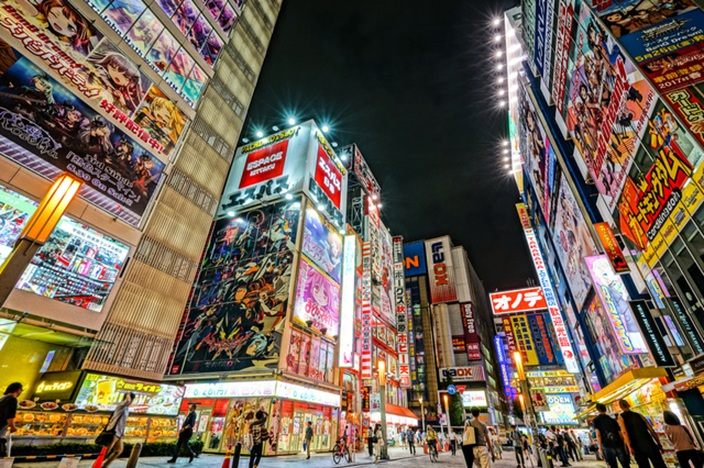
In the context of cultural diplomacy, the most effective means should be utilized to foster pro-Japanese sentiment. In the medium to long term, an increase in visitors to Japan will undoubtedly have a positive economic impact.
Photo: tomo / PIXTA
The popularity of Japanese pop culture continues to grow. Leveraging inbound tourism and imported culture is also a key aspect of cultural diplomacy.
- Pop culture as a strategic pillar of cultural diplomacy.
- The weak yen is driving global interest in events and sales within Japan.
- The “mutual circulation” of culture aligns with the essence of cultural diplomacy.
Pop culture has become an important element in modern soft power strategies. Japanese anime, manga, games, and related music are enjoyed worldwide, and Japan is already one of the leading countries in promoting pop culture. Anime and game conventions are held in various countries and regions around the world, attracting many fans of Japanese works.
This movement of Japanese pop culture is primarily driven by creators and private companies who communicate its fun and excitement through their work, both in Japan and around the world. This has resulted in many examples of cultural and economic success. The industry operates independently with little government regulation, but because it relies heavily on individual expertise and relationships, it is difficult to support through policy measures. Not only does it differ significantly from core industries in terms of industrial policy, but new forms of utilization in policy, including diplomacy, are also required. I would like to consider how “Japanese pop culture” should be utilized in order to further increase understanding and support for Japan.
The proliferation of pop culture and public diplomacy
Since the second half of the 20th century, Japanese pop culture—including anime, manga, video games, and J-pop—has grown into one of Japan’s leading cultural industries. With the spread of the Internet and the rise of streaming services, the international distribution of Japanese content has accelerated. Previously, content was distributed through cinema screenings, television broadcasts, and the distribution of videos and DVDs; now, simultaneous global streaming is possible through services such as Prime Video and Netflix. Furthermore, the distribution of videos by YouTubers and virtual YouTubers (VTubers) has increased significantly, and YouTube content is widely viewed both domestically and internationally. This content is not only consumed domestically for entertainment but has also circulated across borders, resulting in a global fan base and making it an essential element in cultural diplomacy.
As part of its “pop-culture diplomacy” program, the Ministry of Foreign Affairs has implemented various initiatives. Since 2007, the ministry has presented the Foreign Minister’s Award to the winner of the World Cosplay Championships at the World Cosplay Summit (WCS), which was launched by the broadcaster TV Aichi. The Ministry of Foreign Affairs also serves on the executive committee alongside Aichi Prefecture, Nagoya City, and private companies. In the same year, the ministry established the Japan International Manga Award[1] to honor international manga artists who have created outstanding works. The award aims to spread manga culture overseas and promote international cultural exchange through manga.
In 2008, Doraemon was selected as an anime cultural ambassador, with the aim of linking Japanese anime to interest in Japan itself. Pop culture is also being used in exchange programs to promote understanding of Japan. In 2009, the Ministry appointed Trend Communicators of Japanese Pop Culture, commonly known as the “Kawaii Ambassadors,” for a one-year period. Currently, rather than new initiatives on a Ministry-wide scale, pop culture is being used in many situations, such as at events in the regions under its jurisdiction, led by overseas diplomatic missions, and has become a major tool for cultural diplomacy.
Pop culture originating overseas and Japan
While Japanese content enjoys high acclaim in the global market, overseas content is also widely accepted in Japan. When considering policy engagement in this field, the example of South Korea is instructive. Since the late 1990s, South Korea has prioritized the development of its cultural industry as a national strategy, actively exporting K-pop and Korean dramas to international markets. As a result, K-pop has rapidly gained popularity, particularly among young people in Japan. Today, K-pop has become a social phenomenon in the Japanese market, with K-pop artists holding dome tours and festivals that attract audiences of tens of thousands. The spread of K-POP has gone beyond simply importing music; it is influencing all aspects of life and culture, including fashion, makeup, and language learning, and many young people are enthusiastic about learning Korean.
Additionally, foreign games have become more prevalent in Japan in recent years. In particular, titles by Chinese developers are increasingly dominating the top sales rankings in the mobile game market, which is centered on smartphones. Chinese games like “Genshin Impact” feature character designs and storylines reminiscent of Japanese anime and role-playing games (RPGs), which are readily accepted by Japanese users. Online games from the West remain popular as well, and it has become common for Japanese users to play with people from around the world via the Internet.
The penetration of overseas pop culture in Japan not only increases consumption, but also allows young people to experience different cultures daily, broadening the foundation for international awareness and multicultural understanding. It is a successful “soft power strategy” for the exporting country and promotes mutual understanding with other countries, emphasizing Japan’s cooperative position in the international community. Seeing Japanese people enjoy K-pop and overseas games fosters positive relations between Japan and other countries and has a soft power effect that strengthens international relations.
However, the growing share of overseas content in the domestic market risks weakening the competitiveness of Japanese content and diluting its cultural influence. An increasing number of works by overseas companies use formats similar to those in popular Japanese manga, games, and anime. Examples include JRPGs (Japanese role-playing games), such as “Dragon Quest” and “Final Fantasy,” and more recently, vertical-scrolling comics (webtoons) for smartphones. These works can sometimes become indistinguishable from Japanese content. While this is expected to revitalize the market as a whole, it is important to be aware that, as Japanese culture becomes globalized, its ties with Japan may weaken.
Fan communities connecting the world
In the realm of pop culture, the creators of works, as well as their fans and fan communities, are integral components. These communities transcend borders and take many forms. Overseas conventions are a prime example of this phenomenon. People from various related professions, such as anime directors, game producers, manga artists, and voice actors, are invited as guests to events in Japan and abroad. Those involved in production are becoming increasingly famous.
Many fan community events held overseas are quite large. Examples of these events include Japan Expo Paris in France and Anime Expo (AX) in the United States. There are also large-scale conventions focused on specific works. According to organizers, Star Wars Celebration Japan 2025, a Star Wars-related event held in Makuhari, Chiba Prefecture, in April 2025, attracted more than 100,000 fans from over 125 countries over three days.
The number of visitors to events held in Japan is becoming increasingly diverse. Events such as the Tokyo Game Show and AnimeJapan, which feature the announcement of new anime and games, attract participants from various countries. There is also high interest overseas in doujinshi (self-published works) and derivative works. According to records from the day, Comic Market 105, held in December 2024, attracted participants from 76 countries and regions. Additionally, the World Cosplay Championships at the World Cosplay Summit in August of this year saw cosplayers from 41 countries compete after winning qualifying rounds.
Although it is difficult to quantify the number of visitors to Japan from each country, the clear increase in international participants in recent years is a noticeable phenomenon at events. This trend is likely to have positive effects, such as facilitating communication with potential overseas participants through social media and encouraging more people to visit Japan.
Today, fans from around the world simultaneously share information and opinions about works on social media and in online forums. They also create derivative works, such as fan art. These activities extend the lifespan of works, increase their commercial value, and serve as a medium for building cultural communities and forging cultural bonds. Rather than simply treating works as objects of consumption, fan communities and events can now be said to be nodes of pop-culture diplomacy.
Japanese pop culture as a resource for cultural diplomacy
As discussed above, popular culture has played an important role in cultural diplomacy. Many countries have strengthened their cultural diplomacy, and Japan has attempted to exert “soft power” around the world through pop culture. What policies are needed going forward?
The Cool Japan Strategy, launched by the government in the 2010s, provided important direction for a national strategy encompassing industry. It was the first to strategically define “promoting the appeal of Japanese food, anime, pop culture, and other attractions in a comprehensive manner and enhancing Japan’s brand power” or “comprehensively promoting Japan’s diverse attractions, such as food, anime, and pop culture, and enhancing the nation’s brand image (or brand power).” This became an opportunity for diplomatic missions and cultural exchange organizations to use pop culture to raise interest in Japan, and also served as a guideline for its use. However, because the scope of Cool Japan was so broad, it was difficult to narrow down the target audience.
Capitalizing on a weak yen and a secure environment
What will be required of pop-culture diplomacy in the future? The following initiatives would be useful.
First, utilize Japanese pop culture that is already popular overseas. The goal is not to encourage new fields as if supporting ventures, but rather to expand the reach of popular content overseas. To achieve this, it is essential to cooperate with large content holders, such as publishers and game companies.
However, the current weak yen is making it more difficult to promote content overseas. Collaborating with content holders at overseas Japan festivals and anime conventions is possible, though, by providing information about Japanese exhibits and arranging guest speakers at events. This would also give overseas fans a great opportunity to experience Japanese pop culture more closely. Other effective measures include supporting overseas tours for popular Japanese artists and promoting Japanese characters abroad.
Second, collaborating with overseas pop culture would allow Japan to utilize its unique resources. Japan has many facilities in major metropolitan areas that could serve as large-scale venues for concerts and exhibitions, and transportation is convenient. Furthermore, the weak yen makes holding events in Japan inexpensive for visitors from neighboring countries, which makes it easy to attract them. Japan tours by Chinese and Korean artists already attract many international visitors. Additionally, Japan offers a wide variety of restaurants and accommodations after concerts, and language barriers are being lowered. This environment allows visitors to combine sightseeing and shopping, further enhancing Japan’s advantage.
It would also be useful to bring events held in different countries, such as the aforementioned “Star Wars Celebration Japan 2025,” to Japan. Hosting globally popular events in Japan would attract many fans of the series and foster pro-Japanese sentiment. However, since the organizers are often overseas companies, collaborating with companies that have experience hosting events in Japan is necessary.
Japan has several advantages when it comes to hosting events. Freedom of expression is guaranteed, and the risk of events being canceled due to government intervention is extremely low. Therefore, stable events can be expected. There are also many potential venues, making events relatively inexpensive to hold. These advantages should be utilized more often.
However, there are certainly counterarguments to this opinion. For example, some argue that the government should utilize Japanese pop culture instead of things that originate overseas. This perspective is important in industrial policy. In the context of cultural diplomacy, though, it is not necessarily correct to adopt the same perspective as in industrial promotion. The most effective means should be utilized to increase pro-Japanese sentiment. In the medium to long term, an increase in visitors to Japan will undoubtedly have a positive economic impact due to the resulting rise in pro-Japanese sentiment.
Based on the above discussion, it would be ideal for Japan, a leading producer of pop culture, to strengthen its dissemination further and attract events such as concerts and conventions that bring fans from all over the world together. This would allow fans to recognize Japan emotionally as “a country that plays a central role in the distribution of global pop culture.”
Translated from “Nihon Poppu-karucha to Bunka-gaiko (Japanese Pop Culture and Cultural Diplomacy: Overseas Expansion, Reception, and the Role of Fan Communities),” Gaiko (Diplomacy), Vol. 93 Sept./Oct. 2025, pp. 112–117. (Courtesy of Jiji Press) [February 2026]
 NAKAMURA Jin, Ph.D.
Professor, Atomi University
Completed his LL.M. at Graduate School of Law of the Kyoto University and earned his Ph.D. by dissertation from the Tokyo Institute of Technology (now the Institute of Science Tokyo). Before assuming his current position, he worked for the United Nations World Food Programme and Teikoku Oil Co., Ltd., and served as a Visiting Associate Professor at the Graduate School of Interdisciplinary Information Studies, the University of Tokyo. His publications include 「クリエイティブ産業論: ファッション・コンテンツ産業の日本型モデル」 (Creative Industry Theory: The Japanese Model of Fashion and Content).
[1] The Ministry of Foreign Affairs’ website states the following about the award:
The Ministry of Foreign Affairs founded the International MANGA Award in 2007 for the purpose of expanding international exchange and mutual understanding through the MANGA culture, which is widely accepted around the world.
This award honors MANGA artists who contribute to the development of MANGA culture in the world.
https://www.manga-award.mofa.go.jp/index_e.HTML
Keywords
- pop culture
- cultural diplomacy
- soft power
- anime
- manga
- games
- fan community events