


Seven Major Changes in the Security Environment
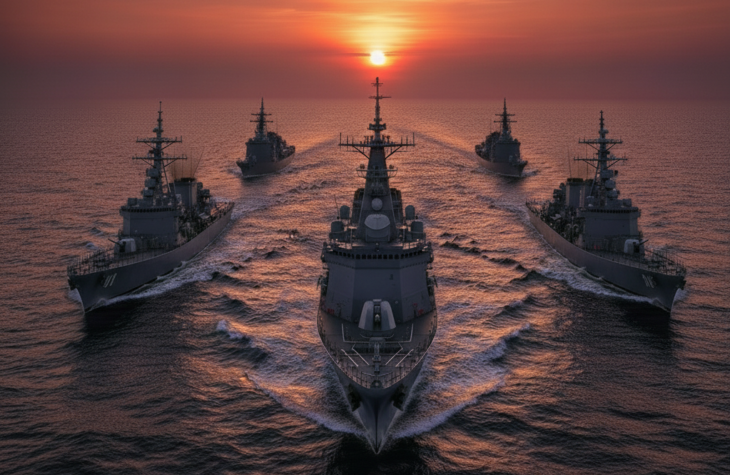
Of the seven changes in the security environment, one is that we have entered an era of power politics. This means that the system of power and the system of interests are prioritized over the system of values. “The United States is currently leaning toward onshoring. If so, we should aim for “friend-shoring.” In other words, we should build supply chains with trustworthy partners. Alternatively, collaboration based on strategic imperatives is also possible. We need to balance and enhance connectivity to revive the ‘system of values’ while preparing for an era of power politics. Shouldn’t this be Japan’s basic strategy going forward?”
Image generated by Gemini
An era where “defense diplomacy” is indispensable
Jimbo Ken: Thank you for this opportunity to speak with you today. I understand that this is your first media appearance since retiring as Chief of Staff of the Joint Staff (hereinafter CSJS), and I am extremely honored.
You served as the CSJS for two years and four months. In December 2022, just before your appointment, the National Security Strategy (NSS), also known as the three security documents (the National Security Strategy, the National Defense Strategy, and the Defense Buildup Program)[1], recognized that “Japan is currently facing the most severe and complex security environment since the end of World War II.” Your tenure seems to have been a major turning point in world history. How did you view those changes?
Yoshida Yoshihide: Before we get to the main topic, let me start with a little warm-up. In his 1966 book, Kokusai Seiji: Kyofu to Kibo (International politics: Fear and hope), the late international political scientist Kosaka Masataka (1934–1996)[2] argues that a nation is made up of three systems: a system of power, a system of interests, and a system of values. I believe this framework is extremely important when unraveling current international security issues. In fact, I learned this from my former boss, Yachi Shotaro—the first Secretary-General of the National Security Secretariat—when I was CSJS. I have shared this idea with many people, and they have shown strong support and interest, especially in Europe. I hope to continue discussing these three systems today.
Of my 39 years and four months as a member of the Self-Defense Forces, my final term as CSJS was the most fulfilling. I have three main thoughts about it.
First, adopting a global security perspective is essential. Traditionally, we have focused on China, North Korea, and Russia, considering security in relation to the United States. However, international situations in Europe, the Middle East, and the Indo-Pacific are now strongly intertwined. Unless we position our regions within this global security framework, our dialogue with counterparts such as chiefs of staff will not be fruitful.
Second is the importance of realism. For example, in February 2025, I held an online meeting with chiefs of staff from the North Atlantic Treaty Organization (NATO) and the Indo-Pacific region. Europe is currently experiencing a “fear of abandonment” from the United States. Ukraine is a geopolitical buffer zone for Europe and cannot afford to lose it. However, the same is true for Russia. Russia would not tolerate any further loss of strategic depth vis-à-vis NATO. This truly is a conflict over a geopolitical buffer zone.
Third, we have entered an era of “defense diplomacy.” Over the past two years and four months, I have had approximately 250 discussions with over 100 chiefs of staff from more than 40 countries—roughly one every three days. I have met with the Joint Chiefs of Staff (JCS), the United States Strategic Command (USSTRATCOM), the United States Indo-Pacific Command (USINDOPACOM), and the United States Cyber Command (USCYBERCOM). I have also met with the Japan-US-ROK, Japan-US-Australia-India, Japan-US-Australia-Philippines, and Japan-Australia-India-Indonesia groups. I have also frequently met with chiefs of staff from NATO member states.
This was precisely because it was essential to what you mentioned earlier as “the most severe and complex security environment since the war.” During these meetings, I felt strongly that trust between chiefs of staff is the foundation of defense cooperation. This is my greatest asset.
The world has changed dramatically over the past three years
Jimbo: As CSJS during a time of historic change, your development of defense diplomacy with an eye toward the global strategic environment was groundbreaking.
Under the Biden administration, Secretary of Defense Lloyd Austin introduced the “integrated deterrence” concept, which strengthens deterrence by linking military, economic, and diplomatic ties and enhancing operations with allies.
In response, the Japan Self-Defense Forces (JSDF) have moved toward deeper joint operations and command and control coordination with the US military.
At the same time, a parallel movement seems to have emerged to enhance the JSDF’s autonomy and self-sufficiency. While Japan has often complemented the US military in emergency scenarios, Japan is now being asked to take a more proactive and strategic approach. In other words, I believe that a major theme in current defense policy is how to balance the integration provided by the Japan-US alliance with the autonomy to establish Japan’s own operational capabilities.
Yoshida: That’s right. I’ve had a similar understanding for the past two years and four months.
With that in mind, I’d like to discuss the issue in more detail. The strategic environment has changed significantly since 2022. In fact, three security documents alone are no longer enough to keep up. As Prime Minister Kishida Fumio once said, “Ukraine today may be East Asia tomorrow,” and that is precisely what is happening now.
So, what has changed? I believe there are seven factors.
First, regional conflicts have become globalized. The outcome of Russia’s invasion of Ukraine will strongly impact the actions of East Asian countries seeking to change the status quo. Furthermore, destabilization in the Middle East will significantly impact Europe and the Indo-Pacific. In other words, the security of the Middle East, the Indo-Pacific, and Europe is becoming inextricably linked. That’s why I’ve always advocated for strengthening our mutual engagement on regional issues with Europe.
The second change, which is also the cause of the first, is the strengthening of cooperation among countries seeking to change the status quo. The biggest catalyst for this was the war in Ukraine, and the most radical strengthening of Russia-North Korea relations as a result. North Korea’s deployment of troops to Ukraine crossed the Rubicon. This exacerbated the situation in Ukraine, and in return, North Korea received advanced technology, cutting-edge military tactics, and economic assistance, including oil, from Russia. In other words, this made the security environment on the Korean Peninsula more dangerous.
European countries have become acutely aware that any attempt to change the status quo in the Indo-Pacific could directly impact their own security. This has led to increased vigilance toward China, which secretly supports Russia.
Third, American politics have become a “variable.” Until now, American conservatives were dominated by primacists, who believe the United States should demonstrate global leadership, and prioritizers, who believe diplomatic resources should be used selectively. However, in recent years, there has been an increasing emphasis on restraint, which holds that the United States should reduce its involvement in the international community.
If this shift is reflected in security strategies, they will lean toward offshore balancing, shifting the security burden to individual countries. In other words, no ally can escape the “fear of abandonment” by the United States.
In my experience, there is not a single US military leader with a restrainer mindset. They are all primacists or prioritizers. Whether it’s the United States European Command (USEUCOM) or the USINDOPACOM, I sense a strong commitment to maintaining peace and stability in the region.
For the military, what’s important is not capability or deployment, but the will to engage. The US military embodies a “system of power” and possesses this will. That’s why I repeatedly tell my staff, “Now is the most important time to strengthen collaboration and cooperation between the JSDF and the US military. This will anchor bilateral relations.” I’m interested to see how the military’s firm resolve and political trends will be balanced going forward.
Jimbo: Recently, US Secretary of Defense Pete Hegseth gathered all the generals in Washington and delivered a stern speech. Meanwhile, the Department of Defense has tightened its control over media coverage, making it difficult for defense officials to participate in private international conferences.
I believe these developments extend beyond mere information management and are linked to larger issues, such as recalibrating civil-military relations and strategic communications. What are your thoughts on this?
Yoshida: The relationship between the government and the military is currently tense. The hundreds of generals I saw on television had blank expressions. The military’s political neutrality is fundamental to democracy, and it’s true that politics is challenging this. However, I don’t think this is currently affecting our relationship with the US military.
Jimbo: When I talk to US military personnel, I often hear them say that they are constantly balancing their “loyalty to the president” with their “loyalty to the nation, as defined by the US Constitution.” This is likely a reflection of the conflict and anguish they sometimes feel between their political views and constitutional principles.
The US-China rivalry for global hegemony
Yoshida: The fourth change is China’s global strategy. After the Global Financial Crisis (GFC) caused major economic stagnation in Western developed countries in September 2008, China seized the opportunity to shift its strategy from “keep a low profile (韬光养晦)[3]” to hegemonic rise. This shift is discussed in Rush Doshi’s The Long Game: China’s Grand Strategy to Displace American Order (Oxford University Press, 2021), which I read while serving as CSJS. The book also makes another important point. With the inauguration of the first Trump administration in 2017, China shifted its goal from regional hegemony to leading the international order. However, in 2018, the US administration shifted its China policy from cooperation to competition. Since then, I have not believed that China’s plotting of global expansion will result in significant progress.
Nevertheless, if the US administration moves in a restrainer-like direction going forward, it will only encourage China’s expansion into the world. I am very concerned about that.
Jimbo: In the mid-2010s, when China led the way in globalization with the Belt and Road Initiative (BRI), the “Free and Open Indo-Pacific (FOIP)” was proposed by the Abe administration as a counter-narrative. Supported by the Trump administration, this concept became a global trend.
While China has demonstrated significant execution power through infrastructure development, finance, and digital technology, its greatest limitation lies in its attempt to monopolize the “copyright” of its narrative. In contrast, the FOIP is based on the principle of “free and open” and has spread around the world as a narrative that anyone can adopt.
I believe this difference was the essence of the global strategic competition at the time. Currently, through its Global South strategy, China is attempting to subsume international public goods with its own national values. This likely expresses the idea that “the world we aspire to is no longer found in the United States or the G7; now it’s our turn to build it.”
The problem is that a new counter-narrative has yet to be fully constructed. What kind of vision for the future can Japan, the United States, South Korea, and East Asia present? We must ask ourselves this question again, with the same enthusiasm with which we conceived the Free and Open Indo-Pacific (FOIP) strategy.
Yoshida: I think that’s a very core perspective. Ultimately, you’re saying that the heart of the strategic competition between the United States and China is their struggle for global dominance. Does China have a chance of winning this battle? First, in terms of its “system of power,” I don’t think China can achieve the same global reach as the US military. China has the most advanced “system of interests,” but the “debt trap” problem has also become apparent, raising concerns among countries in the Global South. The most difficult thing for China is its “system of values.” Even if China were to replace the rule of law with values favorable to itself, there is almost no chance the world would follow. In other words, I think the chances of China gaining global hegemony are close to zero.
However, thanks to its “system of power” and “system of interests,” China’s regional hegemony is quite likely to be realized. We need to seriously consider how to reject this.
Jimbo: The NSS portrays the international situation as a conflict between “like-minded democratic countries that share universal values and the rule of law” and “authoritarian countries that do not.” While this is an accurate analysis, it is actually strategically non-aligned middle powers that drive the fluidity of international politics. These countries do not fully align with either group. Instead, they aim to establish a hybrid order with autonomous rules and principles of behavior, utilizing multiple partnerships, with India at the center.
What emerges from this is Japan’s next strategy. While upholding the international legal order is important, many countries do not support that framework. Japan must not only champion the Japan-US alliance and Japan-Europe cooperation but also incorporate its unique value proposition into its strategy. I believe Japan must carve out a new path with a multifaceted approach combining development cooperation, security dialogue, and defense industry cooperation.
Yoshida: I completely agree with your approach to countries in the Global South. What resonates with them? When I was CSJS, I often told US military personnel that discussing democracy, human rights, and liberal values wouldn’t be effective. However, the “rule of law” remains a common denominator, regardless of who we’re dealing with. With this premise, I’ve strengthened our relationships with Southeast Asia, India, and other countries.
I’ve spoken at length about US-China competition, but I’d like to point out three disadvantages for the US. One is a decade-long rebalance gap. As mentioned earlier, China shifted its global strategy in 2009. While the Obama administration launched a “rebalancing policy” in 2011 that shifted the United States’ focus to Asia, the country only shifted its China policy in 2018 and withdrew from Afghanistan in 2021. This means there’s a roughly 10-year time gap between the two countries.
The second gap is the INF (Intermediate-Range Nuclear Forces) gap. While the United States and Russia reduced their arsenals to zero under the INF Treaty, China has built up its nuclear missile arsenal without any constraints. Amid rising military tensions, China clearly has an advantage in intermediate range nuclear weapons.
The third gap is the one in advanced technology. After shifting its global strategy from hiding its capabilities to becoming a rising hegemonic power, China has focused its investments on the Fourth Industrial Revolution. As a result, China is now at the forefront of quantum information technology, and it is predicted that it will eventually catch up with the United States in artificial intelligence (AI). The United States can no longer win the race for technological supremacy against China on its own.
However, Japan has filled these three gaps and will likely continue to do so in the future. A major focus will also be on how to bring together not only Japan’s capabilities, but also those of the rest of the West.
Jimbo: I agree.
Don’t let it become a world of great power politics
Yoshida: The fifth change is that “systems of power” and “systems of interests” are being prioritized over “systems of values.” In other words, we have entered an era of power politics. This is why realism is so important, as I mentioned at the beginning.
The sixth change is the vicious cycle between the economy and security. When the war in Ukraine began, I felt as if I had gone back a century. The Sarajevo incident (the assassination of Archduke Franz Ferdinand in 1914)[4] triggered the First World War at that time. This time, there was a risk of a third world war, but Europe made bold efforts to contain it.
However, as the saying goes, “History doesn’t repeat itself, but it rhymes,” and these rhymes are being trampled on quite a bit today. Examples include the Spanish flu epidemic, the recent pandemic, and the assassination of political leaders. The rhyme that worries me most is the Great Depression of 1929. The subsequent protectionism and economic blocs were major triggers of World War II in 1939. The question now is how to break the negative cycle between the economy and security.
The seventh and final change is the Fourth Industrial Revolution, particularly the rapid advancement of AI. This goes without saying.
The change I’m most concerned about from 2022 onwards is the transformation of great power competition into great power politics. This could lead to smaller countries’ wishes being ignored.
Jimbo: In the era of great power competition, the main concerns were the weakening of American commitments and deterrence. Recently, however, I’ve noticed a growing tendency to politically settle for incomplete agreements or imperfect war endings. In this context, with the political recognition that “the situation on the Korean Peninsula has entered a certain phase of stability,” discussions of drastically reducing the number of US troops in South Korea and scaling back or canceling joint exercises could become a reality. This could further increase the risk of disruption to the order.
Yoshida: Recently, the term “Acheson Line” (a defense line against the Communist bloc proposed by US Secretary of State Dean Acheson in 1950 that excluded the Korean Peninsula) has appeared frequently in Korean news sites. There is growing concern in South Korea that a second Acheson Line could be established, which would lead to another wave of US abandonment. This gives Prime Minister Kishida’s statement—“Ukraine today may be East Asia tomorrow”—a different meaning.
Ultimately, great-power competition is better than great-power politics. It’s important for Japan to play a major role in that competition, make efforts to avoid reliance on great-power politics, and prevent disruption to the order.
From the era of attrition warfare to the era of information warfare and cognitive warfare
Jimbo: I have one more question. How do you view the evolving nature of the battlefield? What lessons have the JSDF learned from it?
Regarding the war in Ukraine, you previously pointed out that “it is a war of the past, the present, and the future all at once.” Past wars have seen a resurgence of long-term land battles and trench warfare reminiscent of World Wars I and II. Modern wars are notable for networked warfare, which combines communications networks with precision-guided weapons and unmanned aerial vehicles (drones). Furthermore, signs of future warfare include the accelerating use of cyber and space domains, the introduction of AI and autonomous systems, and the military adaptation of civilian technologies.
Yoshida: There’s a saying: “Generals always prepare for the last war.[5]” Among military leaders, the old view of war as a war of attrition based on nuclear deterrence is still very strong. However, we are now in the age of information warfare and multi-domain operations, which include space, cyberspace, and electromagnetic waves.
Furthermore, cognitive warfare will play a greater role in future intelligentized warfare, and the question here is how to achieve superior decision-making. Future battles will likely revolve around the sophisticated processes of sensing, deciding, and acting. Concentrated investment in preparation for this style of warfare is essential.
In terms of military innovation, we must advance reforms in future operational concepts, advanced technology, and organizational structure simultaneously. It will be important to glean as many clues as possible from the various developments in Ukraine for the next round of innovations.
Jimbo: Japan is increasing its defense budget to levels not seen since the war, while also building capabilities in new areas. However, expanding the Self-Defense Forces’ manpower is difficult due to the declining birthrate.
Japan boasts a long coastline and the sixth largest exclusive economic zone (EEZ) in the world. This means that although the area that must be protected is extensive, Japan has limited human resources and is geographically vulnerable.
Under these conditions, Japan must confront threats from three directions: China, North Korea, and Russia, each in different ways. To what extent does the current Japan Self-Defense Forces structure fit into this complex environment? There are still areas of mismatch. The Trinity Reform, which involves a comprehensive review of equipment, organization, and human resource development, is likely still in progress.
Yoshida: Given the long-term decline in the birthrate, it’s clear that the number of eligible recruits will be cut in half. To address this, we need to restructure our force significantly. We must concentrate our personnel in areas where JSDF personnel are essential and replace other areas with AI and unmanned systems. We can also outsource to the private sector or recruit former personnel. In short, we need to transform our organization from labor-intensive to knowledge-intensive. This is true not only for the JSDF but also for Japanese society as a whole.
Jimbo: Earlier, you offered some harsh criticisms of the United States, but I still believe that the fluidity of human resources supports America’s dynamism. There’s an established cycle of personnel between the US military and the private sector, and military experience leads to recognition in the private sector.
Additionally, knowledge and technology from the private sector feed back into innovation in the US military. This is a strength that the US has and other countries don’t.
Additionally, social respect for the military is deeply rooted in the US. Politicians and business leaders view the military’s role as central to running the country, which forms the basis for trust in crisis management and strategic decision-making. It’s important for the JSDF to institutionalize more circular personnel exchanges with the private sector in areas such as organizational management, advanced technology, and cyberspace.
Aiming to revitalize the “system of values”
Yoshida: Ultimately, I think what’s important is revitalizing the “system of values.” This also means figuring out how to establish new connections. For example, in the field of economic security, expanding the Comprehensive and Progressive Agreement for Trans-Pacific Partnership (CPTPP) would revitalize the “system of values” in the sense of protecting free trade.
We also need to integrate strategic autonomy. As I’ve mentioned, the United States is currently leaning toward onshoring. If so, we should aim for “friend-shoring.[6]” In other words, we should build supply chains with trustworthy partners. Collaboration based on strategic indispensability is also possible. This way, we can balance enhancing connectivity, which revitalizes the “system of values,” with autonomy, which prepares us for an era of power politics. Shouldn’t this be Japan’s basic strategy going forward?
Jimbo: Whenever the global order changes, contradictions and inconsistencies arise.
The free trade system established by the General Agreement on Tariffs and Trade (GATT) and the World Trade Organization (WTO) is faltering. Meanwhile, the international legal order defined by the United Nations (UN) Security Council is becoming a mere formality.
However, as we pause in the face of these institutional contradictions, a new reality is quietly taking shape.
The question is whether states merely adapt to this transition—or whether they shape its direction. It’s not that simple. As existing frameworks transform, we must decide what values and principles to adopt when engaging with the world. Rather than passively adapting to changes in the order, Japan should lead the way in opening up new horizons of value.
After listening to you, I realized that, when considering Japan’s future strategy, we must look beyond institutional and military boundaries and examine global trends from a macro perspective. This requires adopting a philosophical approach and a civilizational imagination.
(Moderated by Shimada Yoshiaki)
Translated from “Zen Togobakuryocho ga kataru Anzenhoshokankyo, Nanatsu no Daihenka (The former Chief of Staff of the Joint Staff discusses Seven Changes in the Security Environment),” Chuokoron, December 2025, pp. 130–139 (Courtesy of Chuo Koron Shinsha) [February 2026]
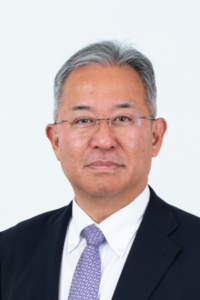 YOSHIDA Yoshihide
Former Chief of Staff of the Joint Staff
Born in Tokyo in 1962, Yoshida graduated from the Faculty of Engineering at the University of Tokyo and joined the Japan Ground Self-Defense Force in 1986. He has served in various positions, including Cabinet Councillor for the National Security Secretariat of the Cabinet Secretariat, Commander of the Ground Component Command, and Chief of the Ground Staff of the Ground Self-Defense Force. From March 2023 to August 2025, he served as Chief of Staff of the Joint Staff, the highest-ranking uniformed officer in the Japan Self-Defense Forces, the first graduate of a school other than the National Defense Academy to do so.
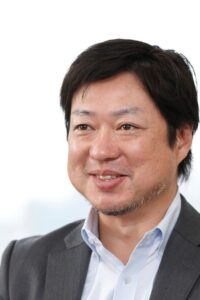 JIMBO Ken, Ph.D.
Professor, Keio University, Managing Director of International House of Japan
Born in Gunma Prefecture in 1974. Completed a doctoral course in the Graduate School of Media and Governance at Keio University. Ph. D. in Media and Governance. His area of expertise is international security. Senior Research Fellow of the Canon Institute for Global Studies and Senior Research Fellow of the Tokyo Foundation. Jimbo is the author of numerous books, including Asia Taiheiyo no Anzenhosho Akitekucha: Chiiki Anzenhosho no Sansokozo (Regional security architecture: Three-tier structure of regional security) (edited and co-authored), and co-authored Genai Nihon no Chiseigaku (Geopolitics of Contemporary Japan) and Kensho Abe Seiken (Verification of the Abe administration).
[1] The topmost of the three security documents is the National Security Strategy (NSS). In light of this, the “National Defense Strategy“ (NDS) (the former “National Defense Program Guidelines“ [NDPG]) defines defense goals and approaches as well as means to achieve them. Moreover, the “Defense Buildup Program“ (the former “Medium Term Defense Program“ [MTDP]) is a medium- to long-term buildup program to achieve the level of defense capability that ought to be possessed under the NDS.
https://www.japanpolicyforum.jp/diplomacy/pt2023033111381213064.html
[2] Kosaka Masataka (1934–1996) was a professor at Kyoto University and one of Japan’s leading international political scientists in the postwar era. He analyzed international relations from a calm, realist perspective and is known as a pioneer who established international political studies in Japan. His 1968 book Kokusai Seiji — Kyofu to Kibo (International politics — fear and hope) (revised in 2017), has long been a highly regarded introductory textbook and educational resource for the field.
[3] “Keep a low profile,” or tao guang yang hui (韬光养晦), was a guiding foreign policy principle introduced by Deng Xiaoping in the early 1990s. It advised China to hide its capabilities and bide its time, avoiding international leadership roles or confrontation while focusing on domestic economic development. This strategy aimed to prevent alarming other nations as China grew stronger.
[4] The Sarajevo incident (Assassination of Archduke Franz Ferdinand), which occurred on June 28, 1914, was the assassination of Archduke Franz Ferdinand, heir to the Austro-Hungarian Empire, and his wife by a young Serbian man named Gavrilo Princip. This incident took place in Sarajevo, the capital of Bosnia, and triggered the outbreak of World War I.
[5] “Generals always prepare for the last war” is a phrase of warning that refers to military leaders’ tendency to cling to past successes and experiences from previous wars. This causes them to fail to adapt to changing technology and tactics, resulting in outdated fighting methods. It is a criticism of the risk that past victories will lead to future defeats and of leaders’ blind spots when they are bound by the legacy of the past.
[6] Friend-shoring is a strategy in which companies and governments relocate or consolidate their supply chains and production bases to trusted allies or friendly countries to avoid geopolitical risks. In the context of the ongoing pandemic, the US-China conflict, and Russia’s invasion of Ukraine, there has been a shift in procurement from lower-cost countries to safer ones.
Keywords
- global security
- strategic environment
- defense diplomacy
- regional conflicts
- systems of power
- systems of interests
- systems of values
Related posts:
 Regarding the “Limited Exercise of the Right of Collective Self-defense” Based on the Determination of “Survival-threatening Situations”
 “A World with America” and “A World without America”
 Xi Jinping’s Regime: Political Dynamics of Personal Dictatorship
 Expos as Sites of Experimentation: Considering the Architecture of Expo 2025
 Sakaguchi and Kitagawa win Nobel Prize: Japan celebrates dual achievement in same year as two researchers who persevered through adversity call for support for basic research