


How Should We Respond to Successive Incidents? Understanding through a Culture of Coexistence: Bears and the Japanese People
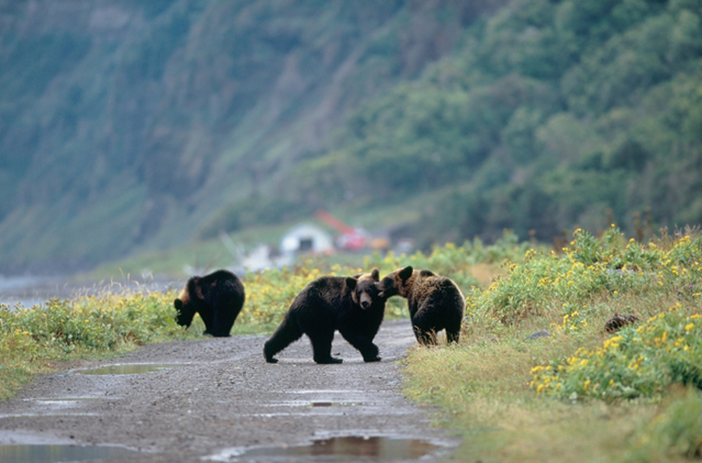
In recent years, a series of extreme heat waves have thrown everything out of whack. The poor harvest of acorns and other food, which are a favorite food of bears, has led bears to cross satoyama (border zones between rural and urban areas) in search of food.
Photo: Wildlife and Nature / photolibrary
Every day, news reports of bear damage and sightings are being broadcast within the country. While bears are forest animals, they have recently been appearing in human living areas, causing not only damage to agricultural crops but also human injury and fatalities. According to announcements from the Ministry of the Environment of Japan (MOE), as of November 5, 2025, the number of fatal bear accidents for the fiscal year has already reached 13 (11 on Honshu and 2 in Hokkaido). In particular, incidents surged in October, with a total of seven cases in Iwate, Akita, and Miyagi Prefectures in northern Honshu.
Human-bear conflicts have escalated to the scale of a natural disaster. It has reached a point where the dispatch of the Japan Self-Defense Forces is being requested. Just as we check the daily weather forecast and prepare our clothing or rain gear before going out, we have entered an era where we must constantly consider ways to prevent encounters with bears. Furthermore, when heading into forests for wild vegetable gathering, mountain climbing, or hiking, it is necessary to exercise the utmost caution, even in places that were previously considered safe. Of course, since there are limits to how much an individual can predict or perceive the emergence or encounter of a bear, it is an urgent matter for local governments and the national government to provide rapid information on bear activity and implement countermeasures.
Several factors can be considered as to why bears have begun to appear so frequently. First, as an immediate factor, 2025 saw a poor harvest of acorns—a favorite food of bears—making it difficult for the forest ecosystem to sufficiently sustain bear populations. There is a shortage of food supply relative to the number of bears in the natural world.
What attracts bears to human living areas, in addition to agricultural crops, is garbage such as discarded food scraps. In particular, bears need to accumulate significant fat reserves during the autumn to survive the winter; therefore, when there is a poor harvest of wild nuts and fruits in the forest, they appear in human settlements in search of food. Furthermore, there are concerns that due to recent global warming, the timing of bear hibernation may be delayed, or the number of individuals that do not hibernate at all may increase.
Satoyama (border zones between rural and urban areas)[1] is located between the mountain forests where bears inhabit and human residential areas, and it has played the role of a buffer zone between the living spaces of bears and humans. The behavior of free-ranging or stray dogs, which I often saw in my childhood, chasing away intruders while barking, likely contributed to the function of this buffer zone. However, in recent years, as the abandonment of farming in satoyama has progressed, fruit growing on untended trees left unharvested has become an ideal food resource for bears (and other animals as well).
Taking a long-term view, a major factor in the increase of the bear population is the decrease in “natural enemies.” No natural enemies of bears exist in the mountain forests of Japan; the only one is the human hunter. However, in Japanese society, the hunting population is declining. Without natural enemies, there is nothing to hinder the reproduction of bears.
As described above, the increase in the frequency of bear appearances in human living areas is significantly influenced by changes in Japan’s social structure. How should we coexist with bears in the future? This is a challenge posed to modern Japanese society. To solve this, it is essential first to understand what kind of animals bears originally are and what kind of historical relationship they have had with humans until now.
In my book published in 2025, Hito to Higuma: Shuryo kara Kuma-okuri-girei made (Humans and brown bears: From hunting to bear-sending rituals) (Iwanami Shinsho), I discussed the evolution and biological characteristics of bears, and introduced the history of encounters and the world of spiritual and cultural exchange between humans and brown bears. In this article, as a foundation for exploring the way of coexistence with modern bears, including the Asian black bear of Honshu, I would like to consider the relationship between bears and the Japanese people (referring to the people living in the Japanese archipelago) to date.
Two Species of Bears Inhabit Japan
The Japanese archipelago, stretching from subarctic to subtropical zones, is home to two distinct bear species: the Asian black bear (Ursus thibetanus), characterized by its black fur and crescent-shaped white chest mark, and the larger brown bear (Ursus arctos). While the habitat of the Asian black bear includes Honshu and Shikoku (it is considered extinct in Kyushu), the brown bear inhabits Hokkaido; thus, the Tsugaru Strait serves as the biological boundary between the two. In the Primorsky Krai (the coastal region of the Russian Far East) of the Eurasian continent across the Sea of Japan, both species coexist, with brown bears inhabiting northern Siberia and Asian black bears inhabiting southern East Asia. In other words, the brown bear is a northern-type bear, and the Asian black bear is a southern-type bear.
Among the eight bear species[2] in the world, the largest, the polar bear, is distributed in the Arctic, and the next largest, the brown bear, is distributed in subarctic regions (including Hokkaido). Medium-sized bears are mainly distributed in temperate zones: the Asian black bear in East Asia (including Honshu and Shikoku), the sloth bear in the Indian subcontinent, the American black bear in North America, and the spectacled bear in the South American Andes. The giant panda distributed in Sichuan Province, China, is also included among the medium-sized bears. Finally, the smallest species, the sun bear, is distributed in Southeast Asia.
As can be seen from this distribution, bear species are larger the colder the region they inhabit. The phenomenon where the ratio of surface area to body weight (or the surface-area-to-volume ratio) decreases as body size increases, thereby reducing the rate of heat dissipation, is known as “Bergmann’s rule.” Bear species have adapted to cold regions in accordance with this rule.
As for other characteristics, their diet (food content) is omnivorous, similar to that of humans, and they frequently consume the same types of fruits, nuts, wild vegetables, and mushrooms as humans do. On the other hand, since they disperse indigestible plant seeds over a wide area along with their feces, where the seeds germinate and grow, they also contribute to the growth and expansion of forests. Only the polar bear is carnivorous, preying on animals such as seals.
Furthermore, since both Asian black bears and brown bears hibernate for several months, they need to store a large amount of nutrients in their bodies during the autumn. Hibernation is an adaptive evolution designed to reduce energy consumption during the winter months when food is scarce. Generally, small mammals such as chipmunks and Japanese dormice are known to hibernate, but among animals larger than humans, bears are the only ones that do so.
Bears, which enter holes dug in the ground or large tree hollows to hibernate beneath the snow, awaken in the spring and emerge on the surface. This cycle of hibernation and spring awakening became a symbol of death and rebirth, and it is likely that the mysticism of the bear thus became firmly established within the human heart.
From the Encounter Between the Japanese People and Bears to Bear-Sending Rituals
There is backlash against the culling of bears, but it is not appropriate to dismiss this reaction immediately. This is because humans and bears have nurtured a special relationship since ancient times.
For a better coexistence, let us look here at the history of the long journey of modern humans (Homo sapiens; hereinafter referred to as humans) who spread throughout the world. Humans began migrating out of Africa and spreading across the Eurasian continent about 60,000 years ago. It is thought that they subsequently reached Europe and Asia by approximately 40,000 years ago. This means that humans encountered Asian black bears and brown bears, which had already dispersed throughout various parts of Asia, around that time.
Estimating from fossil records, Asian black bears had migrated to the Japanese archipelago during the Late Pleistocene (the latter part of the Ice Age, approx. 126,000 to 11,700 years ago), when the islands were still connected to the mainland. Regarding brown bears in Hokkaido, for which Pleistocene fossil records are scarce, genetic analysis of extant (currently living) populations suggests they had also arrived in Hokkaido by that same era.
Later, humans who crossed over to the Japanese archipelago after it was separated from the continent encountered bears once again. Even then, while bears were recognized as fearsome animals, they were likely targets of hunting. However, toward bears—which possess a shared diet, similar behaviors, and physical resemblance (anatomical similarities) to humans, and perform mystical hibernation—humans began to feel a “sense of guilt” (ushiro-meta-sa) as they utilized their meat, gallbladders, and fur. It is possible that a spiritual impulse toward bears budded within the human heart as a way to compensate for this.
Bear-Sending Rituals Common to the Northern Hemisphere
Bear-sending rituals as a form of bear culture take two primary forms seen in the Ainu culture of Hokkaido: opunire (hunting-type bear-sending ritual) and iomante (rearing-type bear-sending ritual). The brown bear is the mountain deity (kamuy), and bear-sending rituals have been performed to send it back to the mountains after a hunt. This ritualistic spirit toward bears is common among indigenous peoples across the Northern Hemisphere.
Furthermore, in this spiritual world, the bear serves as a messenger capable of traveling between the celestial realm, where the spirits who own the bears reside, and the terrestrial realm, where humans live.
The commonality of bear culture across the Northern Hemisphere may have been passed down as culture from ancestors to descendants during the process of human migration across the continent. On the other hand, it is also possible that because bears, which exhibit the mystical behavior of hibernation, coexisted with people living in similar natural environments (particularly subarctic forests), a sense of awe toward bears arose independently in the hearts of people even between distantly separated regions.
Let us consider the structure of the human mind here. In the book Yungu Shinrigaku Nyumon (Introduction to Jungian psychology) (Iwanami Gendai Bunko) by Kawai Hayao (1928–2007), it is explained that the human mind is sphere-like, with a “conscious layer” surrounding the ego on the surface and an “unconscious layer” surrounding the self in its depths acting complementarily.[3] Furthermore, the unconscious layer is divided into the personal unconscious and the deeper collective unconscious, the latter of which is said to connect individuals.
If this is the case, even if a culture were once interrupted somewhere during the great migrations of humanity, it would not be surprising if a spiritual culture toward bears were born independently again, provided people lived in confrontation with the nature of the Northern Hemisphere. What is important is that humans and bears stood in an equal relationship with each other within nature.
Returning to Ainu culture, it is thought that against this Northern Hemispheric background, bear hunting developed into opunire (a ritual to send a hunted bear on the spot) and then into iomante (a ritual where a cub captured when a mother bear is hunted during spring bear hunting is brought back to the settlement, raised until autumn, and then sent off).
I believe that “ritual time,” as discussed in Girei no shocho-sei (The symbolism of ritual) (Iwanami Gendai Bunko) by Aoki Tamotsu, was important for the development from hunting to iomante. However, compared to the religious rituals described there, the transition of bear-sending rituals likely required a vast span of thousands of years. The performance of iomante is thought to have unified the participating people and led to the development of Ainu culture.
The rearing-type bear-sending ritual using cubs developed primarily among the indigenous peoples of the Far East (Hokkaido, Sakhalin, and along the Amur River). Furthermore, archaeological DNA analysis of brown bear remains excavated from within the Okhotsk culture sphere (which flourished along the northern and eastern coasts of Hokkaido from approximately the 5th to 12th centuries) indicates that the exchange of bear cubs took place with the Epi-Jomon and Satsumon culture spheres (cultures that flourished mainly in southern Hokkaido around the 3rd century BCE to 7th century CE, and 7th to 13th centuries CE, respectively). This suggests that shared values regarding bear cubs brought about cross-cultural exchange. On the other hand, among the indigenous peoples of the continent, the hunting-type bear-sending ritual was performed in almost all cases.
Bear-Sending Rituals of the Matagi
In Honshu as well, sending rituals for the Asian black bear have been performed. These are conducted by the Matagi (written as 又鬼 or 叉鬼),[4] who lead a hunting life in the mountainous regions of the Tohoku district.
The primary hunting target of the Matagi is the Asian black bear. While their history apparently dates back as far as the Heian or Kamakura periods, the number of people pursuing Matagi hunting as a full-time profession has decreased in recent years.
Known Matagi hunting methods include makigari, in which a large group surrounds a bear in the mountains; shinobi-ryo, in which an individual or multiple people track and hunt a bear; anaguma-ryo, in which a hibernating bear is captured; and wana-ryo, which uses traps. These are similar to the bear hunting methods used by the Ainu. Bears captured through Matagi hunting are also utilized in various ways.
In Matagi culture as well, the mountains are considered a place ruled by a deity, and bears are regarded as the property of that deity. This concept, after all, shares commonalities with the bear-sending rituals that have been performed across the Northern Hemisphere.
Furthermore, in the villages where the Matagi live (Matagi-no-sato), rituals have been performed to console the spirits of the bears and to express gratitude for the protection of mountain deities. Although their origins involve mountain worship called shugendo, overlapping with Buddhist and Taoist ideas—different from the origins of the iomante in Hokkaido—it is thought that there are commonalities in the spiritual concepts toward bears.
Detailed information regarding the Matagi and bear-sending rituals can be found in the book Kuma (Bears) (Hosei University Press) by Akaba Masaharu. It introduces the Kodamagawa Kuma-matsuri (Kodamagawa Bear Festival), which has been held for approximately 300 years in the Matagi village of the Kodamagawa district[5] in Yamagata Prefecture. At this bear festival, the fur of an Asian black bear is offered on an altar outdoors. Today, this has also become a tourism resource for the local area.
The Meaning of the Ritual and the Spiritual Positioning of the Bear
In the aforementioned work by Aoki, it is stated that religious rituals possess the functions of “liberation” and “constraint.” If we apply this to the bear-sending rituals of Honshu and Hokkaido, “liberation” refers to expressing feelings of apology to mountain deities for hunting, butchering, and consuming the bear, thereby seeking spiritual peace. On the other hand, “constraint” can be said to lie in strengthening the bonds within a group of people and uniting different groups by establishing a specific place and time for the performance of the ritual.
The figure (Figure: Relationship between physical distance and spiritual distance between humans and animals) relatively depicts the physical distance and spiritual relationship between humans and animals. As has been stated, bears are beings that we wish to remain as physically distant from as possible, while at the same time, the spiritual relationship with them reaches the deepest parts of the human heart. Dogs and cats are animals that are physically extremely close and maintain a deep spiritual relationship with humans. However, that relationship is directed toward affection and companionship, which is entirely different from the relationship with bears. There is no animal other than the bear that occupies such a unique position in its spiritual relationship with humans.
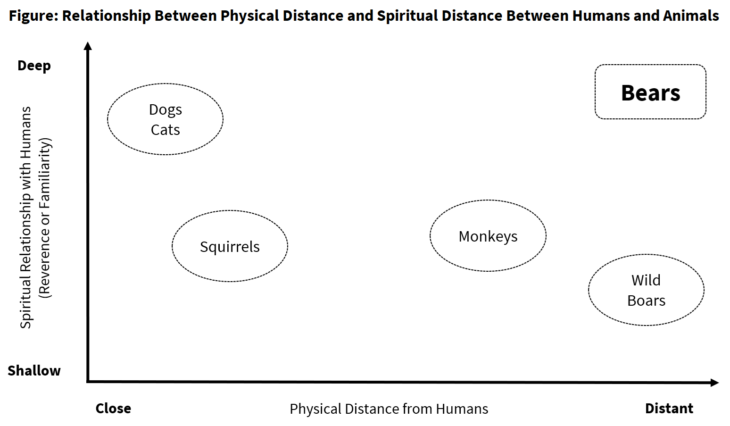
Source: Based on Hito to Higuma (Humans and Brown Bears) (Iwanami Shinsho) by Masuda Ryuichi
Bear Literature
Bears appear in literary works both in Japan and abroad. Here, let us look at Japanese literature.
In children’s folk tales, Kintaro, who won a sumo wrestling match against a bear on Mount Ashigara (on the border of Kanagawa and Shizuoka Prefectures), is depicted shouldering a large axe (masakari) and riding on the back of that bear. While the bear is a powerful animal, the story highlights Kintaro’s robustness even more so.[6] This folk tale has also become a famous children’s song.
Furthermore, among the works of the children’s story writer and poet Miyazawa Kenji (1896–1933) is Nametokoyama no Kuma (The Bears of Mt. Nametoko, included in Matasaburo the Wind Child) (Kadokawa Bunko). The setting is “Mount Nametoko” in Iwate Prefecture. While works featuring bears often depict fierce battles between bears and bear hunters, this work portrays a warm yet heartbreaking emotional exchange between Kojuro, a Matagi hunter, and the bears.[7] Additionally, the living conditions of the Matagi are described, allowing one to feel Miyazawa Kenji’s love for the region and his kindness of heart.
Folktales passed down through Ainu culture (Uepeker) are introduced in Ainu to Kamigami no Monogatari (The stories of Ainu and their deities; the title of the English translation is Our Land Was a Forest: An Ainu Memoir) (Yamakei Bunko) by Kayano Shigeru (1926–2006). Many of the stories contain didactic content told by elders, but there are also accounts of opunire and conversations with bears (bear deities) being raised for the iomante ritual.
There are also many novels set in Hokkaido. Tomogui (Cannibalism) (Shinchosha) by Kawasaki Akiko, the winner of the 170th Naoki Prize,[8] depicts the life of a Meiji-period bear hunter and his tense battles with bears. It is a work of fiction marked by sharp psychological descriptions, providing an opportunity to contemplate diverse views on life.
Kuma Arashi (Rampage of the brown bear) (Shincho Bunko) by Yoshimura Akira (1927–2006) is a non-fiction novel written based on research into the Sankebetsu Brown Bear Incident, in which a single bear killed seven people over two days in Tomamae Village, Hokkaido, in 1915. It recounts the tragedy of the incident and the figure of a veteran bear hunter.
There are also memoirs written by actual bear hunters. Higuma tono Tatakai (Battle with brown bears) (Yamakei Bunko) by Nishimura Takeshige (1892–1983), who was active as a bear hunter primarily in eastern Hokkaido during the Taisho period (1912–26), and Kuma Hoyuru Yama (The roaring bear mountains, ibid.) by Konno Tamotsu (1917–2000), who hunted bears in the Hidaka region from before to after the war, depict tense scenes of confronting bears and the lifestyle of people at that time. Additionally, Kumauchi (Bear hunting) (Shogakukan Bunko) by Kubo Toshiharu (1947–2024) is a moving record portraying the emotional bond between a bear hunter and his hunting dog in eastern Hokkaido. There is also Kuma ni Attara Dosuruka (What to do if you encounter a bear) (Chikuma Bunko) by Anezaki Hitoshi (1923–2013) and Katayama Ryuho (1942–2004), in which a bear hunter active around Lake Shikotsu in central Hokkaido speaks deeply about confrontations with bears and nature.
In the realm of manga concerning bears, Kuma Uchi no Onna (The woman bear hunter) (Shinchosha) by Ajima Yabuta features a modern hunter in Hokkaido who is obsessed with bear hunting as the protagonist. Furthermore, Golden Kamuy (Goruden Kamuy) (Shueisha) by Noda Satoru, which was also adapted into a film, is set in Hokkaido during the late Meiji period; while introducing Ainu culture, bears also make an appearance.
Rethinking the Culture of Coexistence
Based on the long history and culture of humans and bears described above, I will conclude by considering the ideal form of a better coexistence.
Since a natural ecosystem in which bears can survive can maintain biodiversity, it can be said that the very fact that bears inhabit the forest has intrinsic value. In The New Ecology: Rethinking a World with Species (Japanese title: Science of the Anthropocene) (Iwanami Shinsho), Oswald J. Schmitz referred to a way of being for human society that incorporates relationships with local ecosystems—rather than a framework solely for human society—as “Social-Ecological Systems (SES).” I believe it is important to respect this system when considering the coexistence of bears and humans.
In short, it means not losing respect and humility toward the nature that exists alongside us. For example, when mountain climbing, one should have the feeling of being permitted to enter a world where bears (and other wildlife) inhabit. There, one may encounter a bear. To avoid this, by making noise in advance to make one’s presence known, the bear will avoid us. Even if we do not notice them, bears are always watching us.
Furthermore, it is necessary to consider society and nature without falling into anthropocentrism or ecocentrism (putting human interests first or focusing only on nature). Including humans, the food web on Earth connects all living things. If we think this way, the idea that one should not litter during mountain climbing or illegally dump waste—acts that lead to bear food—will naturally arise in anyone.
If agricultural lands or urban areas are in close proximity to forests, the intrusion of wildlife should be expected, even if defensive barriers such as electric fences are installed.
In light of the current state of bear damage, is it not necessary to re-recognize these matters at the individual, local government, and national levels? Japan inherently possesses traditional cultures and customs that incorporate nature, and the idea that society and nature are equal is likely easy to accept.
While wavering between “awe” and “attachment” toward bears, humans have nonetheless hunted them and held special mourning rituals for them. It is essential to implement bear damage countermeasures based on a firm understanding of those complex emotions.
Translated from “Aitsugu Higai ni Do taio subekika? Kyosei no Bunka kara Himotoku: Kuma to Nihonjin (How Should We Respond to Successive Incidents? Understanding through a Culture of Coexistence: Bears and the Japanese People),” Chuokoron, January 2026, pp.168–175 (Courtesy of Chuo Koron Shinsha) [March 2026]
 Masuda Ryuichi, Ph.D.
Professor Emeritus, Hokkaido University
Born in Gifu Prefecture in 1960. He earned his Ph.D. from the Graduate School of Science, Hokkaido University. His areas of expertise include zoogeography and molecular phylogenetics. He has held prestigious positions throughout his career, including Postdoctoral Fellow at the National Cancer Institute (USA) and Professor at Hokkaido University. He has authored numerous books, such as Honyurui no Seibutsuchirigaku (Biogeography of mammals), Yurasia Dobutsu Kiko (The Eurasian animal travelogue), and Hito to Higuma (Humans and brown bears).
[1] Satoyama: A traditional “buffer zone” between wilderness and human settlements. While centuries of sustainable management maintained high biodiversity and kept wildlife at a distance, recent urbanization and depopulation have led to its decline. The loss of this managed boundary is a primary reason for the frequent appearance of bears in residential areas today.
[2] The bears that live in the world are the brown bear (Ursus arctos), which is widely distributed throughout the Northern Hemisphere; the polar bear (Ursus maritimus), which lives in the Arctic; the American black bear (Ursus americanus), which lives in North America; the Asiatic black bear (Ursus thibetanus), which is widely distributed throughout Asia; the sun bear (Helarctos malayanus), the smallest bear, which lives in the tropical rainforests of Southeast Asia; the sloth bear (Melursus ursinus), which lives around India and mainly eats termites; the spectacled bear (Tremarchos ornatus), the only species in the Southern Hemisphere that lives only in South America (the Andes Mountains); and the giant panda (Ailuropoda melanoleuca), which lives exclusively in the mountains of central China.
[3] “According to Jungian psychology, the human psyche consists of both conscious and unconscious layers. For Prof. Masuda, the bear resides deep within our ‘unconscious layer’ as a symbol of mystery and divinity, meaning that our relationship with bears cannot be resolved through rational management alone.”
[4] Matagi: Traditional winter hunters of northern Japan who have lived in harmony with the mountains for centuries. They revere the bear as a gift from mountain deities (Yama-no-kami) and follow strict spiritual codes to maintain the balance of the ecosystem. Their unique culture reflects the deep historical “ritual time” shared between humans and bears.
[5] Kodamagawa (Yamagata Pref.): A legendary gateway to the Iide Mountains and home to the “Iide Matagi.” This village preserves the authentic “Bear Festival” (Kuma-matsuri), where hunters perform ancient rituals to honor the bear’s spirit. It stands as a living example of the long-term “ritual time” shared between humans and bears in the deep snow country.
[6] The image of Kintaro wrestling a bear symbolizes the human “ego” confronting the raw, powerful forces of the “unconscious”—represented by the bear. By riding the bear, Kintaro demonstrates a state of coexistence where human vitality masters and directs the wild energy of nature, rather than simply destroying it.
[7] In Miyazawa’s story, the hunter Kojuro apologizes to the bear before taking its life, acknowledging that both are part of the same cycle of nature. This reflects what Prof. Masuda describes as the “sense of guilt” (ushiro-meta-sa) inherent in the Matagi culture—a state where the hunter and the hunted share a deep, spiritual resonance within the “unconscious layer” of the human heart.
[8] The Naoki Prize is a literary award established in 1935, given primarily to entertainment (popular literature) short and full-length novels written by mid-career authors. It is a prestigious award in Japanese literature, on a par with the Akutagawa Prize, given to new writers. The winners are selected twice a year (January and July), and the winning works often become bestsellers.
Keywords
- human-bear conflicts
- coexistence
- bear hunting
- bear-sending rituals
- Ainu
- Matagi
- bear literature
Related posts:
 Expos as Sites of Experimentation: Considering the Architecture of Expo 2025
 Sanaenomics: Tackling a Historic Turning Point
 Japan’s International Cooperation Seen from Palau: Rising Geopolitical Interests, Principles and Strategies under Scrutiny
 China’s Expanding Presence in Central Asia: Its Global Strategy and Public Responses
 Why Are Debates Surrounding Family and Gender So Contentious? The “Principle of Deliberation” to Which We Must Return