


Will “Chinese-style” Development Permeate Hong Kong?
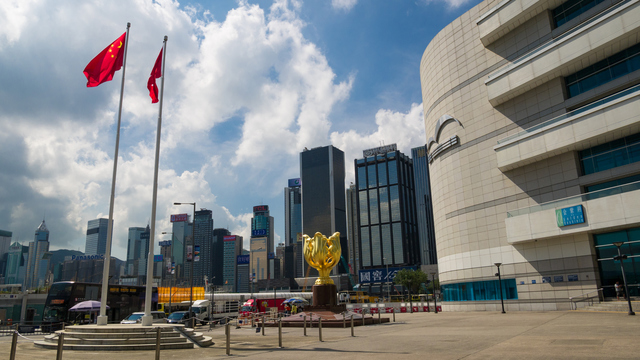
The five-star red flag and the Hong Kong Special Administrative Region flag fly in Hong Kong’s Golden Jade Square. “Chinese style” is beginning to take over everyday life.
Photo: Sekkado / photolibrary
Hong Kong’s politics are under the control of the Chinese Communist Party, while its economy remains a capitalist system. In Hong Kong, characterized by a so-called “One City, Two Systems,” “Chinese-style” control is also intensifying within the economic sector.
- Plans are [underway] for executive-led initiatives to establish high-tech industries in the Northern Metropolis.
- Private enterprises are struggling, being asked to provide massive amounts of investment.
- There is also criticism of industrial policies that lack a perspective on the service industry, which is Hong Kong’s strength.
In June 2020, the Chinese government enacted the “Hong Kong National Security Law (NSL)” to suppress the intense protests that broke out in Hong Kong in 2019. In the more than five years since then, political repression has raged through Hong Kong. In accordance with the NSL, courts have repeatedly issued rulings criminalizing freedom of expression, sending many commentators, pro-democracy politicians, and young social activists to prison. Protests such as demonstrations and rallies have nearly vanished. The electoral system was also unilaterally overhauled by the central government (the leadership of the Chinese Communist Party [CCP]), bringing an end to the democratization that had been steadily built up over the past 40 years. The selection of senior officials and legislators effectively came to depend on the will of the central government, and Hong Kong politicians began to routinely proclaim their loyalty to President Xi Jinping. This is the realization of what the central government calls “From chaos to order” (由亂到治). Hong Kong politics has been transformed into a “Chinese-style” “national security law system.”
On the other hand, even after undergoing such a major political overhaul, the Hong Kong economy continues to operate under the capitalist legal system inherited from the British. Following the handover, under the “One Country, Two Systems” framework, Hong Kong maintained a British-style capitalist system across various fields including politics, economy, and society. However, in Hong Kong under the national security law system, it has been placed in a state of what could be described as “One City, Two Systems”—where two distinct systems coexist: a Chinese-style Communist Party rule in politics and an international capitalist system in the economy. Under this framework, the next goal of the Hong Kong government is said to be the further development of the economy, namely “from order to prosperity” (由治及興). Can President Xi Jinping’s “Chinese Dream” (中國夢), which seeks to utilize Hong Kong’s economic power for the national policy of “Chinese-style modernization,” be realized? We will examine the changes currently occurring in the relationship between politics and the economy in Hong Kong under the national security law system.
“Laissez-faire” and the Decline of Industry
Hong Kong grew significantly through its export industries after WW2 and, along with South Korea, Taiwan, and Singapore, was referred to as one of the “Asian newly industrialized economies (NIEs).” However, from the 1980s onward, Hong Kong’s industry declined rapidly. The primary cause was the commencement of the “reform and opening-up policy” in China in 1978. Once mainland China, with its overwhelmingly lower land and labor costs, opened up to foreign investment, almost all of Hong Kong’s industry relocated to the mainland. The manufacturing sector’s share of Hong Kong’s Gross Domestic Product (GDP) continued to decrease even after the handover, dropping to 1.0% by 2023.
However, it has been frequently argued in recent years that the decline of industry was not due to that factor alone, but also to problems within the Hong Kong government’s policies. Hong Kong was once known for its “laissez-faire” economy, characterized by minimal government intervention in the economy. “Small government” policies, such as free trade and low tax rates, provided an ideal environment for the commerce and financial sectors; even after the relocation of its industries, Hong Kong continued to develop through its service industries and leaped forward to become an international financial center in Asia. Driven by skyrocketing real estate prices, which were said to be among the highest in the world, developers reaped enormous profits and grew into conglomerates (taipans). On the other hand, because the government did not adopt policies to invest in or nurture specific industries, Hong Kong’s industry missed the wave of sophisticated advancement. “Laissez-faire” was not necessarily compatible with industry.
Since the handover of Hong Kong, the Chinese government has occasionally expressed dissatisfaction with this situation. From the perspective of the Chinese Communist Party regime, which has strongly led and pushed forward development based on national policies while excluding dissent, the Hong Kong government’s laissez-faire attitude appeared to be a form of lying flat (goblin mode). In particular, while Xi Jinping makes “Chinese-style modernization” driven by “new quality productive forces” such as high technology a national policy, he also states that “houses are for living in, not for speculation,” and disregards the real estate industry. Pro-Communist media have frequently raised voices demanding a shift in the Hong Kong government’s economic policies. Perhaps in light of these intentions from Beijing, successive Chief Executives after the handover have also attempted various policies by championing “high-tech transformation” and “re-industrialization,” but Hong Kong’s industry, which had already fallen significantly behind, has not reached the point of flourishing once again.
“Chinese-style” Development of the Northern Metropolis
With the enactment of the NSL, the Hong Kong government was placed under even stricter control from Beijing. Demonstrations and protest activities vanished, and voices opposing development were silenced. In Hong Kong under these circumstances, it was inevitable that there would be an “accelerationist” shift in “Chinese-style” development policies. On October 7, 2021, the then Chief Executive of Hong Kong Carrie Lam announced the “Northern Metropolis Development Strategy (NMDS).” This is a project that aims to integrate the northern part of Hong Kong—a 300-square-kilometer area adjacent to Shenzhen where development has traditionally lagged—with Shenzhen over a period of 20 years.
The target is the attraction of high-tech industries. As is well known, Shenzhen is China’s largest high-tech hub, home to the headquarters of Huawei and Tencent, and already surpasses Hong Kong in terms of population and GDP. The Chinese government has been promoting the “Guangdong-Hong Kong-Macao Greater Bay Area (GBA)” initiative to integrate Guangdong, Hong Kong, and Macao, and the Northern Metropolis (NM) follows this direction, with a strong focus on collaboration with Shenzhen. While the center of Hong Kong has traditionally been on Hong Kong Island in the south, it is said that the realization of the NM will turn Hong Kong into a city with dual centers: “finance in the south, high-tech in the north.”
However, development and industry attraction on such a scale are unprecedented projects for the Hong Kong government, which is attempting to adopt new policies modeled after Chinese methods in various ways. First is a paradigm shift in the legal system. “Chinese-style” development is characterized by what is known as “China speed.” To satisfy Xi Jinping, who is also referred to as the “Accelerator-in-Chief,” administrative procedures must be simplified and construction periods shortened. For this reason, the Hong Kong government states that it will introduce special arrangements, such as expanding government authority through special legislation for the NMDS, creating routes for fiscal spending without oversight from the Legislative Council (LegCo), and enacting preferential policy packages for land, taxation, and building permits.
As one method of “speeding up,” the introduction of “Chinese-style” standards can be cited. On September 12, 2025, the Hong Kong government announced that it would establish the “Hong Kong Railway Standards” (HKRS). It appears that standards for design, building materials, and construction will be set with reference to railway safety standards worldwide, including those of China. It is said that utilizing the technology and resources of China—a railway superpower capable of mass production—could reduce construction periods and costs by 30%, and there is little doubt that standards will be set with “Chinese-style” methods in mind.
The heavy leaning toward specific industries is also “Chinese-style.” Previously, the Hong Kong government adhered to the principles of “not picking winners” and maintaining a “level playing field,” and as mentioned earlier, it lacked an industrial policy. However, the NMDS clearly states that it will attract high-tech industries. To this end, the government intends to conduct interviews with specific target companies and provide tailor-made policies.
Calculated interests or patriotic loyalty?
The problem is exactly how much this development will cost and who will bear that burden. The plan includes the construction of five railway lines and 920,000 housing units, among other projects. The total development area of 300 square kilometers is comparable to the entire existing urban area of Hong Kong. Naturally, a massive budget will be required; however, when the NM plan was first announced in 2021, the government did not provide an estimate for the total construction costs.
Currently, the Hong Kong government is facing financial difficulties. Previously, it maintained a fiscal surplus by obtaining abundant revenue related to real estate development, such as the sale of public land and stamp duties. In recent years, however, this has shifted to a struggle with a significant fiscal deficit due to the costs of COVID-19 measures and the subsequent decline in revenue from the real estate recession. With a shrinking birthrate and an aging population also becoming severe, and spending on social welfare increasing, it is pointed out that Hong Kong’s finances have already fallen into a structural deficit.
In this fiscal year’s budget, an unprecedented measure was even invoked, ordering universities—which are flourishing due to increased tuition revenue from admitting large numbers of international students from the mainland—to “refund” money to the government. There was also another major project alongside the NMDS involving the development of large-scale artificial islands off the coast of western Hong Kong Island, but this has effectively stalled. Amidst this, however, the NM development remains a “national policy” and a sacred cow. Financial Secretary of Hong Kong Paul Chan Mo-po has stated that the government will maintain the pace of the NM development by issuing bonds.
Consequently, the government has turned to the corporate sector to shoulder the financial burden. The Chinese government exercised its own political power to mobilize the business community. On November 8, 2024, Xia Baolong, Director of the Hong Kong and Macau Affairs Office and the top official in charge of Hong Kong affairs in Beijing, held a “symposium” in Shenzhen, which brought together numerous high-ranking Hong Kong government officials, including the Chief Executive, and many executives from major Hong Kong companies. The 29 participating business leaders were each required to give a 10-minute presentation in front of Xia Baolong, explaining their companies’ current and future investment plans in Hong Kong. After hearing their reports, Xia Baolong cited a letter previously sent by Xi Jinping to Hong Kong entrepreneurs of Ningbo origin praising their contributions to the nation through investment. He stated that the Hong Kong business community is the main force behind Hong Kong’s economic development and urged them to “illustrate their love for the country and Hong Kong with concrete actions,” encouraging investment in projects such as the NM.
The declaration that investment in China and Hong Kong is a measure of patriotism undoubtedly places pressure on the business community. However, the Hong Kong business community, which built its current standing under a capitalist free economy since the British colonial period, is not an entity that acts by unconditionally submitting to political pressure. In response to Xia Baolong’s remarks, Henry Tang Ying-yen—a scion of a major corporation that once amassed wealth in the garment manufacturing industry in China and who later served as the Chief Secretary for Administration of the Hong Kong government—spoke at a lecture, representing the skeptical attitude of the economic sector. He stated that while the Hong Kong business community loves the country, projects must also be profitable, and that actual actions should not be demanded based solely on the government’s unilateral desires. In response, Chief Executive John Lee emphasized once again that he wants the business community to sincerely understand “the spirit of President Xi Jinping’s reply letter (to Hong Kong entrepreneurs of Ningbo origin),” asserting that what matters is whether it is a mere commercial decision or a desire to show “love” for this land for the sake of future generations.
Naturally, Hong Kong’s private enterprises are always “calculating with their abacuses,” but they must also remain mindful of their relationship with the Chinese government. On the other hand, while the Chinese and Hong Kong governments apply pressure in the name of “patriotism,” they cannot directly dictate the decisions of companies operating under a free economy. Under this delicate distance and sense of tension between the two sides, the maneuvering continues. On November 29, 2024, representatives from many famous companies were gathered at the Hong Kong Special Administrative Region (HKSAR) government headquarters for a ceremony where they simultaneously signed the “Memorandum of Understanding on Supporting and Participating in the Northern Metropolis Development.” A total of 85 companies signed, consisting of 58 Chinese companies, 25 Hong Kong companies, and 2 foreign-funded enterprises. The sight of representatives from these eminent companies, lined up on a tiered platform in front of John Lee, other high-ranking Hong Kong officials, and the heads of Chinese Communist Party (CCP) liaison offices in Hong Kong, holding up their signed MOUs for a commemorative photo was impressive. However, this was merely a declaration of “intent” to support, and lacked specific details such as investment amounts or targets. Whether or not they will actually submit bids remains an unknown.
Is the recession merely a “stain on a shirt”?
In the first place, even if Xi Jinping favors high technology and dislikes real estate speculation, is it rational to extend that philosophy to the “Special Administrative Region” of Hong Kong, which is a commercial city? As mentioned earlier, attempts at high-tech transformation in post-handover Hong Kong have faced repeated setbacks. With neighboring Shenzhen already overwhelmingly surpassing Hong Kong in technological prowess, does Hong Kong—which is inferior to Shenzhen in terms of costs such as land and labor—have any chance of victory by making a “new entry” into high-tech?
John Tsang Chun-wah, who served as the Financial Secretary of the Hong Kong government until 2017, expressed doubts that even after hearing John Lee’s Policy Address on September 17, 2025—which pushed the NM to the forefront—people likely could not see a clear path forward for Hong Kong’s future economy. While he supports the development of IT, Tsang stated that the development of the Hong Kong economy is impossible if it moves away from commerce, trade, logistics, and finance, which account for the majority of Hong Kong’s GDP; he questioned why Hong Kong’s greatest strengths are not being utilized.
Currently, what is widely heard from the citizens of Hong Kong are poignant voices lamenting the sluggishness of commerce. Total retail sales, which reached 485.2 billion Hong Kong dollars at their peak in 2018, fell to 376.8 billion dollars in 2024. “Binge-buying” tourists from the mainland have not returned even after the pandemic. On the other hand, the “northbound spending” boom—where Hong Kong residents travel to Shenzhen, where prices are lower, to shop—has taken hold, leading to a succession of closures of restaurants and shops in Hong Kong, while the unemployment rate is gradually rising. Although stock prices have been on a recovery trend since 2025 and the market is showing activity due to new listings by Chinese companies, unlike Japanese stocks, which continued to hit record highs almost daily last autumn, the Hang Seng Index as of early October 2025 stands around 27,000 points—still some distance from the all-time high of 33,484 points reached in 2018. In many respects, some economists describe Hong Kong’s current situation, which remains unable to recover to its 2018 levels from before the protests and the COVID-19 pandemic, as the “longest recession in history.”
In reality, it can be said that the success or failure of the development ultimately depends on Hong Kong’s economic conditions. When the NMDS was announced, Carrie Lam claimed, based on her own experience, that since land is what generates the most wealth in Hong Kong, it is impossible to lose money through land development. However, the residential property price index (with 1990 as the base of 100) fell from 394.8 in July 2018 to 284.9 in March 2025. Faced with stagnant land prices, many developers have become hesitant to engage in new projects.
Nevertheless, the Hong Kong government describes this recession as the inevitable pain accompanying an economic structural transformation and continues to ask citizens for their endurance. After the Policy Address, John Lee appeared on a radio program where many listeners called in to express their hardships due to the recession. On that occasion, John Lee shared an episode from his childhood. One day, he went to school wearing a white shirt, and after his teacher pointed out a black stain on it, he felt so frustrated that he burst into tears. His teacher then comforted him, saying, “The rest of the shirt is white, so don’t be so sad.” He stated that because Hong Kong still has many good qualities, people should not be pessimistic.
The Fraser Institute in Canada ranked Hong Kong as the world’s freest economy in its 2025 edition of the Economic Freedom of the World index, released on September 25, 2025. Indeed, the “entire shirt” remains white for now. However, the Institute did not forget to point out the “black stains.” The report noted that Hong Kong’s scores for regulation, the legal system, and property rights are deteriorating, stating that the cause is “undoubtedly the notorious 2020 NSL, which appears to have ended China’s ‘One Country, Two Systems’ promise.”
Xi Jinping describes “One Country, Two Systems” as a “good system” and states that it will be maintained for the long term. However, as a result of the radical transformation in politics, the philosophy and methods of policy-making in Hong Kong have undergone a major shift. Under this government, for how long can a free market economy be maintained? Will the black stains eventually cover the entire white shirt? Hong Kong stands at a crossroads.
Translated from “Honkon ‘Chugoku-shiki’ Kaihatsu wa Shinto suruka (Will “Chinese-style” development permeate Hong Kong?),” Gaiko (Diplomacy), Vol. 94 Nov. / Dec. 2025, pp. 42–47. (Courtesy of Jiji Press) [February 2026]
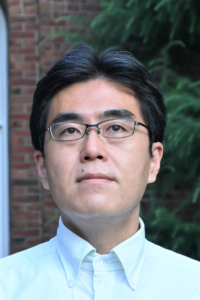 KURATA Toru, Ph.D.
Professor, College of Law and Politics, Rikkyo University
Completed his doctoral studies at the Graduate School of Interdisciplinary Cultural Studies, University of Tokyo in 2008. His specialization is Hong Kong politics. His publications include Honkon Seiji Kiki (Hong Kong political crisis) (University of Tokyo Press, 2021, a winner of the Masayoshi Ohira Memorial Award), Chugoku Henkango no Honkon (Hong Kong after the handover to China) (Nagoya University Press, 2009, a winner of the Suntory Prize for Social Sciences and Humanities). He also co- authored Honkon (Hong Kong) (Iwanami Shinsho, 2015), and co-edited Honkon Kiki no Shinso (An in-depth examination of the Hong Kong crisis) (Tokyo University of Foreign Studies Press, 2019).
Keywords
- Hong Kong
- national security law system
- free market economy
- One City, Two Systems
- Chinese-style development
- patriotism
- recession
Related posts:
 Japan’s International Cooperation Seen from Palau: Rising Geopolitical Interests, Principles and Strategies under Scrutiny
 China’s Expanding Presence in Central Asia: Its Global Strategy and Public Responses
 Afghanistan Earthquake: Relief Activities by Peace Japan Medical Services and Peshawar-kai
 War and Order from the Global South
 Beyond 1.5°C: Not to Despair