


International Cooperation and Resource Diplomacy to Reduce Dependence on Chinese Rare Earths
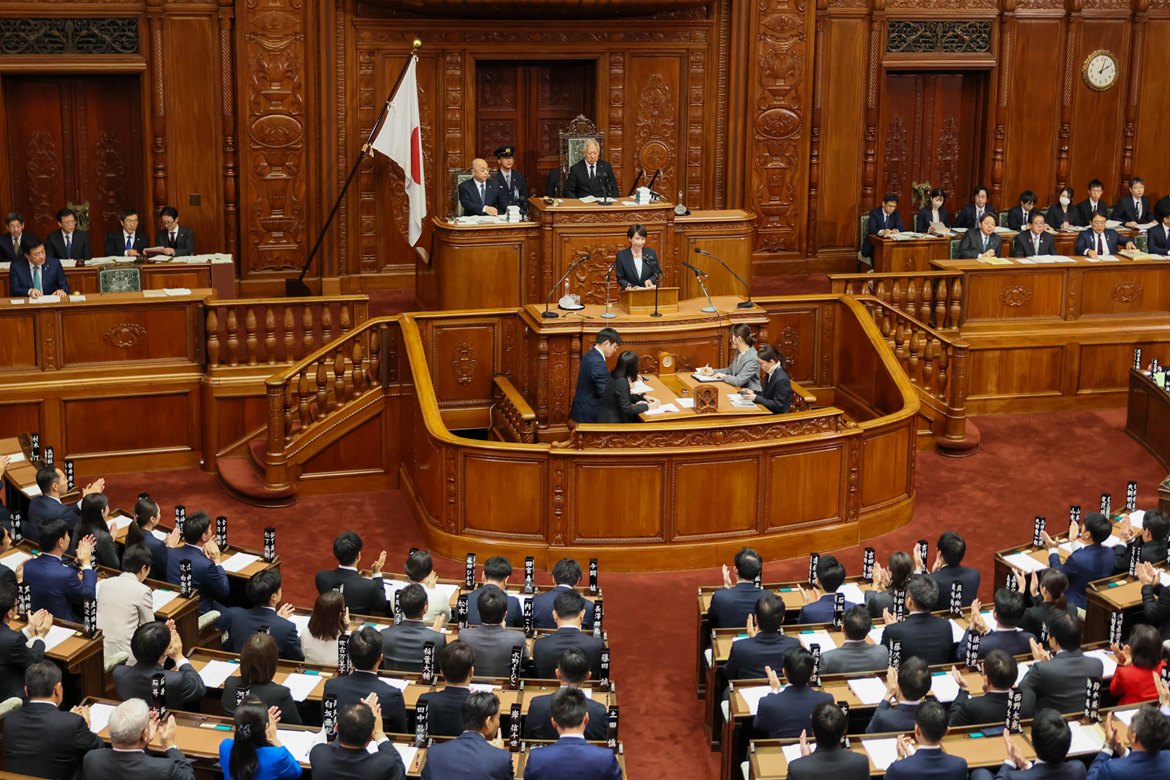
In her policy speech to the 221st Session of the Diet on February 20, 2026, Prime Minister Takaichi Sanae explicitly referred to rare earth elements, stating: “In addition, we will aim to bring about the early societal application of fusion energy, ahead of the rest of the world. […] Notably, we will fast-track our efforts to utilize rare earth resources from the seabed in the waters surrounding the island of Minamitorishima.”
(Photo: Cabinet Public Affairs Office)
China’s dominance in rare earth element (REE) production stems from low mining and refining costs and vertical integration across the industry. Securing a stable supply of REEs requires international cooperation grounded in a long-term strategy.
- REEs are essential to improving both technical and environmental performance
- The key indicator is not the size of mineral reserves but the cost of industrial use
- Japan must contribute to building a stable international supply chain
In February 2026, speaking at an outdoor campaign rally in Okayama Prefecture, Prime Minister Takaichi Sanae was reported to have made a statement to the effect that Japan had successfully recovered rare-earth-rich mud from the seabed at a depth of 6,000 meters off Minamitorishima Island, and that Japan would therefore face no shortage of rare earth elements (REEs) for either the current generation or the next. However, this recovery forms part of a project for which the technical aspects and costs of industrial use have not yet been examined in detail. At present, it is therefore not possible to project that Japan will not face any shortage of REEs in the future. The author is troubled that the Prime Minister should make such a statement at this stage and by what it suggests about the state of Japan’s resource security and its economic security.
The exploration and mining of seabed mineral resources is a project that inspires grand dreams and a sense of adventure, and its high degree of technical difficulty makes it an important subject for basic research. For researchers, it is also an exceptionally challenging frontier. However, at the initial stage of a project for which the verification needed for practical application has yet to be carried out, it is questionable whether the Prime Minister should be determining whether industrial use is feasible in terms of technology and cost and then asserting that “neither the current generation nor the next generation will face a shortage of rare earth elements.”
The cost factor dictating the strategic value of rare earth elements
In the production of mineral resources for industrial use, particularly in the case of REEs, the key factor is cost. This includes the costs of mining, refining, and waste disposal. Compared with production costs, resource quantities and deposit locations are of secondary importance. Although it does not appear to be generally well known, identified land-based REE resources alone amount to roughly 1,000 years of supply, and it is fair to say that they are effectively inexhaustible. However, it is naturally more economically rational to exploit land-based resources that lie near the surface and are easy to mine and refine, and to produce rare earths in regions where waste-disposal costs are low. Even if a groundbreaking technological innovation were to occur, bringing seabed REEs into industrial use would probably still take 10 to 30 years.
Another important consideration is whether there is any point in developing resources in areas under Japanese jurisdiction without regard to cost. Resource development should be evaluated on the basis of economic rationality and effectiveness. With the exception of limestone and iodine (chemical symbol I), Japan imports all its mineral resources. The rationale for developing REEs as a resource simply because they have been found on the seabed within Japan’s territorial waters is highly questionable at present. Whether domestic resources should be developed is a matter to be discussed after the necessary technology has been established and the costs analyzed. Even if Japan were to produce REEs domestically—one of the many mineral resources it requires—this would not by itself place its resource security on a firm footing. Concentrating development funds on a single mineral commodity could also upset the balance of the overall resource-development budget.
The author considers any attempt to put REE resources to industrial use merely because they have been discovered on the seabed to be highly unrealistic on both economic and technical grounds. Projects have previously been launched to mine resources such as cobalt, manganese nodules, and methane hydrate from the seabed within Japan’s territorial waters, but all have stalled over cost or technical problems.
On the other hand, REEs have rapidly gained prominence as “strategic materials” in international politics in recent years. Although the 17 REEs are widely distributed throughout the Earth’s crust as mineral resources, economically mineable deposits are limited, and refining and separation require advanced technology and entail environmental burdens. Sources of supply therefore tend to be concentrated in certain countries, resulting in high geopolitical risk.
The importance of REEs has increased further with the push for carbon neutrality and the advance of digitalization. Used in everything from high-performance motors for electric vehicles (EVs) and drones, large wind turbines, communications equipment, and semiconductor manufacturing equipment to defense equipment such as missile guidance systems and radar, REEs are known as “industrial vitamins” that underpin modern industry and national security alike. The international environment surrounding REE supply must therefore be understood not merely as a resource issue but as a major current issue forming part of a strategic competition over mineral resource development against the backdrop of US-China confrontation.
Since the author’s arguments above have already been presented in various outlets, he will not discuss them in further detail here; readers interested in learning more are invited to consult his commentaries on YouTube. This article sets out to explain the international situation surrounding REEs, which is also important from the standpoint of resource security. Specifically, the author will discuss individual REEs and their applications; the reasons why China established its overwhelming predominance in mining and refining; attempts at decoupling from China and their limits; and international cooperation and Japan’s role in securing a stable supply.
What are REEs? Their types and applications
The REEs comprise 17 elements in the periodic table: the 15 lanthanides plus scandium (Sc) and yttrium (Y). They are generally classified into light rare earth elements (LREEs) and heavy rare earth elements (HREEs); HREE production volumes are low, and their supply risk is high.
The LREEs include lanthanum (La), cerium (Ce), praseodymium (Pr), and neodymium (Nd), of which neodymium is the principal material for high-performance permanent magnets (NdFeB alloy magnets). Because it is indispensable for high-performance motors in hybrid vehicles and EVs, as well as for wind power generation, demand for Nd is expanding rapidly. Cerium is used in automotive catalysts and abrasives, but because it is currently produced as a byproduct of Nd production, it is very likely to be in oversupply in the future.
The HREEs include dysprosium (Dy), terbium (Tb), and yttrium (Y). Adding trace amounts of Dy or Tb to high-performance permanent magnets (NdFeB alloy magnets) allows them to retain their coercivity even at high temperatures. Dy and Tb have become indispensable for raising the heat resistance of the high-performance motors used in hybrid vehicles and EVs. HREEs are also important in the aerospace and defense sectors. Especially notable is the sharp rise in demand for magnet materials in recent years as EVs and wind power generation have become more widespread. A single EV uses only a small quantity of REE magnets (on the order of kilograms), but the advance of electrification worldwide is pushing overall REE demand higher.
China’s predominance in mining and refining
The supply chain for permanent magnets (NdFeB alloy magnets), the main application of REEs, is divided into five stages: (1) mining, (2) mineral processing, (3) refining and separation, (4) magnet manufacturing, and (5) end-use products. Of these, the refining and separation stage is the most technically demanding and environmentally burdensome.
China has rapidly advanced its refining technologies since the beginning of this century. Because the cost of disposing of waste generated by mining and refining is also extremely low, China boasts an overwhelming share of REE production. In recent years, ore supplies from Australia and the United States have become available, but because China’s costs for refining and separation—that is, for producing magnet alloys from ore—are overwhelmingly low, it still accounts for more than 90% of the global market.
China’s predominance is not accidental but the result of several overlapping structural factors. The first factor is the geological advantage of REE deposits in southern China. The ion-adsorption deposits there are a globally rare type of deposit in which the cost of extracting, separating, and purifying HREEs is extremely low. Consequently, under current conditions, China is overwhelmingly competitive in producing HREEs such as Dy and Tb, which are indispensable for improving the heat resistance of high-performance magnets; economically viable alternative sources of supply are limited.
The second factor is lenient environmental regulations and a low-cost structure. Using volcanic (more precisely, magmatic) minerals in REE refining entails the generation of waste, including radioactive waste, as well as hazardous effluent containing heavy metals. The high cost of environmental protection measures in developed countries makes it hard for them to be competitive with an ultra-low-cost China.
The third factor is state-led industrial policy. Since the 1990s, the Chinese government has designated the REE industry as a strategic industry and pushed it toward oligopoly through measures such as subsidies, preferential tax treatment, and corporate consolidation. Until around 2010, there were numerous REE producers in China, but under state leadership they were consolidated into the “six major groups,” and a system of state control through the “two major groups,” established by 2021, remains in place.
The fourth factor is the existence of a vertically integrated supply chain. China has built a wholly domestic system running from mining through magnet manufacturing to end-use products (EVs, home appliances, and military equipment), thereby securing both price competitiveness and supply stability. The Chinese government’s suspension of rare earth exports (the “rare earth shock”), triggered by the 2010 territorial dispute over the Senkaku Islands, did not last long. This was because China’s EV industry and other related sectors were not sufficiently developed at the time, demand for REEs for end-use products was low, and the industry could not sustain itself without exporting much of what it produced. Today, however, because China is home to the world’s largest REE-consuming industries, its REE industry can, depending on circumstances, sustain itself without exporting.
The fifth factor is pricing power. China has a record of driving out foreign competitors with price cuts and, conversely, of disrupting supply by using rare earths as a means of political pressure, as in the 2010 suspension of exports to Japan. At present, China’s market dominance is overwhelming, and this situation is not expected to change for some time.
Attempts at decoupling from China: Progress and limits
The United States, the European Union (EU), Japan, Australia, and other nations are working to diversify REE supply. However, significantly reducing reliance on China in the short to medium term remains difficult.
In the United States, operations at the Mountain Pass mine (MP Materials) in California have been restarted and mining volume is being increased. Plans appear to be underway to start refining and to produce HREEs, but HREE production still depends on China. The United States is also reported to be exploring investment in refining and magnet manufacturing under the Defense Production Act.
Although the EU, too, is pushing to expand refining capacity within the bloc and to diversify supply chains under the Critical Raw Materials Act, strict environmental regulations are a barrier to investment.
In Japan, the 2010 export suspension described earlier prompted the Japan Organization for Metals and Energy Security (JOGMEC) to invest in Lynas (Australia), helping to establish a non-Chinese supply chain. Lynas stands out as the only major non-Chinese refiner, but its HREE supply capacity remains limited. The main reason appears to be that, although it has the production capacity, procurement of feedstock such as mixed rare earth oxides (REOs) has become difficult. In 2012, Shin-Etsu Chemical established a rare earth separation and purification company in Vietnam, which, though small in scale, is in operation. That the company has a refining facility in Vietnam and a supply chain that bypasses China deserves particular note, and the author believes that policies to expand production and procurement by such means should henceforth be pursued as a national effort. Resource development is also advancing in India and Vietnam, but underdeveloped refining technology and infrastructure limit how far supply can expand in the short term.
Japan also leads the world in recycling technology (urban mining). Producing REEs through recycling, however, currently costs far more than producing them by refining natural ore.
For all these reasons, decoupling REE supply from China is extremely difficult under present circumstances. The single largest barrier is the bottleneck in refining and separation technologies. Refining requires advanced technology and environmental protection measures, creating high barriers to entry. China has accumulated considerable technological expertise, and its advantage, namely the overwhelmingly low cost of disposing of waste generated by refining, is difficult to overturn. The scarcity of alternative HREE sources outside China is a further problem. Supply of dysprosium and terbium in particular is extremely dependent on China because of geological constraints.
The REE market is also small (on the order of several hundred billion yen a year), which makes it difficult to recoup investments and constitutes another major barrier. Private companies cannot bear the risks alone, making government support essential. In recent years, magnet manufacturing in China has also been expanding rapidly. Although Japan was once a major producer of rare-earth alloy magnets (rare-earth magnets), China’s magnet output is now the largest by an overwhelming margin. Unless the magnet manufacturing industry is secured and fostered, decoupling the supply chain from China will remain incomplete. In sum, while decoupling is progressing, structural industrial reliance on China remains firmly in place.
International cooperation to “manage” reliance on China
There are limits to what any one nation can achieve alone in securing a stable supply of REEs. China’s predominance in REEs is the result of multiple layers of interlocking factors across geology, technology, policy, and industrial structure, and is difficult to overturn in the short term. Rather than aiming for complete decoupling from China, however, it is possible to manage the degree of reliance and progressively reduce strategic vulnerability. To that end, a multilayered approach is indispensable: (1) building non-Chinese supply chains through international cooperation, (2) securing stockpiles on an overwhelming scale, (3) promoting substitution, reduction, and recycling through technological innovation, (4) establishing market systems and enhancing transparency, (5) strengthening Japan’s technological capabilities and resource diplomacy, and (6) fostering talent in the relevant fields.
(1) Direction of international cooperation: Joint investment in mining and refining will be important. The United States, Europe, Japan, and Australia need to collaborate to expand non-Chinese refining capacity. International cooperation is indispensable, particularly for developing supply sources of HREEs. In addition, international harmonization of environmental standards is important. If environmental regulations are overly strict, REE production costs will rise and investment will stall. On the other hand, if regulations are too lenient, the result will be environmental destruction. International standards need to be put in place.
(2) Strategic stockpiles are also important. As with petroleum, international cooperation on stockpiling REEs could be considered. For many years, the author has advocated that Japan maintain national stockpiles of industrially important rare metals equivalent to 10 years of domestic demand or at least one year of global demand. It is also important to retain high-quality scrap of rare metals and their alloys domestically rather than exporting it overseas. Unlike petroleum or rice, rare metal stockpiles have the advantage of being orders of magnitude smaller in volume and taking up little space. They are also easy to transport and store. In addition to being important in view of possible future wars and security issues, these stockpiles could also be used as aid supplies when allies are in need. The government should provide companies with tax incentives and financial support for their REE inventories (in-house stockpiles). Companies can then take advantage of these tax measures and support programs to actively build up large-scale in-house stockpiles when REE prices fall.
(3) Research and development of alternative materials and recycling technologies are also important. Developing technologies to reduce the amount of HREEs used in magnets and improving recycling efficiency will be key to decoupling from China.
(4) Efforts should also be made to establish a highly transparent market. To mitigate the risk of price manipulation by China, international price benchmarks and trading markets need to be developed.
(5) Japan has a major role to play as a technology-oriented nation. Japanese companies today have world-class technological capabilities in high-performance magnet manufacturing, which puts them in a strong position to serve as the core of international cooperation in this field. In its resource diplomacy, Japan should build on the success of its support for Lynas and take the lead in further investment and cooperation.
(6) In deploying these strategies, fostering capable engineers and researchers in non-ferrous refining and magnet manufacturing is essential. In the 21st-century international order, where carbon neutrality and digitalization are advancing, REEs have become a strategic resource on par with energy. Amid ongoing US-China confrontation, securing a stable supply of REEs is a critically important issue that directly affects the industrial competitiveness and security of every nation. Japan is called upon to leverage its technological strengths and to take the lead in building frameworks for international cooperation, and so to help construct a more stable global supply chain. Finally, if the risk of misleading statements by government leaders such as the one cited at the outset is to be reduced, one task is urgent: people capable of debating from a global perspective the course Japan should take on resource security and rare metal stockpiling must be cultivated and placed within the government.
Translated from “Takaichi seiken no keizai anzen hoshō seisaku o tou: Rea āsu seisan ‘datsu-Chūgoku’ no kokusai kyōryoku to shigen gaikō (Questioning the Takaichi Administration’s Economic Security Policy: International Cooperation and Resource Diplomacy to Reduce Dependence on Chinese Rare Earths),” Gaikō (Diplomacy), Vol. 96, Mar./Apr. 2026, pp. 96–102. (Courtesy of Jiji Press) [August 2026]
OKABE Toru H., Ph.D.
Executive Director and Vice President, the University of Tokyo; Professor, Institute of Industrial Science
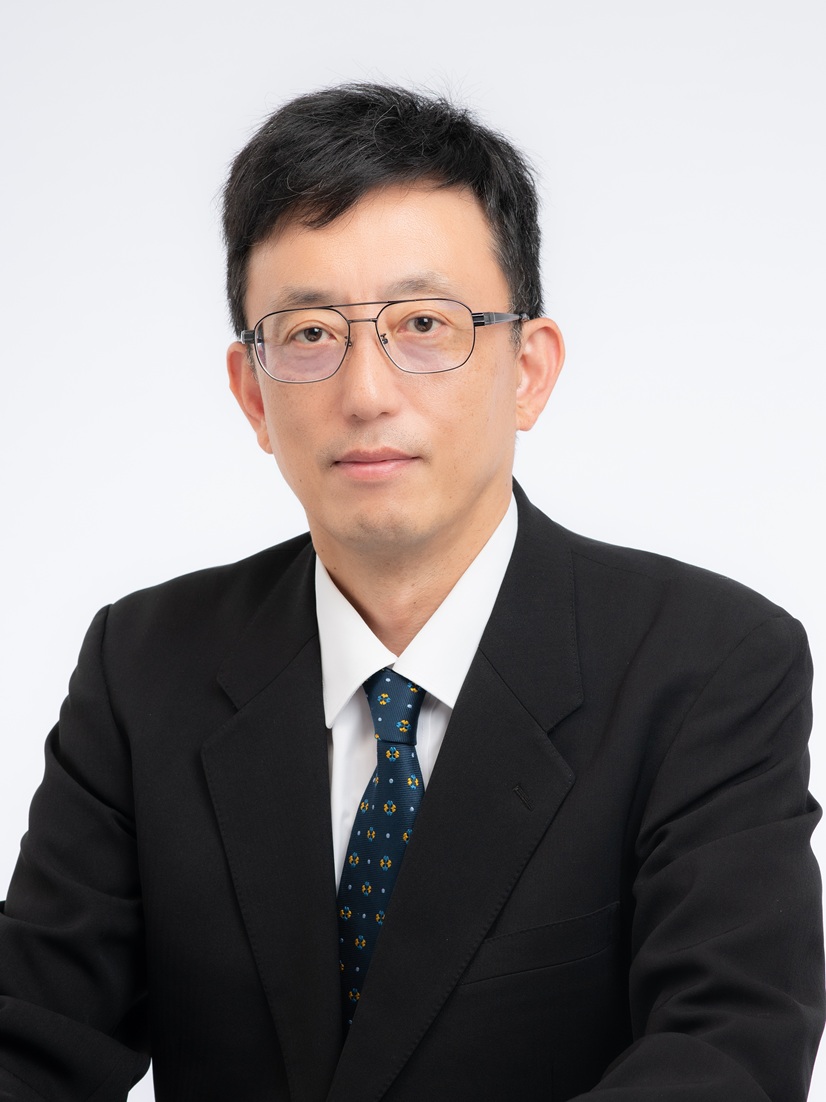
He completed the doctoral program at the Graduate School of Engineering, Kyoto University, in 1993 and holds a Ph.D. in Engineering. His research focuses on materials chemistry, resource circulation engineering, and rare metal process engineering. After serving in several positions, including as an associate professor at the Institute of Industrial Science, the University of Tokyo, he assumed his current position. His co-authored books include Rea metaru no saishin dōkō (Latest Trends in Rare Metals).
Keywords
- rare earth elements
- REEs
- mining
- refining
- industrial use
- supply chain
- strategic materials
Related posts:
 Social Security Reform Over Consumption Tax Cuts
 Free Trade Regimes Without the United States and Choices for the Global South
 The Dilemma between Free Trade and Economic Security
 Trials facing Japanese diplomacy beyond “Plan A′”: A new course demanded by multiple wars
 The “Creative Power” National Security Initiative: Integrating Security and Economic Strategy