


Reading the Energy Crisis Through Volume, Price, and Environment: Lessons from Fifty Years of Ordeals for “Resource-Poor Country” Japan
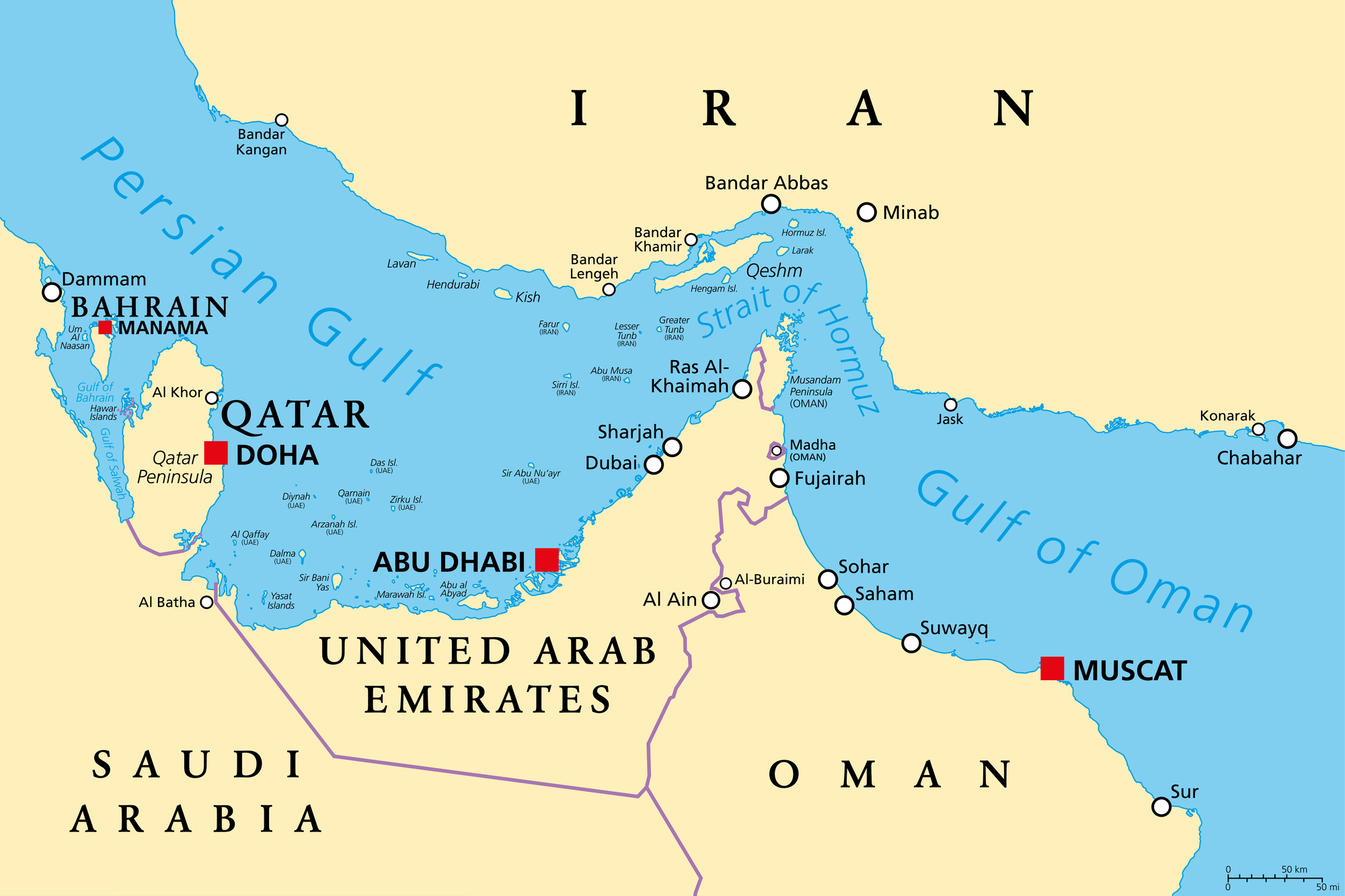
The Strait of Hormuz. As a critical geostrategic chokepoint accounting for approximately 20% of global oil consumption, the de facto blockade in early 2026 has fundamentally disrupted international energy security and posed an unprecedented ordeal for Japan’s foreign policy.
Photo: Peter Hermes Furian / PIXTA
“The world is facing the largest energy crisis in history.” Fatih Birol, Executive Director of the International Energy Agency (IEA), issued this warning during the initial phase of the crisis, when Iran launched its de facto blockade of the Strait of Hormuz. It was by no means an exaggeration. Although some countries increased production and expanded transport via alternative routes, approximately 10% of the global crude oil supply was lost in March 2026 when the crisis began, and the situation has remained volatile ever since. Naturally, the impact has also extended to petroleum products, liquefied natural gas (LNG), and other energy resources.
As early as March 11, the IEA announced a coordinated release of 400 million barrels of oil reserves. The volume released was the largest in history, more than double the amount released during the Russian invasion of Ukraine. This demonstrated just how acute the international community’s sense of crisis was.
The de facto blockade of the Strait of Hormuz, a critical maritime chokepoint, did not end quickly, and the damage spread to the Gulf states, including their energy-related facilities. A complex web of national interests has become intertwined; the United States, Israel, and Iran remain locked in confrontation, while the United Arab Emirates (UAE) has also withdrawn from the Organization of the Petroleum Exporting Countries (OPEC). With neither the situation in the Middle East nor the energy markets expected to settle in the short term, it is inevitable that this crisis will exert a major, multifaceted impact over the medium to long term.
Even several months after the onset of the crisis, Japan as a whole has yet to experience the kind of chaos one might expect. With no social panic like that of the first oil crisis (1973) and stock prices remaining high, the situation, at first glance, does not seem like a crisis. Although various repercussions from a shortage of naphtha have emerged, the impact has not yet rippled widely through everyday life. Gasoline prices, which had temporarily spiked toward mid-March, have also remained relatively contained.
The crisis has only just begun. While it remains uncertain how this current crisis will be referred to in the future, there is no doubt that it represents one of the greatest trials for Japan as a “resource-poor country.” Despite this, why does a sense of tranquility persist within Japan?
The following sections will examine past crises and responses to them through the fundamental triad of “volume,” “price,” and “environment,” before analyzing the specific nature of the trial Japan currently faces.
The Conflict Between Oil Consumers and Producers
Whenever a resource-related crisis has occurred, Japan has found itself in a difficult position as a “resource-poor country.”
The story begins with the Six-Day War of 1967. In this war, Arab nations attempted to use oil as a “weapon” against consumer nations. However, this attempt ended in a dismal failure. This was because consumer nations, led by the United States, still possessed spare production capacity, enabling them to weather the crisis by increasing production.
This outcome provided valuable lessons for both oil-producing and consumer nations. One reason for the failure of the oil-producing nations was the lack of cohesion among the Arab states, which led to the formation of the Organization of Arab Petroleum Exporting Countries (OAPEC) the following year. Meanwhile, consumer nations also began seeking greater coordination among the advanced economies, using the Organisation for Economic Co-operation and Development (OECD) as a platform.
Japan was forced to confront the challenge of balancing the reality of being a “resource-poor country” with its position as an advanced industrial nation. This fundamental framework is one that continues to this very day.
Following the Six-Day War, UN Security Council Resolution 242, which called for the withdrawal of Israeli forces from occupied territories, was adopted. Japan was involved in the adoption of this resolution as a non-permanent member of the Security Council, and subsequently came to base its Middle East policy on a broadly neutral stance that was nevertheless tilted toward the Arab nations.
As the world entered the 1970s, a series of agreements favorable to oil-producing countries was concluded. One factor behind this shift was concern for the “environment.” As pollution became a serious issue in various countries, the shift from coal to oil progressed faster than anticipated as a response, causing a sharp surge in oil demand. Consumer nations were not simply twiddling their thumbs in the face of the increasingly tight balance between supply and demand. Concrete discussions on a new framework for cooperation had begun within the OECD, with Japan playing a major role. It was at the very moment these discussions were being finalized, in the autumn of 1973, that the Fourth Arab-Israeli War erupted, triggering the first oil crisis.
The Two Oil Crises and the Evolution of Cooperation Among Consumer Nations
As they had done during the Six-Day War, Arab nations used oil as a “weapon.” At the onset of the first oil crisis, Japan’s primary energy supply was 94% dependent on fossil fuels, with oil accounting for 75.5% of the total. The fear that “oil might stop coming in” fundamentally shook prior assumptions, triggering a social panic in Japan, characterized by phenomena such as toilet paper vanishing from store shelves.
However, this crisis cannot be understood simply in terms of “volume.” There are two major reasons for this. The first was the presence of the international oil majors. Although the influence of oil-producing nations had been growing since the beginning of the 1970s, the international oil majors still controlled the downstream sectors (such as transport, refining, and marketing). Arab nations attempted to classify consumer countries based on their respective Middle East policies to implement supply embargoes or reductions. However, because the international oil majors, which held interests worldwide, redistributed the supply, imports into individual countries decreased by roughly the same proportion, regardless of their specific Middle East policies.
Second, it was a crisis not only of volume but also of “price.” In October and December 1973, OPEC unilaterally raised the posted price of crude oil on two occasions. Taking Arabian Light, a representative crude grade, as an example, the price of Arabian Light, which stood at $3.01 per barrel before the crisis, surged to $11.65 within a short period. It was this price escalation that exerted the greatest impact on the real economy.
For these and other reasons, the oil crisis spread globally, even affecting countries like the United Kingdom and France, which had initially been regarded as friendly nations by the Arab states. While Japan “clarified” its Middle East policy to lean toward the Arab nations, it simultaneously participated in coordination efforts among consumer countries.
Crises can also serve as the matrix that gives birth to new frameworks for cooperation. As 1974 began, the movement toward cooperation among consumer nations was revitalized. At the initiative of the United States, the Washington Energy Conference was convened in February, and the International Energy Agency (IEA) was established in November of that same year. The IEA was set up under the aegis of the OECD as an international organization that mandates member states to maintain a specific level of oil reserves, while also functioning as a think tank on energy issues.
International energy resource governance made further progress after the Cold War. These efforts have led to the development of multi-layered initiatives, including the International Energy Forum (IEF) as a platform for dialogue between oil-producing and consumer nations, the International Renewable Energy Agency (IRENA), and the Energy Charter Treaty (ECT), which evolved from the European Energy Charter. France, which had previously pursued its own independent path by emphasizing bilateral relations with oil-producing countries, also joined the IEA in 1992. India’s application for full membership in 2023, despite being a non-OECD member, demonstrates how the IEA has become the core framework for cooperation among consumer nations.
Cooperation among consumer nations did not mean an end to crises. The price surge caused by the turmoil surrounding the Iranian Revolution from 1979 to 1980 led to the second oil crisis, which also became a major agenda item at G7 summits. In the 1980s, the Iran-Iraq War created a situation where navigation through the Strait of Hormuz was threatened. Japan managed to navigate this difficult position by maintaining its relationship with Iran while simultaneously cooperating as a member of the G7.
The market experienced temporary turmoil during the 1991 Gulf War, prompting the IEA to carry out its first-ever coordinated release of oil reserves. However, the challenge Japan faced at this juncture was not primarily an energy problem but rather a question of how, as a member of the international community, it should respond to Iraq’s aggression during the final years of the Cold War. Japan went on to expand its participation in international security as seen in the dispatch of minesweeper units to the Persian Gulf and the deployment of personnel to UN peacekeeping operations (PKO) in Cambodia.
It is also necessary to examine the crises faced by oil-producing nations and their responses. The dominance of OPEC lasted for only about a decade following the first oil crisis. This was because cooperation among consumer nations advanced, crude oil futures markets developed, and conflicts of interest among oil-producing countries became increasingly pronounced. In the mid-1980s, Saudi Arabia’s decision to increase production triggered a sharp plunge in crude oil prices, a phenomenon also referred to as a “reverse oil shock.” Subsequently, an era of low crude oil prices persisted for approximately 20 years.
The turning point was the rise of emerging economies, led by China. Around the time of its accession to the World Trade Organization (WTO) in 2001, China’s economic growth began to accelerate rapidly. China, which had been a net exporter of energy resources until the mid-1990s, saw its imports skyrocket—a phenomenon described by terms such as “voracious appetite”—causing resource prices to surge.
Japan’s Energy Security
By the end of the 2000s, the “shale revolution” had begun, making it possible to extract resources from shale formations that had previously been uneconomical to develop. Through shale development, which combines horizontal drilling and hydraulic fracturing, the production of natural gas and crude oil within the United States surged. The United States became a net exporter of energy resources again for the first time in approximately half a century, and Japan also benefited from this development, for instance by shifting its LPG (Liquefied Petroleum Gas) imports from the US—which had previously been heavily dependent on the Middle East—to US-produced imports.
Japan’s shift in LPG procurement sources was driven by the growing price competitiveness of US-produced gas, made available for export by the shale revolution. At the same time, this shift brought significant benefits to Japan from the perspective of energy security.
The essence of energy security lies in diversification and stockpiling. Japan has actively implemented countermeasures since around the time of the first oil crisis. The nation pioneered the commercial use of liquefied natural gas (LNG) and aggressively introduced nuclear power generation. Consequently, Japan’s dependence on oil, which accounted for approximately 75% of its primary energy supply during the first oil crisis, has dropped to around 35% today. The way oil is utilized has also transformed; only a marginal amount of oil is now used for power generation, with its primary applications shifted to raw materials for petrochemical products and fuel for transportation and heating. The procurement sources for each resource have also achieved a reasonable degree of diversification. Even for natural gas, the utilization of which is expanding as a transition energy toward decarbonization, dependency on the Middle East has stabilized at a relatively low level.
Equally important as diversification is stockpiling. Crude oil reserves, which consisted almost entirely of commercial inventories at the time of the first oil crisis, were equivalent to 254 days of consumption, based on published data as of the end of February 2026. In any case, Japan maintained stockpiles equivalent to roughly eight months of supply.
Even so, the reality for Japan remains that it is a “resource-poor country.” Its energy self-sufficiency rate is at the lowest level among major nations. Furthermore, unlike European countries, Japan lacks international pipelines or interconnectors, meaning that it must address energy security entirely on its own.
This brings us to climate change. The issue of climate change, which surfaced after the end of the Cold War, poses a difficult challenge for both oil-producing and consumer nations. It can be said that environmental issues have driven energy policy, much like pollution did in the past. Moving forward through a series of advances and retreats, frameworks for international cooperation were progressively established, notably with the Kyoto Protocol (1997) and the Paris Agreement (2015). In 2020, Japan also committed to achieving a “carbon-neutral” society (net-zero greenhouse gas emissions) by 2050, and has since intensified its initiatives toward Green Transformation (GX).
Given the stance of the second Trump administration and the turmoil in the global energy landscape, one might gain the impression that the issue of climate change has receded into the background. Nonetheless, we must not lose sight of the fact that this remains a critical challenge requiring medium- to long-term initiatives.
Russia’s Invasion of Ukraine and Gasoline Subsidies
Let us once again review the situation prior to the Strait of Hormuz crisis.
As a “resource-poor country,” Japan faced Russia’s invasion of Ukraine while stepping up its efforts toward GX. As a member of the G7, Japan joined the sanctions against Russia; while an embargo was imposed on Russian oil, imports of liquefied natural gas (LNG) were sustained. The market dictates a simple rule: when supply cannot be secured, the impact is directly reflected in prices. Oil is relatively substitutable because it is traded in a global market, whereas replacing LNG is highly difficult. Japan’s continued reliance on Russia for just under 10% of its LNG supply can be viewed as a decision made after carefully weighing the costs and benefits of the sanctions.
As the situation in Ukraine reached a stalemate, global markets also gradually adjusted. Although questions remain about the effectiveness of the sanctions, the turmoil surrounding oil subsided within a relatively short period, and the focus of energy security shifted to natural gas. LNG prices also stabilized within less than a year.
For Japan, a potential energy security crisis unfolded in a form that was difficult to discern at first glance: the subsidies introduced to suppress rising gasoline and other fuel prices. These subsidies, which distort market mechanisms, were implemented at the worst possible timing—just prior to Russia’s invasion of Ukraine. This appears to have been the result of underestimating the risk of a Russian invasion and prioritizing responses to the immediate risk of rising prices. By the time the subsidies were temporarily terminated in fiscal 2025, just under 10 trillion yen had been spent on the program. This amount is equivalent to returning approximately 1% of the consumption tax to the public each year.
Another development that cannot be ignored is the yen’s prolonged weakness following the invasion of Ukraine. The yen-dollar exchange rate, which had hovered at around 110 yen to the dollar, shifted sharply as the yen weakened and has since fluctuated at around 150 yen to the dollar. Given that payments for oil and natural gas are denominated in US dollars, resource import prices have risen by approximately 30% solely as a result of the yen’s depreciation. Following the invasion of Ukraine, an inflationary trend became entrenched amid the yen’s depreciation, and lowering the consumption tax or abolishing the provisional tax rate levied on gasoline and other fuels became central issues in national elections.
In Japan, a decision was finally made in the autumn of 2025 to abolish the subsidies and the provisional tax rate. Just as the situation was finally beginning to move toward normalization, however, the United States and Israel launched attacks against Iran at the end of February 2026.
Initial Responses to the Strait of Hormuz Crisis
As demonstrated by the “Twelve-Day War” in June 2025, the situation in the Middle East had by no means been tranquil. Furthermore, the Strait of Hormuz itself had not always been stable, as illustrated by Japan’s dispatch of minesweeper units following the Gulf War. Nevertheless, conflicts involving Iran, the United States, and Israel had hitherto been contained within certain limits to prevent escalation. A blockade of the Strait of Hormuz was anticipated as the ultimate stage of such escalation.
However, following the assassination of numerous figures at the core of the regime, including Supreme Leader Ali Khamenei, during the opening hostilities, Iran moved to impose a de facto blockade of the Strait of Hormuz. The Strait is a vital maritime chokepoint through which approximately 20% of the world’s crude oil consumption passes, along with a vast array of other energy resources, including petroleum products and LNG.
At the onset of the crisis, the Japanese government’s response could be characterized as de facto “silence.” While referring to the protection of Japanese nationals, the government carefully avoided passing judgment on the situation brought about by its ally, the United States, and its friendly nation, Iran. Meanwhile, the market reacted swiftly: gasoline prices, which had fallen to around 150 yen, spiked to nearly 190 yen.
The silence was finally broken on March 11, more than ten days after the onset of the crisis. The IEA decided on a coordinated release of oil stockpiles by its member states, and an online meeting of G7 leaders was held on the evening of the same day, Japan time. At a press conference held during this period, Prime Minister Takaichi Sanae articulated Japan’s stance on the energy issue. The first and foremost policy announced was one aimed at countering soaring prices through the reinstatement of subsidies. Regarding the retail price of gasoline, the government stated that “we will keep the retail price in check at a nationwide average of about 170 yen.”
During the weeks following the onset of the crisis, the Prime Minister’s Official Residence was presumably focused primarily on measures to counter soaring prices and the Prime Minister’s official visit to the United States from March 18 to 21. Upon her return to Japan, the “Ministerial Meeting on the Situation in the Middle East” was established, and consultations at the leaders’ level with relevant nations, including teleconference calls, began to increase. Nevertheless, even after that, Prime Minister Takaichi’s message regarding energy and resources has remained consistent: while there may be distribution issues, there is no concern about overall supply, and since prices will be kept down, the public has no need to worry.
Turning the Crisis into an Opportunity
It is only natural to draw down oil stockpiles while searching for alternative sources of supply and responding in a manner that avoids creating panic domestically. Nevertheless, it must be said that the measures rolled out by the Takaichi administration were hasty and overly optimistic. Due to differences in terms of trade, tax systems, and energy policies, comparing gasoline prices across countries is no easy task. However, amid sustained high crude oil prices, the “170 yen” benchmark is lower than the price in the United States, which is itself a resource-rich major nation. As a consequence, subsidies amounting to hundreds of billions of yen are being injected every month, leading to a situation in which the formulation of a supplementary budget is already being considered at the very start of the fiscal year.
The reason the crisis has not spread more widely within Japan is partly attributable to past measures, such as stockpiling. However, the period for which this situation can be sustained is not particularly long, and the effects will emerge sequentially, beginning with areas where stockpiling and diversification of supply sources had not progressed. While the fallout is already apparent, particularly in naphtha and related products, the crisis will inevitably reach other areas in turn.
Imposing a fixed levy on electricity bills to promote the introduction of renewable energy for GX while simultaneously providing subsidies to suppress the prices of gasoline, electricity, and gas is akin to “pressing the brake and the gas pedal simultaneously.” Even if measures to counter soaring prices are necessary, unless they are designed to allow market mechanisms to function, the side effects will be substantial, and the energy literacy of the public will never improve.
For the first time in half a century since the first oil crisis, Japan is confronting a crisis of “volume” in addition to one of “price.” The issue of “price” cannot be indefinitely masked by subsidies. Furthermore, the “environment” remains a medium- to long-term structural challenge that cannot be ignored when considering energy issues.
Japan must confront this ordeal while also addressing concrete fiscal issues, such as securing permanent revenue sources to replace the provisional tax rate levied on gasoline and other fuels, as well as securing the financial resources for the defense budget anticipated by the revision of the Three Defense Documents.
There is still much more that can be done, such as providing further assistance to Southeast Asian nations that find themselves in an even more precarious position than Japan, while simultaneously serving as a linchpin for maintaining supply chains. Whether Japan can turn this crisis into an opportunity, the nation now stands at a critical crossroads.
More from this author:
https://www.japanpolicyforum.jp/economy/pt2022091515222612464.html
Translated from “Ryo, Kakaku, Kankyo kara Yomitoku: ‘Shigen-shokoku’ Nippon, Shiren no 50 nen ni Manabu (Reading the Crisis Through Volume, Price, and Environment: Lessons from Fifty Years of Ordeals for “Resource-Poor Country” Japan),” Chuokoron, July 2026, pp. 90–97 (Courtesy of Chuo Koron Shinsha) [July 2026]

SHIRATORI Junichiro, Ph.D.
Associate Professor, The Open University of Japan
Born in 1983. Graduated from the Faculty of Law, Keio University in 2006 and earned his Ph.D. (law) from the University in 2013. His publications include Keizai-taikoku Nippon no gaiko: Enerugi-shigen gaiko no keisei 1967-1974 (The energy resource diplomacy of a rising Japan, 1967-1974; winner of the Suntory Prize for Social Sciences and Humanities), and co-authored works such as Heisei no Saishotachi: Shidosha 16-nin no Shozo (Heisei prime ministers: Portraits of sixteen leaders) and Gendai no Kokusai Seiji [Shintei] (Contemporary international politics (Revised edition).
Keywords
- energy security
- oil crisis
- Strait of Hormuz
- resource-poor country
- consumer nation
- gasoline subsidies
- environment
Related posts:
 New Class Society, Transformation of Hardcore Conservative Base
 Social Security Reform Over Consumption Tax Cuts
 Free Trade Regimes Without the United States and Choices for the Global South
 Trials facing Japanese diplomacy beyond “Plan A′”: A new course demanded by multiple wars
 China’s Economic Sanctions Against Japan Become “Legalized”