


Afghanistan Earthquake: Relief Activities by Peace Japan Medical Services and Peshawar-kai

September 2, 2025: PMS (Peace Japan Medical Services) staff assessing damage in a village of the Dara-e-Noor Valley immediately after the earthquake.
All photos: Courtesy of PMS (Peace Japan Medical Services) & Peshawar-kai
On August 31, 2025 a devastating earthquake struck eastern Afghanistan. Peace Japan Medical Services (PMS) and Peshawar-kai immediately launched emergency relief operations.
- In the mountainous regions, there were people beyond the reach of any aid.
- When necessary, support was provided directly to the people, bypassing local administrative channels.
- Our guiding principle of “sustaining life” has earned profound trust.
Around 11:50 PM local time on August 31, 2025, a magnitude 6.0 earthquake struck with its epicenter in Nurgal District, Kunar Province, eastern Afghanistan, causing catastrophic damage. The affected areas overlap with the irrigation project sites of Peace Japan Medical Services (PMS), which operates out of Jalalabad, Nangarhar Province. Afghanistan is located in the western part of the Himalayan, Karakoram, and Hindu Kush mountain ranges, which were formed by the collision of the Eurasian and Indian tectonic plates. This region is prone to earthquakes and has similar geological conditions to Japan. Previously, on October 7, 2023, an earthquake of a similar magnitude occurred in western Herat Province, claiming over 1,000 lives; at that time, PMS also conducted relief activities. While I am not in a position to provide an exhaustive overview of the entire disaster, I have been involved with this region, both directly and indirectly, for over 40 years. Furthermore, I have participated in relief efforts as a member of the Disaster Psychiatric Assistance Team (DPAT) during the Great East Japan Earthquake, the Kumamoto Earthquake, and the Noto Peninsula Earthquake. Based on these experiences, I hereby report on the current earthquake.
Current Status of Damage and Relief Efforts in Mountainous Regions
Following the restoration of the Taliban regime in 2021, on-site visits by Peshawar-kai staff members resumed. Since mid-August 2025, the 10th Visiting Team—comprising four Japanese members, including Fujita Chiyoko, Chief of PMS Support Unit Japan, Peshawar-kai—has been in the country. This presence enabled close collaboration between the local PMS staff and the Peshawar-kai office, allowing updates on the current situation to be published on the Peshawar-kai website in near real-time.
According to the US Geological Survey (USGS), the epicenter was located 27 kilometers east-northeast of Jalalabad, in the Keshmand Mountains, which includes the Dara-e-Noor Valley where the PMS clinic is situated. Villages scattered throughout the mountainous regions of the Dara-e-Noor, Mazar-Dara, and Diwagarh valleys suffered catastrophic damage. Heavy rains immediately preceding the earthquake may have loosened the ground, potentially exacerbating the destruction. Houses on steep slopes, constructed from masonry or adobe (mud bricks), are vulnerable to tremors; furthermore, the fact that the main shock occurred late at night contributed to the high number of casualties. Four strong aftershocks were recorded, and as of September 4, the death toll stood at 2,205 with 3,640 injured, though an accurate assessment remains difficult to obtain.
Roads leading to villages in the mountainous areas were severed by landslides caused by the earthquake, raising fears of delays in providing aid to the victims. However, according to the PMS assessment that began on September 1, the Taliban regime’s efforts toward recovery were swift, and restoration work by various NGOs was also reportedly underway. Nevertheless, because the affected areas were scattered across steep mountain terrain, relief operations were said to be extremely difficult.
Local news reports indicate that countries including Japan, Russia, China, Uzbekistan, Turkmenistan, Bangladesh, India, Qatar, the United Kingdom, and Iran were among the first to pledge daily life support—such as food, water, and tents—and to dispatch supplies. Much of the aid was sent directly to the Islamic Emirate of Afghanistan (the Taliban regime) or through the United Nations Development Programme (UNDP) and the International Committee of the Red Cross (ICRC) via routes such as the Afghan Red Crescent Society. Under the Taliban regime, the Afghanistan National Disaster Management Authority (ANDMA) has established committees in each province to receive and distribute aid. In Kunar Province, a tent-based shelter has been set up at a former US military base across from the Nurgal District—the hardest-hit area—to accommodate people unable to stay in their homes due to structural destruction or aftershocks. In the disaster-stricken highlands at altitudes exceeding 1,000 meters, the cold is fast approaching, and the situation has entered a phase where support for living environments, including large tents, is required in addition to food.
Relief Activities by PMS and Peshawar-kai
Immediately after the main shock, the PMS clinic in the Dara-e-Noor Valley worked through the night to provide emergency surgical treatment for a large number of injured victims. Since then, it has continued to serve as the medical hub for the region. Although this Dara-e-Noor clinic is officially registered as a Basic Health Center (BHC)—a facility providing minimum medical functions—it possesses capabilities comparable to a Comprehensive Health Center (CHC), handling surgical procedures and nighttime emergencies.
On September 1, PMS river engineers conducted visual inspections of the ten intake weirs and irrigation canals built through past irrigation projects, confirming that there was no major structural damage. Having witnessed the devastation firsthand during their inspections, the engineers consulted with Dr. Ziaur Rahman, the local Deputy Director, and proposed to Fujita Chiyoko, Chief of the PMS Support Unit Japan (who was then visiting), that they should concentrate their efforts on earthquake relief. In response, Peshawar-kai conveyed the message, “We fully support the policy of PMS; we are with all of you at PMS,” and immediately decided to provide an emergency disbursement of $300,000 from the Peshawar-kai’s “Fund for Life.” This first phase of support focused primarily on food. On October 2, one month after the disaster, we notified PMS of an additional second-phase disbursement of $300,000 for daily life support. To devote every effort and ingenuity to providing meaningful aid precisely when people are suffering—this is exactly what Dr. Nakamura Tetsu practiced repeatedly. We are deeply grateful to the compassionate supporters in Japan whose contributions have made these activities possible.

Dr. Nakamura delivered a speech at the ceremony for the completion of Sheiwa Intake and Canal on March 15, 2008
Below, we introduce a portion of the reports received from Chief Fujita, who is currently engaged in relief activities on the ground (The following includes excerpts from the Peshawar-kai website [in Japanese]; please refer to the website for further details).
Report dated October 2: Covering the period from September 23 to October 1
PMS moved forward with its planned two-point operation: (1) providing aid to disaster-affected families in Sutan Village in the upper reaches of Dara-e-Noor, Nangarhar Province; and (2) improving roads to the two highland settlements of Alek and Shemash in the upper reaches of Wadi Dara, Kunar Province.
Follow-up Support for Sutan Village: On September 23, while heading toward Sutan Village for an assessment, the team unexpectedly discovered the villages of Ramatek and Majigandon just before entering their destination. Realizing these two villages had received neither prior assessment nor any aid, one team was immediately diverted to investigate. The residents live in houses terraced along steep mountain slopes. Boulders and landslides triggered by the earthquake had caused homes to collapse. Furthermore, as the main shock and aftershocks involved significant vertical motion, many houses appeared intact from the outside with their exterior walls standing, yet their heavy mud roofs had collapsed straight down. In many cases, the true extent of the damage only became apparent upon entering the dwellings. Navigating through these scattered settlements involves considerable danger. The PMS assessment members reported that they felt fear many times during their survey, yet they pressed on, remembering the words of “Dr. Saab” Nakamura (the late Dr. Nakamura Tetsu [1946–2019]): “We go where no one else wants to go and do what no one else is willing to do.”
Through their efforts, the actual conditions were confirmed, and distribution cards were handed over to 100 families. The following day, September 24, relief supplies were distributed to a total of 200 families, including those in Sutan Village. The Dara-e-Noor District Chief, who was present during the distribution, received expressions of gratitude from the villages; however, he also conveyed numerous requests for tents, stating, “If support is to continue, we ask for assistance with tents.” Staff members who entered the villages for the assessment also repeatedly heard stories such as, “Because aftershocks continue, we sleep in the fields at night, but it is freezing and sometimes it rains. Each time, the children and women weep from fear and cold.” Even in Jalalabad, where we are staying, the mornings have been chilly since mid-September (the cold has arrived early this year, 2025), and fans are no longer needed. The cold in the Sutan Village area, located at an altitude of over 1,000 meters, must be far more severe than in Jalalabad.
Since the epicenter of this earthquake was in Kunar Province, most domestic and international aid is being delivered to disaster areas within that province, the Nurgal displacement camp, and camps supported by the ICRC or the United Arab Emirates (UAE). The disaster-stricken areas in the deep reaches of the Dara-e-Noor Valley, such as Sutan Village, are less visible; consequently, aid there has been significantly delayed compared to other regions, and no displacement camps have been established.
In any case, we must hurry. Negotiations with wholesalers and purchasing began immediately on the 29th. We received a notification stating that the distribution of tents would be carried out by the District administration and that we should deliver them to the government office. However, Dr. Zia and others immediately visited the District Chief to explain that PMS, as per its usual practice, conducts its own independent assessments and distributes aid directly into the hands of the victims. They sought his understanding and received full consent. By October 13, 3,050 tents had been distributed.
Since my previous report on September 18, the Internet had remained unstable in some provinces, including Jalalabad City. At the PMS Jalalabad Office, both internet and telephone communications suddenly ceased around 5:00 PM on September 29. It became impossible to contact not only Japan but also between PMS staff members and their families. However, on the evening of October 1, telephone lines began to connect, and the Internet gradually started to recover.

September 13: Distribution of flour, blankets, and other relief supplies at the Nurgal displacement camp.
Inheriting Dr. Nakamura’s Mission and “Hope”
Peshawar-kai was established in 1983, and the following year, Dr. Nakamura began his medical activities for leprosy in Peshawar, in the Khyber Pakhtunkhwa, formerly the North-West Frontier Province of Pakistan. Following the 1979 Soviet invasion of Afghanistan, three million Afghan refugees had flooded into Peshawar. Dr. Nakamura not only provided medical care to these refugees but also organized refugee medical personnel to establish a self-sustaining healthcare system. He worked toward the organization that would lead to the present-day PMS (1986), treated leprosy as one of many infectious diseases, and established clinics in the rural and mountainous areas of Afghanistan to which the refugees would eventually return (1991). To support these clinics, he built the PMS Base Hospital in Peshawar (1998) and constructed a medical system for the eradication of leprosy tailored to local conditions.
Just as these activities were gaining momentum, a major drought caused by climate change became apparent. In response, he launched a well-digging project to secure life-sustaining water (2000) and initiated an irrigation canal project named the “Green Ground Project” on the great Kunar River (2003). The Marwarid Canal was completed (2010), and 230 hectares of farmland were reclaimed in the Gamberi Desert, where the canal reached its terminus (2010). Subsequently, in response to the residents’ requests, nine intake weirs and other structures were built along the Kunar River, completing the PMS-style irrigation system. By 2019, 16,000 hectares had been irrigated, restoring fertile land capable of supporting 650,000 people. On December 4, 2019, while working to promote these methods across Afghanistan, Dr. Nakamura fell to an assassin’s bullet.
Dr. Nakamura continued to “light up a corner” of the world, saving lives and seeking reconciliation among people and between people and nature. Resonating with his way of life, Peshawar-kai, a voluntary organization, has gained 26,000 supporters, and PMS operates as an international NGO with 100 staff members in Afghanistan. Dr. Nakamura’s perspective was not to view people conceptually through the lenses of ideology, creed, politics, religion, or social systems, but rather to look directly at living beings, believing that “Helping people in need is simply what we ought to do.” (For details, please refer to: Nakamura Tetsu, Nakamura Tetsu: Shisaku to Kodo [Reflections and Deeds of Nakamura Tetsu, Vol. 1 & 2], Peshawar-kai, 2023 and 2024). Currently, as Dr. Nakamura had hoped, in addition to projects on major rivers, we are attempting to draw water from small and medium-sized rivers in mountainous areas, carrying out irrigation canal projects in Balakot (2024) and Nazyan (scheduled for completion in 2026). Furthermore, the medical services for leprosy, which had been suspended due to repeated conflicts, were resumed in 2025.
During the 40 years Dr. Nakamura was active in this region, Afghanistan remained in a state of war, with the regime changing at least six times. However, regardless of any political upheaval, Dr. Nakamura remained undaunted and steadfast, pushing forward toward his goals. Therefore, when the Taliban regime returned to power in 2021, PMS continued its projects without any stagnation and even embarked on new initiatives. Under the Taliban’s rule, public safety has improved, and injustice, corruption, and drug cultivation have almost vanished. Since PMS operates in rural areas where people have originally led traditional lives, there appears to be little resistance to the Taliban regime.
In its political landscape, present-day Afghanistan bears a striking resemblance to Japan during the transition toward national unification in the late 16th-century Sengoku (Warring States) period;[1] nevertheless, modernization has progressed, and the internet has spread through smartphones. During the period when the country was aiming for recovery from the earthquake, the Internet was disconnected by the intention of the [Taliban] regime, causing massive chaos in finance, aviation, and government administration. The reason for the disconnection was the religious leaders’ claim that “outrageous customs are entering the country,” but it is an undeniable fact that even in Afghanistan, various systems cannot function without the use of the Internet.
Dr. Nakamura respected Afghan culture and customs, and without imposing Japanese or Western values or ideologies, he acted with only the sustenance of life in mind. This was the factor that earned him the absolute trust of the Afghan people. We will continue to advance the projects of PMS, following his spirit as our model.
The earthquake relief efforts will conclude in October 2025, and we will resume our conventional medical, agricultural, and irrigation projects. The greatest challenge facing Afghanistan is the drought caused by global warming, leaving the country constantly exposed to the possibility of famine. We will continue our activities by sincerely taking to heart the meaning of Dr. Nakamura’s words: that the wish of the Afghan people is simply to be able to have three meals a day with their families—nothing more than that.
Translated from “Afuganisutan Daijishin: Peshawaru-kai no Shien Katsudo (Afghanistan Earthquake: Relief Activities by Peshawar-kai),” Gaiko (Diplomacy), Vol. 94 Nov. / Dec. 2025, pp. 126–131. (Courtesy of Jiji Press) [March 2026]
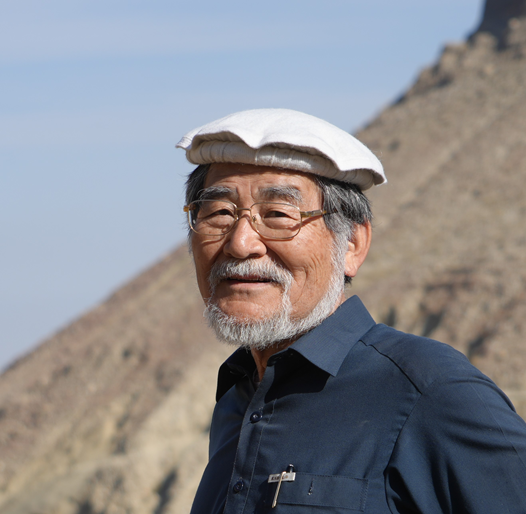 Dr. MURAKAMI Masaru Chairman of Peshawar-kai, Executive Director of Peace Japan Medical Services (PMS)
Murakami Masaru graduated from the Faculty of Medicine at Kyushu University. He serves as a physician at the National Hospital Organization Hanamaki Hospital. Together with Dr. Nakamura Tetsu and others, he formed Peshawar-kai in 1983. He became the Secretary General in 1992 and assumed the position of Chairman in 2015. In 2019, he succeeded Dr. Nakamura as the Executive Director of PMS.
[1] The Sengoku period (1467–1615) was a century-long era of civil war and social upheaval in Japan. The reference to the “late 16th century” specifically points to the transition from fragmented rule by local warlords to a unified national authority under leaders like Oda Nobunaga (1534–82) and Toyotomi Hideyoshi (1537–98). Dr. Nakamura Tetsu often drew this parallel in his speeches and writings to describe Afghanistan’s current state of emerging from decades of conflict toward a centralized, albeit rigid, form of governance. Following the Battle of Sekigahara (1600) and the Siege of Osaka (1615), this era eventually gave way to centuries of stability.
Keywords
- Afghanistan earthquake
- Peace Japan Medical Services (PMS)
- Peshawar-kai
- relief operations
- mountainous regions
- Dr. Nakamura Tetsu
- Taliban
Related posts:
 Will “Chinese-style” Development Permeate Hong Kong?
 Japan’s International Cooperation Seen from Palau: Rising Geopolitical Interests, Principles and Strategies under Scrutiny
 China’s Expanding Presence in Central Asia: Its Global Strategy and Public Responses
 “A World with America” and “A World without America”
 How Should We Respond to Successive Incidents? Understanding through a Culture of Coexistence: Bears and the Japanese People