


Shiba Ryotaro: The Author Who Bridged the Gap Between the Humanities and the Masses
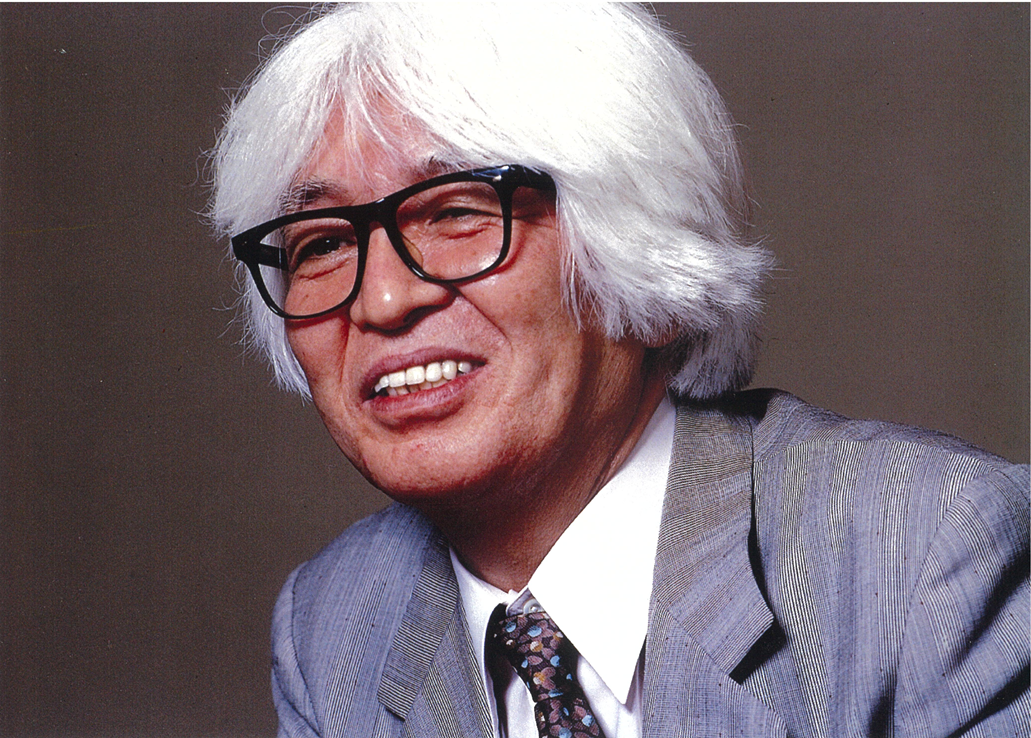
Shiba Ryotaro (1923-1996) was a Japanese novelist, nonfiction writer, and critic. He was a member of the Japan Art Academy, a Person of Cultural Merit, and a recipient of the Order of Culture. He was a leading author of his time, with approximately 44 novels, 156 short stories, and over 1,500 essays and travelogues. Professor Fukuma Yoshiaki points out the significance of his works as follows: “Shiba’s writings bridged the gap between “history (as a form of kyoyo, or liberal arts),” and by extension, the humanities, and the general public. This effectively expanded the reach of the rondan (the sector of opinion journals and intellectual discourse) beyond the narrow confines of core reading intellectuals into a slightly broader stratum of society.”
Photo: Volumes of Ryoma ga Yuku (left) and Saka no Ue no Kumo (right).
Photo: Courtesy of Shiba Ryotaro Memorial Museum
This year 2026 marks the 30th anniversary of the death of Shiba Ryotaro (1923–96). Even after the passage of so much time, Shiba’s works continue to be widely read. The cumulative circulation of Saka no Ue no Kumo (Clouds Above the Hill: A Historical Novel of the Russo-Japanese War), which deals with the Russo-Japanese War (1904–05), has reached 19.7 million copies. Meanwhile, Ryoma ga Yuku (Ryoma!: The Life of Sakamoto Ryoma), which depicts the turmoil of the Bakumatsu period (the late Tokugawa shogunate [1603–1867]) centering on Sakamoto Ryoma (1836–67), has reached a staggering 25 million copies.
The large number of salaried workers among his readers is another prominent characteristic. The May 1996 special extra issue of Bungeishunju[1] contains many essays by figures in the business and bureaucratic sectors who had been avid readers of Shiba’s works since their youth. In response to Shiba’s passing, the business magazine President featured a special section in its April 1996 issue, and the following year, it published a special extra issue titled Rinji Zokan Shiba Ryotaro ga Yuku. This clearly indicates the presence of a solid readership among those employed in corporations and government offices.
Yet, upon reflection, Shiba’s historical novels are by no means an easy read. Under the prefatory phrase “yodan daga” (as a digression), commentary on historical background is frequently woven into the text. This might be fine if the descriptions were strictly confined to the era of the story itself, but instead, they consist of contrasts with Asian and Western history, or comparisons with Showa [Showa period: 1926–1989] and modern history—sometimes unfolding over several pages. For readers immersed in a tale where the protagonist dashes forward with soaring spirits, this sudden intrusion of “history” breaks their pleasant concentration. Furthermore, such historical knowledge has no direct bearing on the daily duties of salaried workers. Why, then, did they pick up Shiba’s works in spite of this?
On the other hand, Shiba also maintained numerous points of contact with academia. He engaged in many dialogues with figures such as Yamazaki Masakazu (playwright and critic; 1934–2020), Kosaka Masataka (international political scientist and historian; 1934–96), and Amino Yoshihiko (historian; 1928–2004). This very magazine, Chuokoron,[2] has featured around ten of his dialogues with university intellectuals since the 1970s. Yamazaki Masakazu remarked, “I always eagerly jump at the chance to accept any invitation for a dialogue with Mr. Shiba,” and expressed his deep admiration for Shiba’s “wonderful erudition that is entirely free from any hint of pedantry” (Shiba Ryotaro Zenshu Geppou [Monthly report of the complete works of Shiba Ryotaro], vol. 23). Tsurumi Shunsuke (philosopher and critic; 1922–2015) also held Shiba in high esteem, noting—as will be discussed later—that Shiba possessed “both details and broad strokes, and these two elements are interconnected” (Shiba Ryotaro no Seiki [The century of Shiba Ryotaro], edited by Saito Shinji [1939–2023]).
Nevertheless, there was no shortage of historians who raised doubts about Shiba’s understanding of history. Kindai Nihonshi wo Do Miruka: Shiba Shikan wo Tou (How to view modern Japanese history: Questioning the Shiba view of history) (1997) by the historian Nakamura Masanori (1935–2015), and “Saka no Ue no Kumo” to Nihon Kin-Gendai-shi (“Clouds above the hill” and modern and contemporary Japanese history) (2011) by the historian Harada Keiichi (1948–), are prime examples. Shiba was neither an academic historian nor a researcher affiliated with a research institution. Why, then, was he criticized by professional historians? At first glance, it might seem “unbecoming” for specialist researchers to criticize a historical novelist. In hindsight, however, it can be said that he was being “evaluated” as a subject worthy of such criticism.
Considered in this light, Shiba’s works and statements traversed the space between the popular reading culture of salaried workers and academia. Why, then, was Shiba able to become a figure who straddled both realms? What was the historical background that made this possible? I would like to examine these points below.
A Portable Taiga Drama
Shiba’s major historical works were published primarily during the 1960s. Ryoma ga Yuku, which boasts the highest circulation among his works and spans five volumes, was published between 1963 and 1966. It was followed by Saka no Ue no Kumo (Clouds above the hill: A historical novel of the Russo-Japanese War), which spans six volumes and was published between 1969 and 1972. Other notable works from this period include Komyo ga Tsuji (The turning point of the meritorious deed) (two volumes, 1965), Shinshi Taikoki (New history of Taiko [Taiko refers to Toyotomi Hideyoshi, 1537–98]) and Toge (Mountain pass) (both two volumes, 1968). It is highly possible to discern an affinity between these publications and Japan’s era of high economic growth.
However, it was not these tankobon (hardcover editions) that were read for generations to come. Rather, it was the bunkobon (paperback editions), such as Bunshun Bunko, Shincho Bunko, and Chuko Bunko.[3] Unlike tankobon, which are replaced relatively quickly, bunkobon remained on bookstore shelves for long periods, generating readers over the long term. Shiba’s works were adapted into bunkobon one after another from the mid-1970s onward—in other words, during the Showa 50s period. It was at this very time, amid the recession and paper shortages caused by the oil crisis, that publishing companies were channeling their efforts into inexpensive paperbacks. With the launch of many new paperback imprints, including Kodansha Bunko, Chuko Bunko, and Bunshun Bunko, the publishing industry was booming with a bunko craze.[4]
The shift to bunkobon format directly enhanced portability. Unlike hardcover tankobon, the A6-sized bunkobon were compact and lightweight, making it entirely feasible to read them even while standing in a crowded train. For salaried workers whose round-trip commutes demanded significant time, the bunkobon was demonstrably a convenient medium for reading.
In addition to this, the fact that Shiba’s novels were interspersed with yodan (digressions) also contributed to their readability during commutes. Reading while commuting forces salaried workers to remain constantly mindful of their destination station, rendering the experience inevitably fragmented and distracted. However, because Shiba’s works are sprinkled with yodan, they make it easy for commuters to find natural stopping points while reading on the train. The very disruption of a story—in which the protagonist dashes forward with soaring spirits—by these yodan implied a profound affinity with the nature of reading during a commute.
This point becomes easier to understand when overlaid with the contrast between film and television. Although both are visual media, a film requires sustained, high concentration as one gazes intently at a screen for an extended period inside a dark theater shut off from the outside world. In contrast, television is situated within the domestic living space and is never detached from daily life. Viewers are frequently spoken to by family members or engage in “distracted viewing.” In the case of commercial broadcasting, commercials are frequently inserted.[5] Unlike film, television inherently confines the viewer to fragmented and scattered viewing. Shiba’s works possessed qualities that resonated deeply with these characteristics of television. Considering that Shiba’s works were frequently adapted into NHK Taiga Dramas[6]—which are broadcast in installments of 45 minutes every week over the course of a year—his works in bunkobon format could well be described as a portable taiga drama that could be carried during commutes.
Salaried Workers’ “Kyoyo” (Humanities)
Even so, why did salaried workers pick up Shiba’s works, which were interspersed with “historical” elements? The answer lies in the residual survival of values associated with kyoyo-shugi (humanistic intellectualism). Kyoyo-shugi refers to a norm of character cultivation primarily achieved through reading classical works in the humanities, such as history, literature, philosophy, and thought. From the Taisho period until around the 1960s, this norm was widely observable on the campuses of universities and pre-war higher schools.[7] At a time when advancement rates to higher education were low, the value that “as an elite, one must read books and refine one’s character” was implicitly shared among students (Takeuchi Yo, Kyoyoshugi no Botsuraku [The decline of kyoyo-shugi (humanistic intellectualism)]). However, this was not necessarily confined exclusively to elite student culture. In the 1950s, working youth who could not advance to university—or even to high school—due to economic hardship turned to “life magazines”[8] such as Ashi and Jinsei Techo. These magazines featured the life records of the youth themselves, alongside essays by intellectuals on philosophy, literature, and history, as well as reading guides. Their pent-up frustration at being unable to pursue higher education led them to seek a level of kyoyo (humanities) that would not pale in comparison to that of the students advancing to higher-level schools (my book, “Kinro Seinen” no Kyoyo-bunka Shi [A cultural history of the cultivation of “working youth”]).
By the end of the 1960s, however, this kind of norm receded into the background. As the rate of advancement to higher education rose, university students became commonplace. The university disputes in the late 1960s spoke to a growing disillusionment with universities and a backlash against elitist kyoyo (humanities). Yet, even if this was the case among the youth, a longing for kyoyo lingered among the middle-aged demographics who had once been young themselves. The middle-aged generation of the Showa 50s period, during which Shiba’s works were extensively adapted into bunkobon, was precisely the cohort that had passed through the atmosphere of kyoyo-shugi (humanistic intellectualism) in their younger days.
The corporate society at the time was also highly compatible with kyoyo (cultivation). The end of high economic growth and the oil crisis presented corporations with management difficulties, but they remained cautious about weathering these challenges through large-scale layoffs. The Mitsui Miike labor dispute (1959–60), which was described as a battle of “total capital versus total labor,” had dealt a severe blow not only to workers but also to corporations. In order to avoid a recurrence of such a situation, corporations sought to weather the crisis through internal reassignments rather than dismissals.
Until then, the promotion tracks for blue-collar factory workers and white-collar office staff had been distinct. While university graduates obtained the status of office staff almost immediately upon joining a company, it was not uncommon for junior high school graduates working on the factory floor to require more than thirty years to attain the same status. However, if corporations were to implement internal reassignments that drastically crossed job boundaries, this lack of uniformity in promotion tracks would pose a significant hindrance. Consequently, a movement to unify the personnel systems for regular employees—by factoring performance evaluations into educational background and years of service—began to spread, primarily among large and mid-sized enterprises.
This shift signified the expansion of a labor model in which employees, rather than honing specialized skills in fields like manufacturing, accounting, or sales to jump to other companies with better terms, moved across various departments within a single corporation as they stepped up the career ladder toward managerial positions. What was valued most under this system was not so much highly advanced expertise or knowledge, but rather one’s “character as an organization person.” The anticipation that they would eventually be required to demonstrate management and leadership skills also fueled their motivation to learn from “history (as a form of kyoyo [humanities]).”
Precisely at this time, a mass history boom was gathering momentum. Rekishi Dokuhon (History reader), published by Shin-jinbutsuoraisha, experienced a resurgence, while Rekishi to Jinbutsu (History and people) by Chuo Koron Sha and Rekishi to Tabi (History and travel) by Akita Shoten were launched in the first half of the 1970s. In 1978, the business magazine President pivoted toward an editorial strategy centered on historical figures. These publications featured numerous essays by historical novelists alongside scholarly treatises by historians. Furthermore, the Meiji Hyakunen (the Meiji centennial)[9] triggered the compilation and editing of local histories across various regions, and the NHK Taiga Drama series—which had temporarily struggled—saw its viewership ratings climb from the early 1970s onward. The growing interest among the salaried class in “history (as a form of kyoyo [humanities])” aligned perfectly with this broader societal trend.
Turning a “Yodan” (Digression) into a Main Business
Alongside his writing of historical novels, Shiba also began to author numerous travelogues, essays, and cultural critiques, such as Rekishi to Shiten (History and perspective) (Chuo Koron Sha, 1974), Rekishi no Naka no Nihon (Japan in history) (Chuo Koron Sha, 1974), and Roshia ni Tsuite (About Russia) (Bungeishunju, 1986). After completing Dattan Shippuroku (The Tartar wind chronicle) (Chuo Koron Sha) in 1987, he laid down his pen as a historical novelist and dedicated himself exclusively to historical essays, civilization critiques, and travelogues. The works written during this period included publications such as Kaido wo Yuku (On the highways and byways) (Asahi Shimbun Sha; 43 volumes, 1971–96), “Meiji” to iu Kokka (The nation called “Meiji”) (NHK Publishing, 1989), “Showa” to iu Kokka (The nation called “Showa”) (Japan Broadcasting Publishing, 1993), and Kono Kuni no Katachi (The shape of this country) (Bungeishunju; six volumes, 1990–96). These works were, so to speak, expansions of the yodan (digressions) in which Shiba had discussed Asian history and modern history within his historical novels.
It was also from around the Showa 50s period that Shiba increasingly engaged in dialogues with intellectuals. He held numerous dialogues with Yamazaki Masakazu, including “Kindaika no Suishinsha: Meiji Tenno” (The promoter of modernization: Emperor Meiji) (Bungeishunju, February 1974 issue), as well as several pieces in Chuokoron, such as “Wakai Nihon no Fushigina Seikaku” (The strange character of a young Japan) (January 1977 issue) and “Ima Nihon wo Do Hyogen Shite Iku ka” (How should we express Japan now?) (July 1977 issue). The November 1985 issue of Chuokoron featured a three-way conversation with ancient historians Obayashi Taryo (1929–2001) and Mori Koichi (1929–2013) titled “Naze, Ima ‘Nihon no Kodai’ ka” (Why “Japan’s antiquity” now?). In the April 1988 issue, he engaged in a dialogue with Amino Yoshihiko titled “Tayona Chuseizo: Nihonzo” (Diverse images of the medieval period and Japan). Furthermore, numerous dialogues were arranged with prominent intellectuals across a wide spectrum of fields ranging from political science and intellectual history to cultural history and literature; these included the historian of political thought Hashikawa Bunzo (1922–1983) (Yoshida Shoin Zenshu Daigo Dairoku Kan Geppo [Monthly report for the collected works of Yoshida Shoin, volumes 5 and 6]), Haga Toru (1931–2020) in the field of comparative cultural history (Rekishi to Jinbutsu, April 1978 issue), and Kosaka Masataka in the field of international politics (Bungeishunju, June 1970 issue).
Affinity with Interdisciplinary Intellectuals
Not a few intellectuals held Shiba in high esteem. In 1972, a roundtable discussion was convened to discuss Saka no Ue no Kumo, bringing together faculty members from the College of General Education (currently the College of Arts and Sciences) at the University of Tokyo, including Hirakawa Sukehiro (1931–; comparative literature scholar and critic), Kimura Shozaburo (1930–2006; historian of Western history), and Haga Toru. They reportedly spoke in unison: “It is fascinating. This will wipe away the narrow-minded and biased ‘dark view of modern history’ that is rampant in Japanese historiography.” The previously mentioned dialogue with Haga was also born out of this roundtable discussion. Similarly, the dialogue with Hashikawa Bunzo was realized at Hashikawa’s own request, partly because Shiba had written Yo ni Sumu Hibi (Days of living in this world) (three volumes, 1971), which featured the thinker and educator Yoshida Shoin (1830–59) and Takasugi Shinsaku (1839–67; a loyalist activist of the anti-shogunate movement from the Choshu domain during the late Edo period) as protagonists (Shiba Ryotaro Taiwa Senshu 3 [Selected dialogues of Shiba Ryotaro, volume 3]).
What becomes faintly visible here is an affinity with interdisciplinary intellectuals. While researching cultural and literary history, Yamazaki Masakazu developed a wide range of criticism spanning from Zeami (1363–1443), the founder and master of noh theater, to modern civilization, while also participating in the establishment of the Suntory Foundation (1979). Although Hashikawa and Kosaka had their own specific fields of expertise—the history of political thought and international politics, respectively—their interests also possessed an interdisciplinary nature that traversed political science, historiography, and the history of thought. As for Haga, the scope of his interests was likewise broad, extending from Western studies (Yogaku) in the Edo period to the history of the Meiji Restoration, as well as the comparative history of literature and art.
These fields clearly overlapped with Shiba’s wide-ranging yodan (digressions), which spanned from ancient history to modern and contemporary history, from Chinese, Korean, and Mongolian history to Western history, and further from cultural and intellectual history to military and political history. Haga Toru, who later served as a professor at the International Research Center for Japanese Studies (Nichibunken), remarked in a three-way conversation with psychologist Kawai Hayao (1928–2007) and religious scholar Yamaori Tetsuo (1931–): “The reason Shiba-san’s historical novels are so fascinating is that there is always a clear historical perspective—or rather, a vision of history—within which he brings the details of the characters to life, thereby continuously enriching that vision. That aspect was truly magnificent.” He further praised: “It’s incredible; it’s as if he were a one-man Nichibunken” (Chuokoron, September 1996 Special Issue).
Nichibunken was established in 1987 with the purpose of “pursuing international, interdisciplinary, and comprehensive research on Japanese culture and providing research cooperation and support for Japanese studies researchers around the world.” Rather than delving into a specific discipline like historiography, the intention behind the center was to decipher “Japanese culture” across various eras while incorporating interdisciplinary and comparative historical perspectives. All three participants in the three-way conversation held professorships at Nichibunken at the time. Shiba’s works resonated deeply with this kind of interdisciplinary, “Nichibunken-esque” interest.
Tsurumi Shunsuke’s assessment of Shiba shared a very similar perspective. In a 1995 dialogue with Shiba, Tsurumi remarked, “People who graduated from history departments may mean well, but they are ultimately far too granular,” adding, “[Shiba] has never studied in a university’s historical archives department, right? […] That is precisely what makes him good.” He then went on to evaluate Shiba as follows:
When looking at Shiba-san’s work, especially Kaido wo Yuku (On the highways and byways), it is written with bold lines, yet it possesses both the details and the broad strokes. These two elements are correlated with each other. I think this is quite a rare phenomenon. Most of the excellent historians I have read possess the ability to write with bold lines, and that connects with the minute details and anecdotes. […] In Japan, I suspect this is the fault of the universities. History departments in universities tend to fragment everything, don’t they? Consequently, they lack broad strokes. The individuals who did possess them—like Yamaji Aizan (1865–1917; critic and historian) or Yanagita Kunio (1875–1962; folklorist)—were those who had nothing to do with university history departments.
(Shiba Ryotaro no Seiki [The century of Shiba Ryotaro])
Tsurumi, who was closely associated with the magazine Shiso no Kagaku (The science of thought) and the Japan Association for the Commemoration of Fallen Students (Wadatsumi-kai) and was regarded as a progressive intellectual, stood at a different political position from Kosaka Masataka, who served as a diplomatic advisor to successive prime ministers, or Yamazaki Masakazu, who participated in Prime Minister Ohira Masayoshi’s (1910–80) “Den’en Toshi Koso Study Group” (The Garden City State Concept Study Group). Intellectuals at Nichibunken at the time, such as Haga Toru, were also frequently classified as conservative. Nevertheless, their assessments of Shiba converged precisely in their appreciation of his broad perspective, which refused to be confined within the narrow boundaries of conventional historiography.
Dissonance with “Postwar Historiography”
In contrast, a subtle distance was discernible between Shiba and scholars rooted in the tradition of Postwar Historiography. In his 1977 treatise titled “Shiba Ryotaro ‘Tobu ga Gotoku’ ni Tsuite” (On Shiba Ryotaro’s Tobu ga gotoku), historian Oe Shinobu (1928–2009) acknowledged that “Shiba depicts these subjects through meticulous research and fieldwork driven by immense passion,” and that “he fully utilizes the latest findings of local researchers, conducts his own direct interviews, and incorporates them into his work without any pure fiction.” Nevertheless, Oe also expressed skepticism toward Shiba’s works—where historical facts and creative fiction intermingle—by questioning: “What are the limits within which a writer can disregard the definitive alibis that real historical figures have left behind in history to create their own fiction?” (Minshu Bungaku, November 1977 issue).
Scholar of Russian history Kikuchi Masanori (1930–97) criticized the heavy emphasis on heroes in Shiba’s works. In his 1973 book 1930-Nendai Ron: Rekishi to Minshu (On the 1930s: History and the common people), Kikuchi argued:
“Should the masses acting as the instruments of the elite in Saka no Ue no Kumo be so easily veiled by the victory of the nation-state? Furthermore, is it acceptable for us, the readers—who will almost certainly perish and decay into countless nameless bones—to naïvely embrace the rhetoric of these elites and imagine ourselves as heroic figures or generals.”
However, Shiba did not focus solely on “heroes.” In his ninja novels such as Fukuro no Shiro (Owls’ castle) (1959) and Fujin no Mon (The gates of the wind god) (1962), or in short stories like “Kerori no Doton” (Doton the unbothered) (1960), he depicted the figures of the lower-and-middle social strata during the Sengoku (Warring States) period who sought to survive in the shadows, relying entirely on their own skills. In the short story “Hitokiri Izo” (Izo the assassin) (1964), he portrayed the sorrow of Okada Izo (1838–65), a swordsman tormented by poverty who attempted to rise through his swordsmanship but was ultimately marginalized by both Takechi Hanpeita (1829–65) of the anti-shogunate faction and the upper echelons of the Tosa domain, leading to his death in prison. While Kinoshita Tokichiro (later Toyotomi Hideyoshi) in Shinshi Taikoki admittedly attained the ultimate status of “ruler of the realm,” much of the narrative was devoted to the protagonist’s “resistance against society”—a man who, having suffered from poverty and irrational violence since childhood, strove to reshape a closed and unreasonable social order. Yet, little attention was paid to these aspects of Shiba’s works.
On the other hand, looking at the reverse side of the coin, no criticism that could be described as fierce or severe was to be found during the Showa 50s period. The evaluations of Shiba at the time were characterized by a conspicuous ambiguity, with favorable and critical accounts intertwined with each other. It was not until the late 1990s and thereafter that historiography began to criticize Shiba in a direct manner.
Following Shiba’s passing in 1996, various media outlets, including general-interest magazines (sogoshi)[10] such as Bungeishunju and Chuokoron, published special memorial issues, making Shiba once again the “man of the hour.” Concurrently, there was a conspicuous movement among commentators advocating the jiyushugi shikan (the so‑called “liberal revisionist view of history,” freed from debates over war responsibility) to highly praise Shiba’s works, most notably Saka no Ue no Kumo. As the end of the Cold War coincided with the 50th anniversary of the end of World War II, Japan faced increasingly severe criticism from East Asian societies over its wartime and colonial responsibilities. In reaction to this, a movement emerged to reject the jigyaku shikan (masochistic view of history)—which was accused of unilaterally condemning Japan’s past—and instead to read a “healthy nationalism” into modern Japan. Saka no Ue no Kumo, which depicted the Russo-Japanese War, was thus “reevaluated” as a text that could restore national pride through the lens of a “bright Meiji era.”
These developments triggered direct and frontal criticism of Shiba by practitioners of Postwar Historiography. In his 1997 book Kindai Nihonshi wo Do Miruka: Shiba Shikan wo Tou (How to view modern Japanese history: Questioning the Shiba view of history), scholar of modern history Nakamura Masanori made critical reference to Fujioka Nobukatsu (1943–; educational critic), who had asserted that “the significance of the Shiba view of history for the restructuring of history education is immeasurable.” Nakamura then stated his intent in writing the volume: “By criticizing the Shiba view of history, which lies at the very root of the jiyushugi shikan, I aim to clarify its true nature.” The fact that this volume was published as part of the Iwanami Booklet series—a format that is compact and allows for rapid writing and publication—reveals Nakamura’s urgent sense of crisis toward jiyushugi shikan, which had been rapidly gaining momentum.
Suzuki Ryo (1934–2015), a specialist in modern Japanese history, similarly criticized Saka no Ue no Kumo in his 1997 article titled “Rekishi Ishiki to Rekishi Shosetsu no Aida” (Between historical consciousness and historical novels). He pointed out “the fact that the movements of the common people in Korea and China, whose lands were turned into battlefields by the two wars [the First Sino-Japanese War (1894–95) and the Russo-Japanese War], are almost entirely ignored,” and argued as follows: “I believe it is a fundamental flaw in Mr. Shiba’s perspective on this era that he fails to take into account the rising anti-Japanese sentiment in Korea and the process of colonization that was carried out while suppressing this sentiment.” Suzuki concluded that this was “a rationalization of his unwillingness to acknowledge Japanese aggression.”
Incidentally, Suzuki’s article was included in a special feature titled “Kindai History Kenkyu no Yukue” (The future of modern history research) in the February 1997 issue of Rekishi Hyoron (Historical review). In explaining the intent behind the special feature, the journal’s editorial committee noted: “Triggered by [Shiba’s] passing last year, a kind of Shiba boom has emerged in journalism, and some individuals are even referring to their own historical views as the ‘Shiba view of history.’” The surge of the post-mortem Shiba boom and the expansion of the jiyushugi shikan forced the academic community of historians to realize the urgent necessity of confronting Shiba’s works critically.
The Overshadowing of the “Dark Showa Era”
However, the focus of this critique was directed exclusively at Shiba’s works dealing with the late Tokugawa shogunate and the Meiji period (1868–1912) —most notably Saka no Ue no Kumo—while references to his works set in the Sengoku period or ancient China were virtually nonexistent. Discussing Shiba had become synonymous with discussing Saka no Ue no Kumo alone.
Furthermore, Shiba did not solely depict a “bright Meiji era” in Saka no Ue no Kumo. Descriptions of the “darkness of Meiji”—such as the dysfunction of clan politics (hambatsu seiji) and the rigid sectionalism within the political and military establishments—are by no means infrequent. What stands out even more conspicuously, however, is the “darkness of Showa.” Even within Saka no Ue no Kumo, there are indeed numerous digressions (yodan) that critically discuss the Showa Imperial Army in stark contrast to the “brightness” and “darkness” of the Meiji period.
In Saka no Ue no Kumo, while referencing the low technical standards of the field artillery used in the 1905 Hoten Kaisen (battle of Mukden), Shiba discerned within it “the limited psychological capacity to accommodate mechanical power” and the peculiar self‑definition that “this level should be good enough for Japan.” He pointed out that this mindset was subsequently inherited by the Showa Imperial Army, giving rise to “a mysterious tradition of remaining intoxicated by a kind of splendid yet eccentric illusion—akin to the spiritual beauty of the tea ceremony—that the deficiency in mechanical power could be compensated for by spiritual power” (Saka no Ue no Kumo, Bunshun Bunko, Vol. 7).
Shiba also touched upon the pernicious practices of the Showa Imperial Army, which tended to rely on surprise attacks by a small number of troops to compensate for their lack of manpower and materiel. In Saka no Ue no Kumo (Bunshun Bunko, Vol. 4), he wrote: “When one considers that Oda Nobunaga (1534–82) never engaged in the self-imitation of Okehazama[11]—which was his own success story—but instead consistently amassed forces that doubled those of his enemies and ensured their continuous and sufficient resupply, it is highly doubtful whether the leaders of the Japanese Army after the Russo-Japanese War should even be granted the sophisticated title of ‘specialists.’”
Whether portraying the Meiji period in a bright or dark light, Shiba’s narratives always contained an implicit contrast with the politics and military of the Showa period, which had brought the devastation of war upon Japan and various regions across East Asia.
This tendency was by no means limited to Saka no Ue no Kumo. Whether in his works dealing with the late Tokugawa shogunate, such as Ryoma ga Yuku and Kashin (The flower god), or in his Sengoku period narratives like Kunitori Monogatari (The tale of usurping countries), Josai (The fortress), and Shinshi Taikoki, descriptions that evoke the institutional constraints of the Showa era are far from rare.
Furthermore, this point is explicitly articulated in Shiba’s essay collections, such as Rekishi no Naka no Nihon (Japan in history) and Rekishi to Shiten (History and perspective). In Rekishi to Shiten, he wrote:
“The history of patriotism among those close to political power in the modern era shows that the period when individuals viewed themselves and the state as one and the same ended with the close of the Meiji period. Thereafter, high-ranking military officers began to perceive patriotism merely through the lens and dimensions of their own bureaucratic organizations, causing patriotism to lose its actual substance. There is no doubt that the General Staff Office—a ‘bureaucratic organization with a monopoly on patriotism’—effectively pressed the button to start the war. Yet, as individual high-ranking officers rather than as a collective ‘organization,’ did they truly believe deep down that Japan could win? To put it in extreme terms, their own self-preservation was more important to them than the survival of the nation.”
This description illustrates Shiba’s mode of thinking: by, so to speak, using the “brightness” of the Sengoku and Meiji periods as a kind of photographic “negative,” he brought into sharp relief the “positive” represented by the Shōwa-era “darkness.”
At the very root of this lay Shiba’s own wartime experience; as a student soldier assigned to an armored division, he had witnessed firsthand the complete lack of technical rationality and the severe organizational pathology of the military. Yet, Shiba’s profound indignation toward the “darkness of Showa” was largely overlooked, both in the critiques directed against him and in the discourse that praised him.
Humanities and the Masses
Nevertheless, even granted that such “misreadings” occurred, it is worth reminding ourselves that Shiba’s writings successfully guided the interests of general readers, including corporate salaried workers, toward “history (as a form of kyoyo, or liberal arts).”
Admittedly, when cross-referenced with the findings of academic historiography, descriptions in Shiba’s historical novels and essays do contain scattered inaccuracies. Yet, it is undeniable that his historical novels, interspersed with his characteristic yodan, and his essays, which expanded upon these yodan, stimulated a certain intellectual curiosity among his readers. By drawing comparisons with historical cases from various times and places, including Showa‑era history, a substantial number of readers developed an interest in the endeavor to reexamine society through a long-term, multifaceted lens. This served as an invitation to reading in the humanities and social sciences—an engagement not strictly bound by “practical benefit.”
Needless to say, it is important to be rigorous about the details of historical facts. However, the nature of intellectual argumentation is not necessarily confined to this alone. What kind of historical vision emerges by deliberately casting a wide net and attempting comparisons with ancient and medieval history? How can we reexamine contemporary history from such a vantage point? Through these kinds of thought experiments, it is entirely possible to reexamine society and culture.
Through these endeavors, the humanities have been gradually supported by the general public, including corporate salaried workers. It was entirely ordinary for an avid reader of Shiba’s works to pick up a copy of Rekishi Dokuhon (Historical reader), engage with the articles written by academic historians, and then turn the pages of Iwanami Shinsho or Chuko Shinsho paperbacks. As an extension of this chain of reading, it was far from rare for them to reach for general-interest magazines that featured Shiba’s dialogue sessions.
Shiba’s writings bridged the gap between “history (as a form of kyoyo, or liberal arts),” and by extension, the humanities, and the general public. This effectively expanded the reach of the rondan (the sector of opinion journals and intellectual discourse) beyond the narrow confines of core reading intellectuals into a slightly broader stratum of society. How can we tenaciously envision how culture and society ought to be through a long-term perspective, without being solely consumed by our own utilitarian self-interests? This question is by no means directed exclusively at academical circles; it is addressed to all individuals living in a democracy. The “era of Shiba Ryotaro,” which oscillated between middle-aged corporate salaried workers and the rondan, underscores the profound weight of this question once again for the contemporary world.
Translated from “Shiba Ryotaro — ‘Jinbunchi’ to Taishu wo Kakyo shita Sakka (Shiba Ryotaro: The Author Who Bridged the Gap Between the Humanities and the Masses),” Chuokoron, July 2026, pp. 36–47 (Courtesy of Chuo Koron Shinsha) [August 2026]
FUKUMA Yoshiaki, Ph.D.
Professor, Kyoto University
Born in Kumamoto Prefecture in 1969. Completed doctoral studies at the Graduate School of Human and Environmental Studies, Kyoto University. He specializes in historical sociology and media history. His publications include “Hataraku Seinen” to Kyoyo no Sengo-shi (The post-war history of ‘working youth’ and kyoyo [liberal arts]”) (winner of the Suntory Prize for Social Sciences and Humanities) and Shiba Ryotaro no Jidai (The Era of Shiba Ryotaro).
[1] Founded in 1923, Bungeishunju is one of Japan’s most influential magazines, featuring articles on politics and society, alongside essays and literature. It is widely read by intellectuals and opinion leaders.
[2] Chuokoron is a long-established, general-interest political magazine founded in 1886, covering a wide range of topics including politics, society, culture, and literature. It is widely considered the Japanese equivalent of American magazines such as The Atlantic or Foreign Affairs.
[3] In Japan, books are often first published as hardcovers (tankobon). Later, if they become popular, they are re-released as smaller, cheaper paperbacks (bunkobon).
[4] Following the launch of Kodansha Bunko in 1971, numerous bunko (pocket-sized paperback) series were established, including Bunshun Bunko and Chuko Bunko. Previously, bunko paperbacks tended to publish only well-established literary classics. However, following the bunko boom of the 1970s, contemporary literary works also began to be released in bunko format approximately three years after their hardback publication. By being included in these newly emerging bunko lines, alongside the long-established Shincho Bunko, Shiba’s works were able to secure a vast and enduring readership.
[5] In Japan, it is common for commercials to occupy approximately 20% of the net broadcast time of a one-hour program, compared to 20–25% in the United States, for example.
[6] The NHK Taiga Drama series, which began in 1963, is a long-running historical epic series that depicts Japanese history and prominent figures on a grand scale, thoroughly portraying a single theme or the life of a historical figure over the course of a year (approximately 50 episodes).
[7] Higher schools under the old system (kyusei koto gakko) were institutions of early higher education (primarily three-year programs) entered after middle schools under the old system (kyusei chugakko, prewar secondary education institutions equivalent to modern junior high and high schools). They correspond to the liberal arts curriculum (first- and second-year courses) of present-day universities.
[8] Ashi (Reed) and Jinsei Techo (Life notebook) were representative “life magazines” widely read by “working youth” and “working students” who entered the workforce immediately after graduating from junior high school before and during Japan’s postwar period of rapid economic growth. Both were launched in 1949 and 1952, respectively, and focused on themes of the “way of life,” “reading,” and “social criticism,” featuring many articles on kyoyo (humanities) that aimed to foster a meaningful way of life and spiritual richness. Both magazines eventually faded into obscurity with the times and ceased publication between the 1960s and 1970s.
[9] The Meiji Centennial was celebrated in 1968 to mark one hundred years since the Meiji Restoration of 1868.
[10] Refers to a distinct category of influential Japanese monthly magazines, such as Chuokoron, Sekai, and Bungeishunju, which combine serious political discourse, intellectual essays, and literary works, serving as the primary arena for the rondan (the sector of opinion journals and intellectual discourse).
[11] This refers to the historic Okehazama no Tatakai (Battle of Okehazama), which took place in 1560 in what is now western Aichi Prefecture. Against Imagawa Yoshimoto (1519–60), who commanded approximately ten times the number of troops, Oda Nobunaga launched a surprise attack with only a few thousand soldiers, killing Yoshimoto and achieving a monumental victory. It remains one of the greatest reversals of fortune in Japanese history.
Keywords
- Saka no Ue no Kumo
- historiography
- historical novels
- yodan (digressions)
- paperbacks
- kyoyo (cultivation)
- intellectuals
Related posts:
 Japanese Pop Culture and Cultural Diplomacy: Overseas Expansion, Reception, and the Role of Fan Communities
 Japanese Culture at World Expositions: Beyond 1970 and 2025
 Social Security Reform Over Consumption Tax Cuts
 Free Trade Regimes Without the United States and Choices for the Global South
 Trials facing Japanese diplomacy beyond “Plan A′”: A new course demanded by multiple wars