Vol. 4 - Japan Policy Forum
Home > Volume > Vol. 4

Archives Vol. 4

No.
Vol. 4, Culture  Mar. 17, 2026

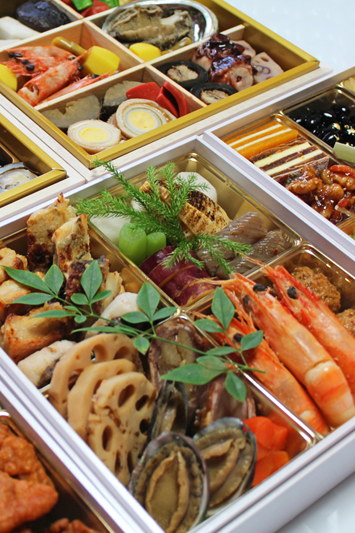
Washoku and Folklore

Amidst a Diverse Food Culture It is difficult to categorize Washoku (Japanese cuisine) into a single type because it has developed uniquely across different eras and regions. One reason for this diversity is the geography of the Japanese archipelago. It stretches approximately 3,200 kilometers from north to south, spanning latitudes from 20 to 45 degrees north. Consequently, the arrival of the “cherry blossom front” (sakura zensen) or the rainy season differs by a month or more between Okinawa and Hokkaido. The presence or absence of heavy snowfall also creates significant regional contrasts. These factors lead to variations in the resources gathered from mountains, rivers, seas, and fields, which in turn shape distinct regional dietary habits. Furthermore, Japan remains an archipelago of mountainous islands, with mountains occupying over 60 percent of the land today. Human dwellings and settlements are scattered up to elevations of several ... ... [Read more]

No.
Vol. 4, Diplomacy  Mar. 12, 2026

Defending Japan’s Sovereignty in the AI Era: Leveraging Linguistic Uniqueness to Build Sovereign AI

  Until the end of the Cold War, the center of gravity of national security rested primarily on the two pillars of military and diplomatic power. There is no doubt that the quantity and quality of weapon systems, starting with nuclear weapons, along with the expansion of alliances and economic cooperation, served as the primary indicators for gauging a nation’s survival and influence. The United States and the Soviet Union, confronting each other across the Iron Curtain, competed to expand their nuclear arsenals and alliance networks, barely maintaining peace upon that precarious balance. However, now that a quarter of the 21st century has passed, the situation has clearly changed. The elements that determine a nation’s true power are no longer limited to kinetic forces or the visible scope of diplomatic activities. They have expanded to include the security of data and networks, the resilience ... ... [Read more]

No.
Vol. 4, Economy  Mar. 9, 2026

Pathways to Balancing Working Hour Deregulation and Child-rearing Support

  Does the deregulation of working hours contradict measures against the declining birthrate? The flexibility in working hours promoted by the Takaichi administration holds the potential to maximize both the “earning power” and the “time discretion” of child-rearing households. Professor Oguro Kazumasa shines a new light on this controversial policy from the perspective of demographic challenges. The Current Political Debate Over Working Hour Deregulation Since Prime Minister Takaichi Sanae mentioned a “review of the upper limits on working hours,” an intense debate has continued in the Diet. This is undoubtedly driven by the fact that Japan is transitioning into a full-scale labor-shortage economy, with chronic labor shortages persisting across a wide range of sectors—including services, healthcare/nursing care, construction, and logistics—amid a rapidly shrinking working-age population. From the corporate side, there are expectations that allowing flexible work styles will lead to accelerated innovation and better ... ... [Read more]

No.
Vol. 4, Culture  Mar. 9, 2026

Japanese Culture at World Expositions: Beyond 1970 and 2025

World Expositions and the Internationalization of Japanese Culture There are two dimensions to the “internationalization” of culture. One is the proactive dissemination of one’s own culture abroad while engaging in exchanges with other nations. In contrast, the second is what can be termed “internal internationalization”—a process where citizens’ direct exposure to foreign cultures within their own country fosters new forms of exchange and cultural creation with a global consciousness. International expositions, or World Expos, which are held based on international treaties, encompass both of these aspects. On one hand, they provide an opportunity for nations to exhibit their domestic industries and technologies while introducing their cultural and artistic works through events such as National Days. In the context of Japan, the Japan Pavilion and Japan Day at overseas expositions serve as vital platforms for communicating Japanese culture to the world. Conversely, in the host ... ... [Read more]

No.
Vol. 4, Diplomacy  Mar. 9, 2026

Reading China’s Tactics Aiming to Change the Status Quo

What Was Prime Minister Takaichi’s Statement? On November 7, 2025, at the House of Representatives Budget Committee, regarding Japan’s right of collective self-defense, Prime Minister Takaichi Sanae was asked by Okada Katsuya, a member of the Constitutional Democratic Party of Japan (CDPJ), “under what circumstances a survival-threatening situation would occur.” In response, she stated that such a determination should be made “based on the individual and specific circumstances of the actual event, by comprehensively judging all available information.” Furthermore, regarding the content of a survival-threatening situation, she answered, “It is as stated in Article 2, Item (iv) of the Armed Attack Situation Response Act.” That Article 2, Item (iv) stipulates: “a situation where an armed attack against a foreign country that has a close relationship with Japan occurs and as a result, Japan’s survival is threatened and there is a clear danger that the people’s right to life, liberty and the pursuit of happiness could be fundamentally overturned.” In response, while confirming whether she was saying ... ... [Read more]

No.
Vol. 4, Society  Mar. 9, 2026

Why Are Debates Surrounding Family and Gender So Contentious? The “Principle of Deliberation” to Which We Must Return

What Is Conservatism in the First Place? The understandings of the concept of conservatism vary greatly from person to person. Historically, however, conservatism has represented a position that calmly asserts the impracticality of those forces that seek to sweep away an enduring society to construct a new one from a clean slate. Consequently, Edmund Burke (1729–1797), who expressed reservations on the voices praising the French Revolution, and Friedrich Hayek (1899–1992), who denied the feasibility of a socialist planned economy, are regarded as quintessential conservative thinkers. Both the French Revolution and the socialist planned economy were movements that attempted to fundamentally reconstruct society based on specific ideologies. Conservatism is what calmly pointed out the impracticality of such reforms. From a conservative perspective, while the ideologies of reformists—such as social contract theory, the concept of human rights, and historical materialism—certainly possess a degree of logic, they ... ... [Read more]