Volume - Japan Policy Forum - Page 4
Home > Volume

Archives Volume

No.
Vol. 4, Society  Mar. 9, 2026

Why Are Debates Surrounding Family and Gender So Contentious? The “Principle of Deliberation” to Which We Must Return

What Is Conservatism in the First Place? The understandings of the concept of conservatism vary greatly from person to person. Historically, however, conservatism has represented a position that calmly asserts the impracticality of those forces that seek to sweep away an enduring society to construct a new one from a clean slate. Consequently, Edmund Burke (1729–1797), who expressed reservations on the voices praising the French Revolution, and Friedrich Hayek (1899–1992), who denied the feasibility of a socialist planned economy, are regarded as quintessential conservative thinkers. Both the French Revolution and the socialist planned economy were movements that attempted to fundamentally reconstruct society based on specific ideologies. Conservatism is what calmly pointed out the impracticality of such reforms. From a conservative perspective, while the ideologies of reformists—such as social contract theory, the concept of human rights, and historical materialism—certainly possess a degree of logic, they ... ... [Read more]

No.
Diplomacy, Vol. 3  Mar. 8, 2026

China’s Expanding Presence in Central Asia: Its Global Strategy and Public Responses

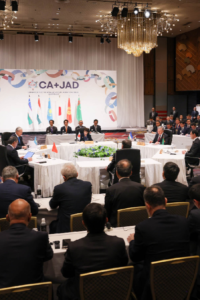
China is deepening its relations with Central Asian countries, primarily in the economic sphere. China appears to be pursuing an inclusive strategy toward the region that differs from its approach to East and Southeast Asia. Utilizing both multilateral and bilateral frameworks, such as “Central Asia plus China” Competition with Chinese companies and land-related issues are negatively affecting public sentiment toward China Providing human resource development and meticulous assistance; Japan should further enhance its distinctiveness Since the start of Russia’s full-scale invasion of Ukraine in February 2022, Central Asian countries have pushed for the diversification of their diplomacy even more vigorously than before. Consequently, attention has been focused on which extra-regional powers would exert their influence within the international relations surrounding Central Asia. Now, more than three and a half years later (as of the time of writing), it appears evident that China is the ... ... [Read more]

No.
Diplomacy, Vol. 3  Mar. 4, 2026

Japan’s International Cooperation Seen from Palau: Rising Geopolitical Interests, Principles and Strategies under Scrutiny

The Pacific Island region is seeing rising geopolitical interest from around the world. Located in the western part of this region, Palau has deep ties with Japan in terms of both historical and personal exchanges. Through JICA’s support, we examine the challenges unique to island nations and the ideal form of aid that contributes to realizing “Human Potential.” Infrastructure investment to stimulate economic growth in island regions Resolving multiple vulnerabilities through innovative aid Growing importance of fostering regionalism amid rising geopolitical risks Mine Yoichi: In mid-September 2025, I traveled to Palau with Nakanishi-san to inspect the sites of Japan’s international cooperation. Palau is located at the western edge of Micronesia, east of Mindanao Island in the Philippines. Nakanishi Hiroshi: At the time of our visit, it was a day-long journey via Guam, but with the establishment of a new direct flight from Narita on October 29, ... ... [Read more]

No.
Vol. 3, Society  Feb. 26, 2026

How Should We Respond to Successive Incidents? Understanding through a Culture of Coexistence: Bears and the Japanese People

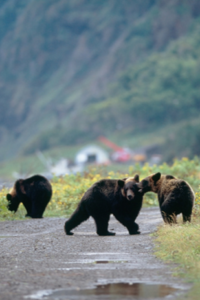
Every day, news reports of bear damage and sightings are being broadcast within the country. While bears are forest animals, they have recently been appearing in human living areas, causing not only damage to agricultural crops but also human injury and fatalities. According to announcements from the Ministry of the Environment of Japan (MOE), as of November 5, 2025, the number of fatal bear accidents for the fiscal year has already reached 13 (11 on Honshu and 2 in Hokkaido). In particular, incidents surged in October, with a total of seven cases in Iwate, Akita, and Miyagi Prefectures in northern Honshu. Human-bear conflicts have escalated to the scale of a natural disaster. It has reached a point where the dispatch of the Japan Self-Defense Forces is being requested. Just as we check the daily weather forecast and prepare our clothing or rain gear before ... ... [Read more]

No.
Diplomacy, Vol. 3  Feb. 26, 2026

Will “Chinese-style” Development Permeate Hong Kong?

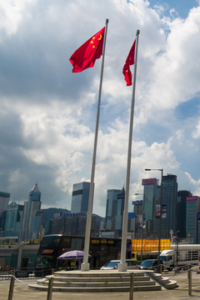
Hong Kong’s politics are under the control of the Chinese Communist Party, while its economy remains a capitalist system. In Hong Kong, characterized by a so-called “One City, Two Systems,” “Chinese-style” control is also intensifying within the economic sector. Plans are [underway] for executive-led initiatives to establish high-tech industries in the Northern Metropolis. Private enterprises are struggling, being asked to provide massive amounts of investment. There is also criticism of industrial policies that lack a perspective on the service industry, which is Hong Kong’s strength. In June 2020, the Chinese government enacted the “Hong Kong National Security Law (NSL)” to suppress the intense protests that broke out in Hong Kong in 2019. In the more than five years since then, political repression has raged through Hong Kong. In accordance with the NSL, courts have repeatedly issued rulings criminalizing freedom of expression, sending many commentators, ... ... [Read more]

No.
Vol. 3, Science  Feb. 25, 2026

Beyond 1.5°C: Not to Despair

Editor’s note: This article first appeared in the November 2025 issue of Sekai, as the 38th and penultimate installment of the series Kiko Saisei no Tame ni (For Climate Renewal). This is actually my final contribution to this series. I am grateful for the opportunity I have had to explore the scientific and social aspects of climate change in my own way. In this article, I will discuss how we should respond to the imminent reality of a 1.5°C global average temperature rise and the attitude we should adopt moving forward. Japan’s record-breaking heatwaves and global warming The summer of 2025 in Japan was astonishingly hot. The daily maximum temperature reached 41.8°C, far higher than ever before, and the number of people receiving medical attention for heatstroke increased sharply across the country.[1] Many people undoubtedly felt the seriousness of climate change firsthand. In lectures ... ... [Read more]

No.
Vol. 3, Economy  Feb. 24, 2026

Sanaenomics: Tackling a Historic Turning Point

  What is needed to sustain and strengthen the evolving Japanese economy? In this text, the author—a private-sector member of the Council on Economic and Fiscal Policy—discusses the economic policies and challenges that the Takaichi administration should pursue in its quest for a “free economy” and a “strong nation.”   On October 21, 2025, Takaichi Sanae took office as Japan’s 104th prime minister. While she is notable for being Japan’s first female prime minister, she is also remarkable in other ways. She is not from a political dynasty; she graduated from a public high school and paid her own tuition to attend a national university. She is not a career bureaucrat from ministries or agencies. Within the Liberal Democratic Party, she belongs to no faction yet has become the foremost policy expert in the political arena. It is precisely Prime Minister Takaichi’s capabilities that ... ... [Read more]

No.
Diplomacy, Vol. 2  Feb. 23, 2026

Seven Major Changes in the Security Environment

An era where “defense diplomacy” is indispensable Jimbo Ken: Thank you for this opportunity to speak with you today. I understand that this is your first media appearance since retiring as Chief of Staff of the Joint Staff (hereinafter CSJS), and I am extremely honored. You served as the CSJS for two years and four months. In December 2022, just before your appointment, the National Security Strategy (NSS), also known as the three security documents (the National Security Strategy, the National Defense Strategy, and the Defense Buildup Program)[1], recognized that “Japan is currently facing the most severe and complex security environment since the end of World War II.” Your tenure seems to have been a major turning point in world history. How did you view those changes? Yoshida Yoshihide: Before we get to the main topic, let me start with a little warm-up. In ... ... [Read more]

No.
Vol. 2, Science  Feb. 16, 2026

Sakaguchi and Kitagawa win Nobel Prize: Japan celebrates dual achievement in same year as two researchers who persevered through adversity call for support for basic research

Distinguished Honorary Professor Sakaguchi Shimon of the University of Osaka was awarded the 2025 Nobel Prize in Physiology or Medicine, and Distinguished Professor Kitagawa Susumu of Kyoto University received the Nobel Prize in Chemistry. They were each selected together with their co-researchers. Sakaguchi was recognized for his “discovery of mechanisms that suppress immune responses,” which has led to the prevention and treatment of diseases involving immunity, such as autoimmune diseases and cancer. Kitagawa was honored for his “development of metal-organic frameworks (MOFs)” that allow gases to be freely stored and released, with applications expected across a wide range of fields including environmental and energy challenges and new materials development. This is the first time in seven years that a Japanese researcher has received the Prize in Physiology or Medicine, with Sakaguchi as the sixth recipient, and the first time in six years for the ... ... [Read more]

No.
Vol. 2, Society  Feb. 15, 2026

Expos as Sites of Experimentation: Considering the Architecture of Expo 2025

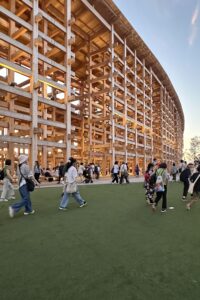
“Surprisingly impressive” this Expo As of this writing, four months have passed since the opening of Expo 2025 Osaka, Kansai, Japan (hereinafter Expo 2025) on April 13, 2025. Prior to the event, various criticisms and questions had been raised, including concerns about the appropriateness of the project costs and the plans for utilizing the site, which involve developing an integrated resort (IR), including a casino. Other concerns included methane gas emissions and whether there was any justification for hosting an Expo in Japan at this time. Even after the event began, there was no shortage of topics of criticism, such as the experimental toilets being difficult to use and the appearance of swarms of chironomids. Unpaid pavilion construction costs were also a cause for concern. However, public perception has steadily improved, and the number of visitors seems to be growing steadily as well.[1] Its ... ... [Read more]