Japanese Culture at World Expositions: Beyond 1970 and 2025
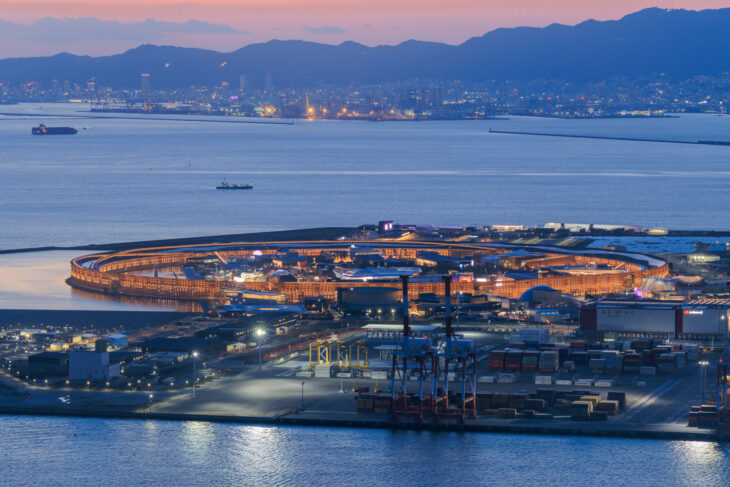
The Grand Ring of EXPO 2025 connects to the legacy of EXPO ‘70. Representing a panoramic view symbolizing the evolution of Japanese culture toward a future of harmony and life, it connects the energetic 1970s, a period of rapid economic growth (1954-1973), to 2025, a year of sustainable “co-creation,” and beyond.
Photo: shiii / PIXTA
World Expositions and the Internationalization of Japanese Culture
There are two dimensions to the “internationalization” of culture. One is the proactive dissemination of one’s own culture abroad while engaging in exchanges with other nations. In contrast, the second is what can be termed “internal internationalization”—a process where citizens’ direct exposure to foreign cultures within their own country fosters new forms of exchange and cultural creation with a global consciousness.
International expositions, or World Expos, which are held based on international treaties, encompass both of these aspects. On one hand, they provide an opportunity for nations to exhibit their domestic industries and technologies while introducing their cultural and artistic works through events such as National Days. In the context of Japan, the Japan Pavilion and Japan Day at overseas expositions serve as vital platforms for communicating Japanese culture to the world.
Conversely, in the host country of a World Expo, a large segment of the population can experience diverse global cultures firsthand within the venue, thereby deepening their insight into cultural diversity. Furthermore, through their own nation’s cultural exhibits, citizens can observe and learn how their country seeks to present its culture to a global audience.
Applying this to World Expos held in Japan, it means that many citizens can encounter the diverse cultures of the world within the venue. Simultaneously, through the exhibits of the government and Japanese corporations, visitors can witness and evaluate exactly how we are attempting to showcase Japanese culture to the world.
Taking the 1970 Japan World Exposition (hereinafter Expo ‘70), the first ever held in Asia, and Expo 2025 Osaka, Kansai, Japan (hereinafter Expo 2025) as case studies, this article examines how Japanese culture has been exhibited at international expositions in Japan and how foreign nations have approached their exhibitions with an awareness of Japanese culture.
The Path to Expo ‘70
Japan has participated in various expositions held across Europe and North America, utilizing them as opportunities to promote industrial development and promote Japanese culture to the world.
At the 1862 London International Exhibition, Japanese ceramics and ornaments were exhibited. This served as a catalyst for a surge of interest in Japanese culture within the British art world. Furthermore, performances of acrobatics and stunts by Japanese troupes gained significant popularity.
The Exposition Universelle of 1867, held in Paris, marked the first occasion for Japan’s official participation in a world expo. In response to the invitation from Emperor Napoleon III of France, the Tokugawa Shogunate (referred to as the Government of the Japanese Tycoon) participated, while the Satsuma Domain (the Government of the Sovereign of Satsuma and the Ryukyu Islands) and the Saga Domain (the Government of the Sovereign of Hizen) also organized individual exhibits and dispatched their respective delegations. The Shogunate exhibited oil paintings by artists such as Takahashi Yuichi of the Kaiseijo (the Shogunate’s institute for Western studies), ukiyo-e prints by Katsushika Hokusai (1760–1849), Utagawa Kunisada (1786–1865), Ochiai Yoshiiku (1833–1904), and Tsukioka Yoshitoshi (1839–1892), as well as silver and ivory accessories, bronzeware, porcelain, and crystal crafts. Meanwhile, an independent exhibit featured a Sukiya-style teahouse built by an Edo (former Tokyo) merchant. Three geishas from the capital’s Yanagibashi neighborhood attracted immense popularity as they demonstrated traditional pastimes, playing with spinning tops and gracefully using Japanese tobacco pipes (kiseru).
At the 1873 Vienna World Exposition, the Japanese government officially participated for the first time as a modern state. During this period, the “Japan fever” in London continued unabated. The Japanese house and garden exhibited at the venue were later relocated to Alexandra Palace and Park in London, where they were known as the “Japanese Village.” Meanwhile, in the bustling district of Knightsbridge, stalls selling Japanese goods were established, and at the Savoy Theatre, the operetta The Mikado became a sensation. Furthermore, Liberty’s (Liberty & Co. department store) began retailing fabrics and furniture featuring Japanese-inspired designs, while new dresses incorporating Japanese aesthetics graced the pages of women’s fashion magazines.
The Meiji government (1868–1912), having learned the utility of international expositions as opportunities for industrial promotion (Shokusan Kogyo), planned the government-sponsored National Industrial Exhibition (Naikoku Kangyo Hakurankai) following the intentions of Okubo Toshimichi (1830–1878), then the Lord Home Affairs Minister. In 1877, the first exhibition was held in Tokyo’s Ueno Park. Subsequently, the second and third exhibitions were also held in Ueno, followed by the fourth in Kyoto and the fifth in Osaka. The primary objective was to gather goods from across the nation in one place to clarify their relative merits, thereby stimulating the ambition and competitive spirit of exhibitors and achieving industrial advancement.
In 1889, Saigo Tsugumichi (1843–1902), then the Minister of Agriculture and Commerce, proposed expanding the scale of the National Industrial Exhibition to host an international exposition called the “Asia Grand Exhibition” (Ajia Dai-Hakurankai). This sparked a momentum to host Asia’s first-ever international exposition in Japan.
In 1903, the fifth National Industrial Exhibition was held in Osaka. Attracting 4.35 million visitors over 153 days, it was the largest event in Japan at the time. Although termed “National,” the exhibition permitted displays of foreign products for reference. In response, trading companies exhibited products from 18 regions across 14 countries—including Britain, Germany, the United States, and France—with the number of foreign exhibits reaching 31,064 items. Notably, the government of Canada, then a British dominion, established an independent pavilion.
Leveraging this experience, the government began preparations to host an international exposition called the “Grand Exhibition of Japan,” evolving from the National Industrial Exhibition; however, the project did not come to fruition. Nevertheless, the government maintained a continuous interest in hosting Asia’s first international exposition. In the Showa era (1926–1989), a world exposition themed on the “Fusion of Eastern and Western Civilizations” was planned, and invitations were sent to foreign nations to participate. Initially intended for 1935 (Showa 10), the event was postponed to 1940, and the plan for the “Grand International Exposition of Japan (1940)”—commemorating the 2,600th anniversary of the founding of the Empire—was formalized. The venues were to be the reclaimed land of Tsukishima in Tokyo and Yamashita Park in Yokohama. However, due to the escalation of World War II, the hosting of the event had to be abandoned.
After passing through the period of postwar reconstruction, the hosting of an international exposition in Japan was finally realized. In 1958, the City of Osaka dispatched Chuma Kaoru (1904–1971),[1] then Deputy Mayor and later the Mayor, to the Brussels World’s Fair held in Belgium. He explored the possibility of hosting an international exposition in Osaka, considering the coastal industrial zone of Osaka South Port as a candidate site. In 1964, Osaka’s local government and the private sector collaborated to request the national government to bid for an international exposition.
In 1965, Japan acceded to the Convention Relating to International Exhibitions and announced its policy to bid for a world exposition in 1970. While Tokyo, Chiba, Shiga, and Kobe also came forward as candidate sites, it was ultimately decided—after coordination with the City of Osaka—that the Senri Hills proposed by Osaka Prefecture would serve as the venue.
At the 57th Board of Directors meeting of the BIE (Bureau International des Expositions), Japan’s application for the international exposition in Osaka was submitted. Although there were opposing views expressing concern that participant nations’ expenses would be excessive since it was only three years after the Montreal Expo, the decision to host the event in Osaka was finalized as various nations showed understanding toward hosting the first international exposition in Asia.
Overview of Expo ‘70
A venue with a total area of approximately 330 hectares was secured by clearing the Senriyama hilly district in the northern suburbs of Osaka. Ultimately, participants from overseas included 77 countries (including Japan), the Hong Kong Government, and international organizations such as the United Nations, the EC (European Community), and the OECD (Organisation for Economic Co-operation and Development). In terms of the number of participating countries, it surpassed the Montreal Expo, which had seen exhibits from 61 nations.
The number of visitors during the six-month period reached 64,218,770. This figure shattered records in the history of international expositions and later served as a benchmark for the Shanghai World Expo. Within Japan, the hosting of the exposition triggered a surge in group tours organized by various organizations. The Japanese National Railways (currently Japan Railways (JR) Group)[2] promoted the Tokaido Shinkansen (Bullet Train) as “Another Pavilion,” transporting travelers from across the country.
The venue of the World Exposition was entrusted with the role of a “testing field” for social experimentation. A “Symbol Zone,” measuring 1 km in length and 150 m in width, was established at the center of the venue, featuring facilities such as the Festival Plaza, the Tower of the Sun, the Theme Pavilion, and the Expo Tower. From here, “moving walkways” extended in all four directions. Centered around plazas named after the days of the week, a group of unique pavilions was constructed, ranging from those with strong ethnic characteristics to those with a pronounced avant-garde flair.
Exhibits from various countries became major topics of conversation, including the US Pavilion, which displayed moon rocks and a lunar module, and the Soviet Pavilion, which showcased the Soyuz spacecraft in addition to exhibits honoring Lenin. The Netherlands Pavilion, which made full use of multi-screen visuals, and the Scandinavia Pavilion, featuring a presentation where slideshows were projected onto blank sheets of paper held by visitors, received high acclaim. Meanwhile, corporate pavilions competed in experimenting with new visual displays, such as projections onto giant screens, multi-projections, and projections onto smoke.
There were also exhibits that showcased the cutting edge of the information society. These included the IBM Pavilion, where a computer would automatically generate a story based on the manga characters selected by the visitor, and the Automobile Industry Pavilion, which demonstrated automatic control to prevent collisions among multiple vehicles.
In the operation of the venue, social experiments serving as models for the information society were implemented. Operation staff communicated using pagers (beepers), which would later become widely popularized. Monochrome videophones were installed at 66 locations, including the Telecommunications Pavilion, the Interpretation Center, and the Lost Children’s Center, for operational services. Furthermore, a color videophone line connected the Telecommunications Pavilion with the Kasumigaseki Building in Tokyo, demonstrating the technology to visitors.
There were also unprecedented attempts in operation and management. Unified signs and pictograms were used throughout the venue based on projected human movement. Additionally, a system was adopted for the first time in Japan to centrally manage event information, entry/exit data, congestion levels, lost children/found property, parking status, and meeting-point information via the association’s computers, providing necessary updates in real-time to bulletin boards installed at various locations. In addition to this online system, known as the “First Information System,” a “Second System” was prepared to consolidate the management of various information within the Japan Association for the 1970 World Exposition, including revenue and assets. This was a pioneering trial of centralized urban information management.
Each pavilion competed with unique designs. Meanwhile, unprecedented attempts were made in terms of construction and structural engineering. Large-scale “lift-up” construction methods, which were without precedent in Japan, were adopted for the Grand Roof of the Festival Plaza and the Electric Power Pavilion. The theory of “Metabolism”—which envisions urban architecture that changes and grows based on the premise of renewal—was applied to several pavilions. The Takara Beautilion, for which Kurokawa Kisho (1934–2007)[3] served as the producer, is a prime example of Metabolism architecture. Square units manufactured in a factory were integrated into a frame, and the on-site construction was completed in just seven days. An Osaka-based entrepreneur who saw the Metabolism pavilions at the Expo later consulted Kurokawa, leading to the opening of the world’s first capsule hotel.
Buildings with air-membrane structures also became a major topic. The US Pavilion was an elliptical air dome with a major axis of 142 m, a minor axis of 83.5 m, and a floor area of 10,000 m². The membrane, made of glass fiber coated with vinyl chloride and reinforced with wire ropes, was maintained by internal air pressure from blowers, ensuring enough strength to withstand a snow load of 18 cm. The Fuji Group Pavilion, whose appearance reminiscent of a covered wagon gained great popularity, created a massive pillar-less space 31 m high by connecting 16 air beams. It was designed to withstand storm winds of 60 m per second.
There were also proposals for energy systems considerate of the environment. A district heating and cooling system was applied to the entire exposition site as the first such practical implementation in Japan. Energy plants, which were among the largest in the world at the time, were installed at three locations: North, East, and South of the venue. Furthermore, during the planning stage, there was an idea to introduce a water circulation system within the venue by having the group of giant fountains sculpted by Isamu Noguchi (1904–88) in the artificial pond double as cooling towers. The Expo venue itself served as a simulation model for the highly informatized and centrally controlled cities of today.
Exhibiting Japanese Culture at Expo ‘70
Within the venue of Expo ‘70, various arguments and messages were presented regarding Japan’s role in the world.
Of particular note is the strong message toward international peace presented through the United Nations Pavilion. At this pavilion, the “Japanese Peace Bell” (formally the “World Absolute Peace Bell”), created by Nakagawa Chiyoji (1905–1972), the former Mayor of Uwajima in Ehime Prefecture, was exhibited in the form of a “homecoming” from the United Nations Headquarters in New York. During the fierce battles on the Burma Front, Nakagawa Chiyoji’s regiment was completely annihilated. After losing consciousness, he awoke to find himself the sole survivor inside a Buddhist pagoda. Following this harrowing experience, he advocated for the “Era of the End of All Wars for Humanity” in the postwar period and traveled to more than twenty countries across the globe. He cast a temple bell to pray for world peace by melting down the military sword he had carried on the battlefield along with coins collected from various nations, and installed it at a temple in his hometown.
Furthermore, in 1951, Nakagawa was permitted to participate as an observer representing the United Nations Association of Japan at the 6th UN General Assembly held in Paris. There, he preached the significance of gathering the aspirations of people wishing for permanent peace, transcending differences of nation and religion. His passion moved the hearts of the delegates from various countries. A new “Japanese Peace Bell” was cast using coins from 65 nations and a gold coin provided by the Pope; it was then donated to the UN Headquarters in June 1954. For Expo ‘70, this bell was relocated from the UN Headquarters to the venue, completing its homecoming. Carrying the prayers for eternal peace from countless individuals, the solemn sound of the bell resonated throughout the Expo grounds.
There was also a form of hospitality (omotenashi) that utilized culture, spearheaded by the Japan Buddhist Federation. The Federation sent an inspection team to the Montreal Expo in Canada to consider its participation in Expo ‘70. However, the requirement of 1 to 3 billion yen to establish a full-scale pavilion was seen as a challenge. Additionally, debates arose regarding the propriety of being placed on the same level as “commercial pavilions” such as corporate exhibits, as well as the pros and cons of setting up a temporary exhibit so close to “true Buddhist capitals” like Kyoto and Nara. Ultimately, it was agreed to forgo a conventional exhibition and instead open a free resting area. It was explained that providing a “place of repose” for people exhausted from walking the grounds to heal their minds and bodies was the most appropriate method of participation for the Japan Buddhist Federation.
The free resting area was named “Horin-kaku.” A garden was established around the wooden building, which featured a hogyo-zukuri (pyramidal) hipped roof. On the centeral altar (shumidan), a plaster statue of the Guze Kannon, associated with Prince Shotoku (Shotoku Taishi), was placed. The space was decorated with ikebana (flower arrangements) and photographs, and many visitors were welcomed with the serving of tea. Historical documents of the time state that “Buddhist music was played to enhance the Buddhist atmosphere.” The architectural design was carried out by Deguchi Masanori and Nakajima Tatsuhiko of the Urban Science Research Institute (Toshi Kagaku Kenkyusho).
During the expo, fifteen practitioners from various schools affiliated with the All-Japan Sencha-do Association were dispatched daily to provide voluntary service, offering tea and hospitality to the visitors. Additionally, three instructors from various schools of ikebana with Buddhist ties were dispatched each day to decorate the interior with beautiful floral displays. English-language guides introducing Japanese Buddhism were also distributed and were said to have been well-received by foreign visitors.
After the expo’s conclusion, the Japan Buddhist Federation invited applications from across the nation to relocate and repurpose the building. Although four proposals were received, following careful deliberation, the structure was sold to Waso So-honzan Shitennoji Temple[4] and the Jodo-shu Buddhist denomination. Renamed as the Koshin-do (located in Tennoji-ku, Osaka City), the Horin-kaku pavilion[5] continues to stand today, preserving the memory of the expo while conveying the message of “Buddhism in the World” to visitors from both Japan and abroad.
Expo ‘70 also featured venues for exhibiting Japanese art. The most significant facility was likely the Expo Museum of Fine Arts. Tominaga Soichi (1902–1980)[6] was appointed as the Art Exhibition Producer and the Director of the museum. He viewed Western art history and Japanese art history as equals, arranging representative masterpieces from ancient times to the present in chronological order.
The museum was organized into five sections: “The Dawn of Creation,” showcasing primitive art from prehistoric times to around the 6th century; “East-West Exchange,” illustrating the influence of cultural exchange between the East and West via the Silk Road; “Sacred Arts,” focusing on Buddhist and Christian religious art; “The March Toward Freedom,” displaying works from the Chinese Song dynasty (960–1279) onwards, the Japanese Kamakura period (1185–1333) onwards, and the Western Renaissance (14th to 17th centuries) onwards, periods when painting became the primary medium of artistic activity; and “Contemporary Vitality,” dealing with modern and contemporary art from the 1890s to the present. Including outdoor contemporary sculptures, a total of 719 works from 44 countries were exhibited through a rotating display.
By presenting a framework for “Japanese Art” as a counterpart to Western Art, it can be said that the intention was not only to disseminate Japanese culture abroad but also to appeal to the pride of the Japanese people through an opportunity to see their own culture being evaluated on a global scale.
Overview of Expo 2025
Expo ‘70, the first international exposition held in Asia, is often remembered as a massive event characterized by the “promotion of national prestige.” In contrast, following the 2005 World Exposition, Aichi, Japan (EXPO 2005 Aichi), which heightened awareness of global environmental issues, Expo 2025 was positioned from the outset as a “problem-solving” exposition.
During the bidding process, Expo 2025 Osaka, Kansai, Japan established the theme “Designing Future Society for Our Lives,” with the sub-themes of “Saving Lives,” “Empowering Lives,” and “Connecting Lives.” The objective was to depict a society where everyone can lead a fulfilling life without leaving anyone behind.
Regarding its significance, the goal to contribute to the achievement of the SDGs (Sustainable Development Goals) and, furthermore, the philosophy of “SDGs + beyond” were explicitly stated. It was expected to demonstrate a vision that goes beyond merely achieving the SDGs—the shared global goals established by the United Nations for the year 2030—and look toward the era that follows.
Furthermore, while keeping in mind the technological development of domestic corporations, the concept of “People’s Living Lab (A Laboratory for a Future Society)” was adopted, designating the venue as an opportunity for demonstration experiments aimed at realizing “Society 5.0.”[7] By providing a platform for verifying the social implementation of new technologies, services, and systems, the expo was envisioned as a way for Japan to showcase to the world various initiatives for solving global environmental problems and the forms of social transformation driven by DX (Digital Transformation).
Additionally, starting well before the opening and leading up to 2025, the “TEAM EXPO 2025” program was promoted. This initiative encouraged a diverse range of participants to take the lead in practicing the expo’s themes and contributing to the achievement of the SDGs, co-creating the ideal future society together.
The greatest highlight of Expo 2025 was the wooden Grand Ring. During the exposition, large-scale events and performances were staged to make the most of its unique form. For performances such as the choral singing of Beethoven’s Ninth Symphony and Bon Odori folk dancing, the Ring served as a one-of-a-kind stage. Conversely, for drone shows, fireworks, and aerobatic flights by the Blue Impulse aerobatic demonstration team, it functioned as a grand spectator gallery. The sight of so many people ascending the circular structure to gaze at the sky and cheer together will be remembered as an unprecedented spectacle.
A world exposition serves as an architectural showcase reflecting the social trends and global conditions of its era. In the venue planning, the area outside the Ring was designated for exhibits by Japanese government-related entities and corporations. Among these, the EXPO Hall “Shine Hat,” designed by Ito Toyo drew significant attention. Its interior, a laborious masterpiece by Kawashima Selkon Textiles featuring a composition of suspended fabrics, was truly stunning. The Japan Pavilion, with its circular arrangement of CLT (Cross Laminated Timber) panels, also commanded a strong presence. It was ingeniously designed for easy dismantling and repurposing, based on the premise that its components would be reused in various locations after the event.
Meanwhile, inside the Ring, foreign exhibits were arranged to surround the group of Signature Pavilions responsible for the theme exhibitions. These international exhibits were zoned according to the sub-themes of “Connecting,” “Saving,” and “Empowering.”
Among the temporary membrane structures, the Luxembourg Pavilion, designed by Japan’s Mikan-gumi and Luxembourg’s STDM (Steinmetz De Meyer), as well as the Kuwait Pavilion by LAVA (Laboratory for Visionary Architecture), were particularly striking. Meanwhile, the Czechia Pavilion, featuring a bold glass facade, was designed by Apropos Architects. On the other hand, the Switzerland Pavilion by Manuel Herz Architects, which consists of interconnected soap-bubble-like modules, and the Uzbekistan Pavilion by Atelier Brückner, characterized by its rows of wooden columns, are notable as environmentally friendly temporary structures designed with the reuse of units and components in mind.
In recent expos, the presence of Middle Eastern nations has been growing. This time was no exception: the Saudi Arabia Pavilion designed by Foster + Partners, reminiscent of a traditional settlement; the Kingdom of Bahrain Pavilion designed by Lina Ghotmeh, resembling a wooden vessel; and the United Arab Emirates (UAE) Pavilion, composed of 90 columns 16 meters high wrapped in date palm frond midribs, are all considered representative pavilions of Expo 2025.
Regarding exhibition equipment, the system used in the main show of the Pasona Group exhibit, “PASONA NATUREVERSE,” attracted much interest. Large, three-dimensionally assembled LED modules were controlled by small motors to move freely up, down, left, and right in synchronization with the progression of the visual content. The staging method, where the LED displays changed shape as if they were a colony of living organisms, was groundbreaking.
As for new technologies, the spatial transmission demonstration provided in Zone 2 of the NTT Pavilion was also innovative. Applying “IOWN,” which NTT positions as a next-generation information and communication infrastructure, the space where entertainment including audio and video was taking place was transmitted as ultra-high-definition 3D data. By synchronizing floor vibrations, it offered a realistic experience at remote locations without any time lag. This technology far surpasses current communication and broadcasting standards.
Furthermore, at Expo 2025, interactive exhibits were seen everywhere, where visitors were lent specific devices to accumulate their experiences within the pavilion. At the Electric Power Pavilion, visitors were asked to carry an egg-shaped device approximately 10 cm in diameter and 13 cm in height; at the Netherlands Pavilion, a glowing sphere called an “Orb”; and at the Germany Pavilion, a device in the form of an adorable character named “Circular.”
There were also methods, such as at the Osaka Healthcare Pavilion, where visitors entered certain personal information upon entry. In each case, every visitor had a unique experience, which was accumulated in the device and reflected in the staging. Spatial design where cyberspace and physical space are fused, and where virtual and real coexist, is becoming part of daily life. It can be said that Expo 2025 demonstrated the diversity of these methodologies.
Exhibiting Japanese Culture at Expo 2025
Expo ‘70 had a strong aspect of being “state-led,” serving as a platform to appeal Japan’s economic recovery and technological prowess to the world. In contrast, while Expo 2025 maintained its facet as a government-led event, it was expected that a diverse range of entities would disseminate their respective “cultures.” Specifically, in line with the theme “Designing Future Society for Our Lives,” there was an expectation for Japan to demonstrate its commitment to contributing to the achievement of a sustainable society by showcasing initiatives toward global challenges—such as health, the environment, and poverty—from a cultural perspective.
Among the pavilions of various nations, there were many examples of exhibits and events that emphasized “co-creation” with Japan. A prime example was the UK Pavilion. It featured a wall composed of stacked LED modules in a three-dimensional cube structure, presenting an experience where animation and spatial design were integrated. While it appeared similar to projection mapping, it employed an innovative method where the high-definition LED spatial structure itself emitted light.
The narrative presented there featured a Japanese father and daughter as the protagonists. The story followed the father, who had traveled to the UK, showing his daughter back in Japan various famous landmarks, the history of technological development since the Industrial Revolution, and the latest technologies, thereby deepening the connection with Japan.
Furthermore, on its National Day, the United Kingdom announced a new framework for exchange called the “MUSUBI Initiative” to deepen the personal connections between the UK and Japan, triggered by the Osaka, Kansai, Expo. This multifaceted program includes a scholarship system focused on nurturing young talent in technological developments such as offshore wind power, as well as sports programs including the youth development club operated in Japan by Liverpool FC of the English Premier League. All of these are significant projects in deepening the friendship between the UK and Japan.
The France Pavilion provided a more concrete manifestation of these connections. Under the theme of “The Red Thread,” it presented the multifaceted ties between Japan and France. Most symbolic was the main show, which utilized an unprecedented spatial presentation with LEDs. In the exhibition room housing models that symbolize Franco-Japanese friendship—such as the restoration sites of Shuri Castle and Notre-Dame Cathedral, and models of Miyajima and Mont Saint-Michel, which share a sister-city relationship—numerous LEDs were arranged three-dimensionally. This setup allowed particles of light and various objects to appear within the space. This methodology of turning the space itself into a visual medium, rather than installing physical screens, was unique and provided a groundbreaking visual experience.
Meanwhile, Expo 2025 drew significant attention to pop culture elements such as anime, manga, and games—genres that were still in their infancy in 1970. Most symbolic was the immense popularity of the official expo character, Myaku-Myaku. The “Myaku-Myaku House,” where visitors could take photos with the character, became so popular that entry was difficult, and long queues formed at various monuments throughout the venue for commemorative photos.
Myaku-Myaku is a mysterious creature. Its red parts are “cells” that can multiply, while its blue parts represent “pure water,” capable of changing shape as freely as a flowing stream. Its personality is friendly but somewhat clumsy. While it is an elusive and adorable being, perhaps that very quality is what makes it quintessential to Osaka.
In fact, at this Expo, characters were visible everywhere to an extent incomparable to previous expositions. The globally popular Japanese character “Hello Kitty” served as an ambassador for the Expo’s exchange programs. Throughout the venue, installations of characters such as Gundam, Astro Boy, Pokémon, and Monster Hunter were positioned at various points. At the Japan Pavilion, the highlight of the exhibit was a display of 32 different versions of Hello Kitty transformed into algae.
On the other hand, many foreign pavilions also featured their own characters. For example, at the Netherlands Pavilion, a statue of Miffy became a popular photo spot. At the Singapore Pavilion, “Merli”—the Singapore Tourism Board’s mascot based on the Merlion—gained great popularity. The Germany Pavilion’s mascot, “Circular,” became a topic of conversation with the claim that it was inspired by Japan’s “Kawaii culture.” It appears that various nations prepared their own original characters with an awareness of the Japanese visitors.
The custom of mascots welcoming visitors at attractions and event venues spread worldwide alongside American theme parks. Japan arranged this custom with the descriptor “Kawaii,” developed it into a Japan-originated cultural industry, and achieved widespread support overseas. Expo 2025 seemed to assert through the entire venue that our Japan is a nation of “Kawaii culture,” and its greatest cultural resources are characters and anime.
Beyond Expo 2025
The international dissemination of Japanese culture through world expositions has evolved from Expo ‘70—which was a platform driven by national prestige—to a collaborative “co-creation” involving diverse entities at Expo 2025. This methodology has transformed in accordance with technological innovation, becoming increasingly complex and rich.
With the proliferation of social media and video streaming platforms, the dissemination of culture has shifted from a one-way transmission to a more diverse and interactive process. We are now in an era where individual creators and influencers play a role in conveying the appeal of Japanese culture to the world from their own unique perspectives.
Meanwhile, with the development of the Metaverse and VR/AR technologies, opportunities to “experience” Japanese culture are expanding, transcending physical distances.
Under these circumstances, Expo 2025 was expected to serve as a “laboratory” where diverse people could exchange ideas and co-create the future. In line with the theme “Designing Future Society for Our Lives,” the expo was called upon to be a platform that demonstrates Japanese wisdom and technology in response to global-scale challenges, rather than merely pursuing economic prosperity. I will leave the final assessment of whether sufficient results were achieved in this regard to future evaluations.
Following Expo 2025, preparations are underway for GREEN × EXPO 2027 (The International Horticultural Exhibition 2027, Yokohama), which carries the theme “Scenery of the Future for Happiness.” In Japan, this will be a large-scale event serving as both a horticultural and international exhibition, following the International Garden and Greenery Exposition, Osaka (The Flower Expo) held in 1890. We must utilize this as an opportunity to disseminate Japanese culture while shifting our consciousness toward the future that begins from 2025.
I would particularly like to point out the necessity of further promoting “internal internationalization,” which is a prerequisite for disseminating Japanese culture abroad. Behind this lies the fact that the Japanese government has set a goal to welcome 60 million international tourists annually by 2030, in response to the rapid increase in foreign visitors. This assumes a figure double that of 2019 (pre-pandemic) and a threefold increase in tourism consumption.
Welcoming 60 million international tourists annually would make Japan the world’s third-largest tourism power, following France with approximately 100 million and Spain with approximately 90 million. In such a context, even greater ingenuity is required in how we convey our own culture to these visitors.
Therefore, it is necessary to multifacetedly disseminate not only stereotypical images of Japanese culture—represented by maiko, sushi, anime, manga, and games—but also regional traditional crafts, food culture, and youth culture. Simultaneously, efforts to more accurately convey the depth and diversity of Japanese culture to the world are desired.
Going forward, we must explore the possibility of Japanese culture and values gaining empathy through contributions to solving global issues, such as environmental problems and medical technology. To this end, it is important to promote mechanisms that sustain international cultural exchange, such as educational programs and joint projects for deepening mutual understanding, rather than merely introducing cultures to one another. We bear the responsibility of conveying to the next generation the way this country should be—gathering respect and admiration from the world through the medium of Japanese culture.
References:
Japan Association for the 2025 World Exposition, Expo 2025 Osaka, Kansai, Japan Master Plan, December 2020.
Hashizume Shinya, Osaka Bampaku no Sengo-shi: EXPO ‘70 kara 2025-nen Bampaku e (A postwar history of the Osaka Expo: From EXPO ‘70 to Expo 2025), Sogensha, 2020.
Hashizume Shinya, Toshi Osaka no Sengo-shi: Fukko, Saisei, Hatten (A postwar history of urban Osaka: Reconstruction, revitalization, and development), A Postwar History of Urban Osaka (Yamakawa Shuppansha).
Translated from “Kokusai Hakurankai ni okeru Nihon Bunka: 1970-nen kara 2025-nen wo Koete (Japanese Culture at World Expositions: Beyond 1970 and 2025),” Asteion, Vol. 103 2025, pp. 41–55. (Courtesy of CE Media House Inc.) [March 2026]
 HASHIZUME Shinya, Ph.D.
Distinguished Professor, Organization for Research Promotion, Osaka Metropolitan University
Director, Research Institute for Tourism Industry
Born in 1960 in Osaka City. Specializing in Architectural History and Urban Culture. He graduated from the Department of Architecture, Faculty of Engineering, Kyoto University. He earned a master’s degree at the Graduate School of Engineering, Kyoto University, and completed a doctoral program at the Graduate School of Engineering, Osaka University. He holds a Doctorate in Engineering (Ph.D.). His numerous publications include Osaka no Nazo: Rekishi ga Tsukuttekita Machi no Katachi (The mystery of Osaka: The city form shaped by history) (Kawade Shobo Shinsha), Toshi Osaka no Sengo-shi: Fukko, Saisei, Hatten (A postwar history of urban Osaka: Reconstruction, revitalization, and development), A Postwar History of Urban Osaka (Yamakawa Shuppansha).
[1] Chuma Kaoru (1904–1971), then Deputy Mayor and later the Mayor of Osaka, played a pivotal role in the realization of EXPO ‘70. After witnessing the success of the 1958 Brussels World’s Fair, he envisioned hosting an international exposition in Osaka to drive the city’s postwar revitalization.
[2] Japanese National Railways (JNR): A government-owned business entity that operated the national railway network in Japan from 1949 to 1987. It was responsible for the development of the Shinkansen (Bullet Train) and was later privatized and divided into the seven companies of the Japan Railways (JR) Group.
[3] Kurokawa Kisho (1934–2007) / Metabolism: One of the most influential Japanese architects of the 20th century and a founding member of the “Metabolism” movement. Metabolism is an architectural theory that views cities and buildings as living organisms capable of growth and change. It proposes that architectural structures should be designed to expand or replace components—much like the metabolism of biological cells—in response to the evolving needs of society.
[4] Waso So-honzan Shitennoji Temple: Established in 593 by Prince Shotoku, it is the oldest officially administered Buddhist temple in Japan. Located in Osaka, it serves as the head temple of the “Waso” denomination, which promotes a non-sectarian approach to Buddhism. It is renowned for its “Shitennoji-style” temple layout, one of the oldest architectural styles in Japan.
[5] The Horin-kaku (Buddhist Pavilion) from EXPO ‘70 was relocated to Shitennoji Temple, where it was repurposed as the Koshin-do. This represents a unique fusion of Japan’s oldest Buddhist heritage and modern expo architecture, preserving the spiritual legacy of the 1970 World Exposition within the historical fabric of Osaka.
[6] Tominaga Soichi (1902–1980): A prominent Japanese art historian and critic specializing in Western art. He served as the Director of the National Museum of Western Art, Tokyo, before being appointed as the Director of the Expo Museum of Fine Arts for Expo ‘70.
[7] Society 5.0: A concept for a human-centered society that balances economic advancement with the resolution of social problems by a system that highly integrates cyberspace (virtual space) and physical space (real space). It was proposed in Japan’s 5th Science and Technology Basic Plan as a future society that follows the hunting (1.0), agricultural (2.0), industrial (3.0), and information (4.0) societies.
Keywords
- world expositions
- Expo ’70
- Expo 2025
- Japanese culture
- Japanese Peace Bell
- Grand Ring
- internal internationalization