
Vol.4 - Japan Policy Forum
Home > Volume > Vol.4

Archives Vol.4

No.
Vol.4, Culture  Mar. 9, 2026

Japanese Culture at World Expositions: Beyond 1970 and 2025

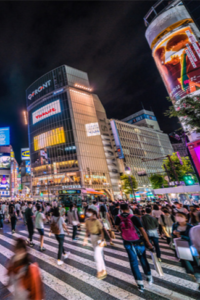
World Expositions and the Internationalization of Japanese Culture There are two dimensions to the “internationalization” of culture. One is the proactive dissemination of one’s own culture abroad while engaging in exchanges with other nations. In contrast, the second is what can be termed “internal internationalization”—a process where citizens’ direct exposure to foreign cultures within their own country fosters new forms of exchange and cultural creation with a global consciousness. International expositions, or World Expos, which are held based on international treaties, encompass both of these aspects. On one hand, they provide an opportunity for nations to exhibit their domestic industries and technologies while introducing their cultural and artistic works through events such as National Days. In the context of Japan, the Japan Pavilion and Japan Day at overseas expositions serve as vital platforms for communicating Japanese culture to the world. Conversely, in the host ... ... [Read more]
No.
Vol.4, Diplomacy  Mar. 9, 2026

Reading China’s Tactics Aiming to Change the Status Quo

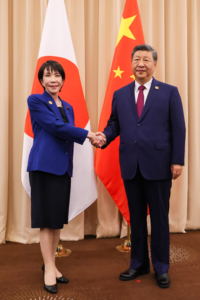
What Was Prime Minister Takaichi’s Statement? On November 7, 2025, at the House of Representatives Budget Committee, regarding Japan’s right of collective self-defense, Prime Minister Takaichi Sanae was asked by Okada Katsuya, a member of the Constitutional Democratic Party of Japan (CDPJ), “under what circumstances a survival-threatening situation would occur.” In response, she stated that such a determination should be made “based on the individual and specific circumstances of the actual event, by comprehensively judging all available information.” Furthermore, regarding the content of a survival-threatening situation, she answered, “It is as stated in Article 2, Item (iv) of the Armed Attack Situation Response Act.” That Article 2, Item (iv) stipulates: “a situation where an armed attack against a foreign country that has a close relationship with Japan occurs and as a result, Japan’s survival is threatened and there is a clear danger that the people’s right to life, liberty and the pursuit of happiness could be fundamentally overturned.” In response, while confirming whether she was saying ... ... [Read more]

No.
Vol.4, Society  Mar. 9, 2026

Why Are Debates Surrounding Family and Gender So Contentious? The “Principle of Deliberation” to Which We Must Return

What Is Conservatism in the First Place? The understandings of the concept of conservatism vary greatly from person to person. Historically, however, conservatism has represented a position that calmly asserts the impracticality of those forces that seek to sweep away an enduring society to construct a new one from a clean slate. Consequently, Edmund Burke (1729–1797), who expressed reservations on the voices praising the French Revolution, and Friedrich Hayek (1899–1992), who denied the feasibility of a socialist planned economy, are regarded as quintessential conservative thinkers. Both the French Revolution and the socialist planned economy were movements that attempted to fundamentally reconstruct society based on specific ideologies. Conservatism is what calmly pointed out the impracticality of such reforms. From a conservative perspective, while the ideologies of reformists—such as social contract theory, the concept of human rights, and historical materialism—certainly possess a degree of logic, they ... ... [Read more]